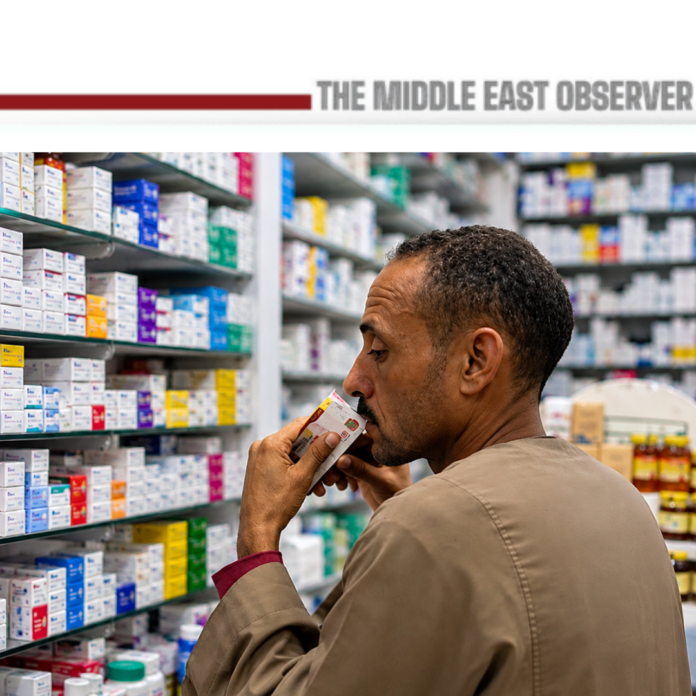
New rules could ease pressure on drugmakers facing rising input and financing costs, but disputed price increases highlight the challenge of keeping medicines affordable and available.
CAIRO,Egypt’s overhaul of pharmaceutical pricing rules is testing whether more flexible regulation can sustain medicine production without placing additional pressure on patients, as manufacturers report rising costs and regulators deny approving widespread price increases for January 2027.
The Egyptian Drug Authority (EDA) introduced Decision 480 of 2026 in September, linking price reviews to exchange-rate movements, inflation and interest rates, weighted at 60%, 30% and 10%, respectively.
The framework provides for six-monthly reviews. Adjustments may be considered when the formula indicates a change of at least 10% and relevant economic conditions persist for 45 days. Reviews can result in price reductions as well as increases, subject to regulatory assessment.
In October, pharmaceutical industry representative Ali Ouf said companies had submitted around 400 repricing requests, with reports suggesting that increases for 40 medicines had been approved. EDA Assistant Chairman Yassin Ragai subsequently denied approving January increases, stressing that applications are assessed individually.
Rising Costs Put Drugmakers’ Margins Under Pressure
Manufacturers face pressures extending beyond currency fluctuations.
El-Saeed Kamel, chairman of Utopia Pharma, told Egyptian business newspaper Al Borsa that production costs had risen 30–45% during 2026, citing raw materials, packaging, energy, wages, transport, financing and quality requirements.
Essam Shehaib, general manager of Uni Pharma, told the same publication that 15–20 of its roughly 60 products either failed to cover costs or generated margins close to zero. The company continued producing some low-margin medicines to help cover fixed expenses.
Financing adds another constraint. Pharmaceutical executives have reported working-capital cycles extending to 300 days, increasing borrowing needs before manufacturers collect revenue from distributors.
More predictable pricing could improve financial planning, but it cannot eliminate these operating costs or guarantee medicine availability.
Investment Moves Beyond Finished Medicines
Egypt produces most medicines consumed domestically but remains heavily dependent on imported active pharmaceutical ingredients, leaving manufacturers exposed to foreign-exchange costs.
Investment in local ingredients is already attracting capital. In October 2025, the National Bank of Egypt announced its participation in Arab Pharmaceutical Ingredients Company’s capital increase for a planned EGP 6.6 billion manufacturing project in Ain Sokhna.
The investment predates the new pricing framework and does not establish that the facility is operational. It nevertheless illustrates efforts to expand domestic ingredient capacity.
The next test is whether the EDA’s price reviews help manufacturers maintain essential supplies without imposing excessive costs on patients. Longer-term resilience will depend on whether announced investments translate into domestic production that reduces reliance on imported ingredients.
Related News:
NBE Invests in Egypt’s First API Manufacturing Hub.
Egypt Launches Construction of Vaccine Manufacturing Hub in SCZone
Read Also:
ACDIMA’s Expanding Role in Egypt’s Drive for Self-Sufficiency and Export Excellence
EIPICO, Backed by ACDIMA, Leads the Way into Pharmaceutical Active Raw Materials