

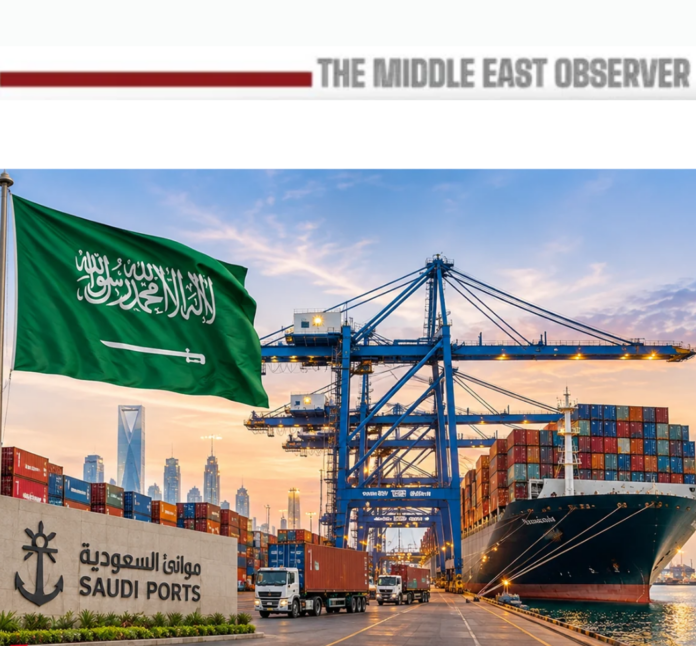
Saudi ports handled 14% more containers in October 2026 than a year earlier, reaching approximately 866,200 twenty-foot equivalent units (TEUs), while Jeddah Islamic Port recorded its highest monthly throughput amid regional shipping disruptions affecting trade routes through the Strait of Hormuz.
Jeddah Islamic Port handled a record 582,900 TEUs during the month, exceeding its previous peak in June by 27.45%, according to figures released by the Saudi Ports Authority (Mawani) on November 9.
Across Saudi ports, inbound container volumes rose 8.53% to approximately 305,600 TEUs, while outbound containers increased 4.83% to 282,900 TEUs. Transshipment containers declined 10.54% to around 186,400 TEUs, while transit containers reached approximately 91,300 TEUs.
The growth comes as shipping companies seek alternative routes to Gulf markets following restrictions on navigation through the Strait of Hormuz. MSC introduced its Europe–Red Sea–Middle East Express service in May, connecting European ports with King Abdullah Port and Jeddah Islamic Port, with Gulf-bound cargo transported by road to Dammam before onward shipment by feeder vessels.
Maersk and Hapag-Lloyd have also developed alternative transport arrangements through Saudi Arabia and Oman, highlighting the importance of combining maritime shipping with overland logistics to maintain regional supply chains.
Saudi Arabia has introduced a logistics corridors programme to redirect cargo from eastern and Gulf ports towards Red Sea facilities, which have a combined annual capacity exceeding 18 million TEUs. More than 27 additional shipping services have been introduced in the western region, providing over 200,000 TEUs of additional monthly capacity.
In July, Mawani announced SAR641 million ($171 million) in additional investments at Jeddah Islamic Port over the preceding three months, including new container-handling equipment and a 200,000-square-metre expansion of terminal operating areas. The authority has also developed truck management facilities and signed agreements for new logistics centres to strengthen cargo handling and inland transport connections.
However, the wider operating figures present a mixed picture. Total cargo handled across Saudi ports fell 11.7% year on year to 22.36 million tonnes in October, while vessel arrivals declined 9.62% to approximately 1,500 ships.
The divergence shows that stronger container traffic did not translate into growth across all categories of port activity. Container volumes measure standardised units handled, while cargo tonnage reflects the weight of goods moving through ports, including bulk commodities.
The increase in container handling and Jeddah’s record throughput underscore Saudi Arabia’s growing role as an alternative logistics gateway for regional trade. However, the longer-term economic benefit will depend on shipping costs, the efficiency of road connections and whether redirected cargo flows are sustained as regional maritime conditions evolve.
Related News:
1. MSC Launches Strategic Europe–Gulf Trade Corridor to Bypass Hormuz Risks
2. Saudi Arabia’s Jeddah Port Expansion Reinforces Red Sea Logistics Strategy
Read Also:
1. Container Shipping Reliability Slips as Spare Vessel Capacity Stays Tight
2. Global Shipping Reliability Near Four-Year Low as Suez Return Reshapes Trade