

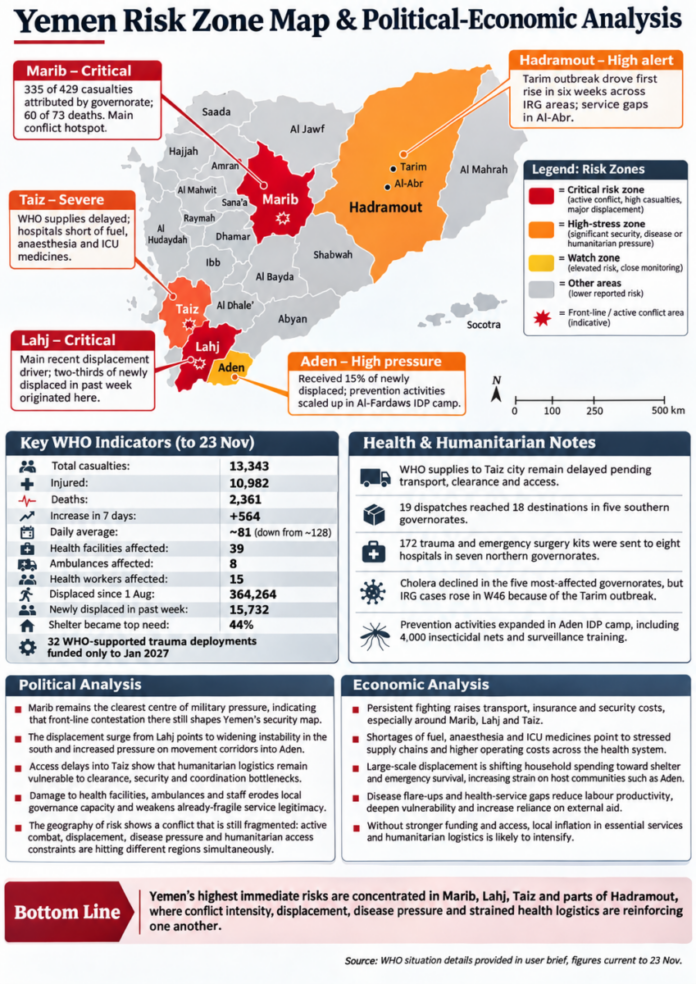
Marib accounts for the bulk of recently reported deaths, while fighting in Lahj, medical shortages in Taiz and displacement into Aden threaten an already fragile economy.
Yemen’s renewed conflict is intensifying humanitarian and economic pressures, with 2,361 deaths, 10,982 injuries and more than 364,000 people displaced since August, according to figures cited in a World Health Organization (WHO) situation report covering developments up to 23 November.
Despite a decline in average daily casualties from 128 to 81, Marib remains a principal conflict hotspot, accounting for 78 percent of recently reported casualties attributed by the governorate and 82 percent of recorded deaths within that breakdown.
Fighting in Lahj accounted for two-thirds of the 15,732 people newly displaced over the past week, with Aden receiving 15 percent of those displaced. Shelter has overtaken food as the most frequently reported humanitarian need.
The health system faces mounting pressure. Yemen’s Health Emergency Operations Centre reports that 39 healthcare facilities have been affected, up from 28, although WHO has yet to verify the additional incidents. Hospitals in Taiz face critical shortages of fuel, anaesthetics and intensive care medicines, while humanitarian shipments remain delayed. A disease outbreak in Hadramout and impending funding cuts threaten to compound the crisis.
Political fragmentation, economic contraction
Renewed fighting between the Houthis and Yemen’s internationally recognised government threatens to undermine the diplomatic gains of the 2022 truce, while hostilities around the Bab Al-Mandab Strait carry wider implications for Red Sea navigation, international trade and Egypt’s Suez Canal revenues.
The economic outlook is equally precarious. The IMF projects a fifth consecutive year of economic contraction in 2026, while suspended oil exports, fragmented monetary institutions and declining external support continue to undermine public finances and purchasing power.
An 18-month IMF staff-monitored programme approved in October seeks to stabilise public finances and protect essential expenditure, but provides no direct financing.
With emergency healthcare programmes facing funding deadlines between November and January, Yemen confronts a convergence of military escalation, fiscal deterioration and weakening public services. Without a negotiated de-escalation and sustained humanitarian financing, the country risks deeper economic fragmentation and prolonged regional instability.
Related Articals:
WHO Seeks $689mn for Eastern Mediterranean Health Emergencies in 2026
Finance in Motion Targets Up to $100mn in Egypt Investments in 2027