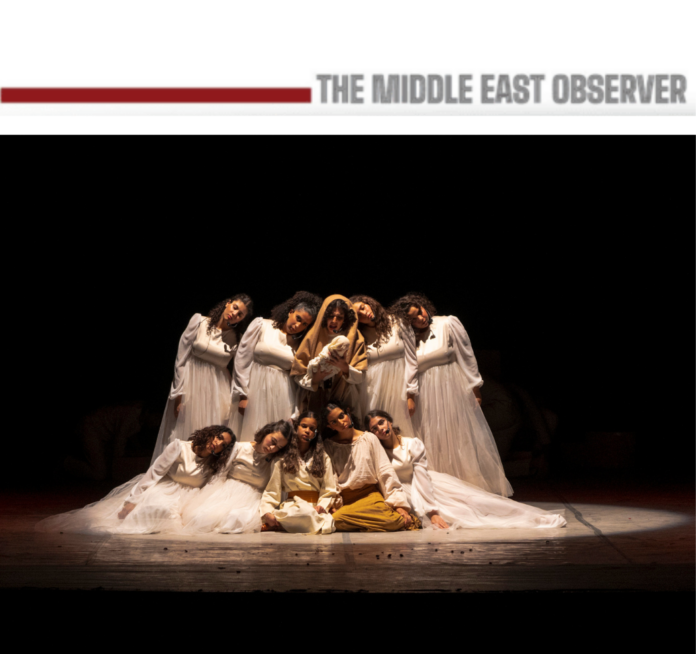
Broadway is more than a street in New York City. It is one of the world’s most successful examples of how culture can become an economic industry, generating employment, attracting tourism, stimulating investment, and projecting national soft power. Its success demonstrates that theatre, when supported by the right institutional and commercial ecosystem, can become far more than entertainment.
Broadway began to emerge during the nineteenth century before establishing itself as the world’s leading commercial theatre district in the early twentieth century. Today, it comprises 41 officially recognized theatres, each with more than 500 seats and equipped with advanced production technology, highly trained performers, and internationally recognized production standards.
Its success, however, extends beyond these flagship venues. Off-Broadway theatres, with capacities of between 100 and 499 seats, provide an important platform for emerging playwrights, directors and performers to experiment with new productions at lower cost. Many internationally acclaimed productions began their lives in these venues before transferring to Broadway.
Complementing this ecosystem is Off-Off-Broadway, where intimate theatres of fewer than 100 seats encourage artistic experimentation and creative risk-taking. Numerous influential playwrights and directors launched their careers through these smaller venues before gaining international recognition.
Over the decades, Broadway has produced some of the world’s most successful theatrical productions, including The Phantom of the Opera, The Lion King, Les Misérables, Chicago, Cats, Hamilton, and Wicked. Several have enjoyed multi-decade runs while reaching global audiences through international tours and licensed productions.
Broadway has also nurtured generations of influential directors and producers. Harold Prince helped redefine modern musical theatre through productions such as The Phantom of the Opera and Evita. Jerome Robbins transformed choreography through West Side Story, while Bob Fosse established a distinctive directing and dance style that continues to influence productions worldwide. Julie Taymor became the first woman to receive the Tony Award for Best Director of a Musical for The Lion King, while directors including Thomas Kail, Michael Greif, Bartlett Sher and George C. Wolfe have continued to shape contemporary theatre.
Yet Broadway’s greatest achievement lies not in its individual productions but in the integrated ecosystem supporting them. Writers, directors, actors, musicians, designers, technicians, producers, investors, educational institutions, marketers and tourism operators all contribute to a sophisticated creative industry capable of sustaining long-term commercial success.
The economic impact of this ecosystem is substantial. According to The Broadway League, Broadway attracted 14.7 million attendees during the 2024–25 season and generated a record $1.89 billion in box-office revenue. Broadway also supports tens of thousands of jobs while generating significant spending across hotels, restaurants, retail and transportation, illustrating how a thriving theatre industry can become a powerful contributor to the wider urban economy.
This raises an important question: Could Egypt develop its own version of Broadway?
In my view, the answer is yes—but not through imitation. Egypt should seek to develop a theatre district that reflects its own cultural identity while embracing international standards of artistic production, commercial management, audience development and marketing.
Egypt possesses significant advantages. It has one of the oldest theatrical traditions in the Arab world and has produced pioneering figures including Yaqub Sannu, George Abyad, Naguib El-Rihani, Youssef Wahbi and Ali El-Kassar. It also continues to produce talented actors, directors, playwrights, musicians and designers, supported by a rich cultural heritage capable of inspiring original productions rooted in Ancient Egyptian civilisation, Islamic history, Arabic literature and modern Egyptian society.
A contemporary theatre district in Cairo could incorporate large commercial theatres alongside medium-sized venues and smaller experimental spaces, creating a balanced ecosystem similar in structure—though not necessarily in form—to Broadway, Off-Broadway and Off-Off-Broadway. Such diversity would encourage innovation, provide opportunities for emerging artists and broaden the range of productions available to domestic and international audiences alike.
The potential benefits extend well beyond culture. A successful theatre district could generate skilled employment across the creative industries, stimulate tourism, attract private investment and strengthen Egypt’s cultural influence throughout the Middle East and beyond. As many countries increasingly recognise, the creative economy has become an important contributor to economic diversification, urban regeneration and national competitiveness.
This vision is also consistent with Egypt Vision 2030, whose cultural strategy seeks to strengthen cultural and creative industries, expand employment in cultural sectors, encourage investment in creative enterprises and enhance the role of culture as a driver of sustainable economic development.
New York is not the only successful example. London’s West End has demonstrated how sustained investment, supportive public policy and commercial management can transform theatre into a major economic asset, attracting millions of theatre-goers annually while supporting tourism and surrounding businesses. Likewise, Seoul has made cultural and creative industries a central pillar of its economic strategy, investing heavily in the performing arts and entertainment sectors as drivers of innovation, employment and international competitiveness. These examples suggest that successful theatre districts depend less on geography than on long-term institutional commitment and strategic investment.
Nevertheless, such an ambition would require more than new theatres. It would depend on sustained investment, professional management, audience development, arts education, modern production capabilities and supportive public policy. Success would also require strong collaboration between government, private investors, cultural institutions and the artistic community to ensure commercial sustainability alongside artistic excellence.
Egypt has long occupied a central place in Arab cultural life. Building a modern theatre district should therefore be viewed not as an attempt to replicate Broadway, but as an opportunity to create an internationally recognised centre for Egyptian performing arts—one that reflects the country’s own history, creativity and cultural identity while contributing to economic development.
Broadway ultimately demonstrates that theatre can be both a cultural institution and an economic asset. For Egypt, the challenge is not whether such a vision is possible, but whether it is prepared to invest in the institutions, talent and long-term strategy required to transform that vision into a sustainable creative industry.
Related news:
Egypt’s State Theatre Between Revival Ambitions and Structural Decay
Al-Tiyatro: When Theatre Becomes a Stage for Egypt’s Creative Economy Revival
Read also:
Egypt, Montenegro Sign Maritime Pact to Deepen Trade and Strategic Cooperation
India Approves US$20bn Push for Chip and Smartphone Manufacturing