

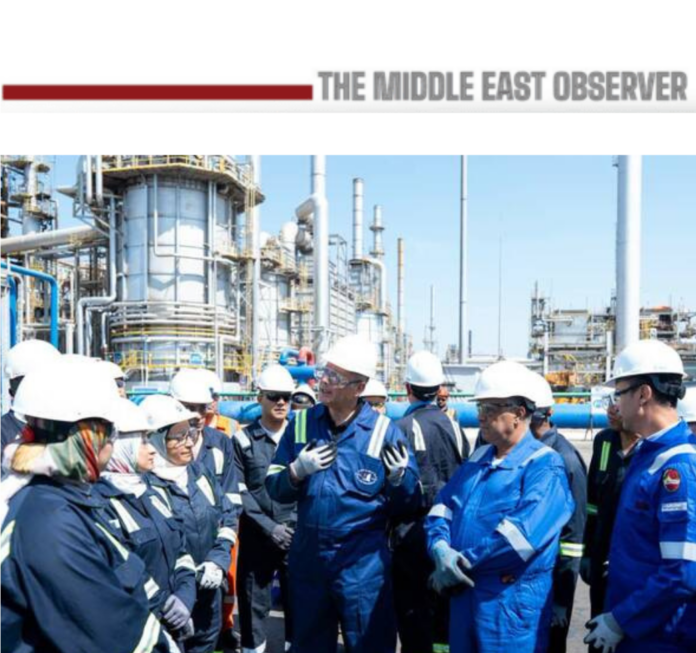
CAIRO — Egypt exported 2.3 million tonnes of petroleum products during the first six months of 2026, equalling the volume shipped throughout the whole of 2025, according to the Ministry of Petroleum and Mineral Resources. The increase reflects stronger domestic crude production, higher refinery throughput and renewed investment across the upstream sector.
Export proceeds reached approximately US$2.3 billion, with shipments comprising mainly jet fuel, naphtha, waxes and vacuum distillates. Petroleum Minister Karim Badawi said petroleum product exports are projected to rise to around 2.5 million tonnes during the second half of the year as refinery operations continue to improve.
According to the ministry, the stronger export performance has been supported by Egypt’s highest crude oil production since 2024, alongside increased exploration and development activity. Officials also attributed the improvement to the settlement of outstanding payments owed to international oil companies, which encouraged foreign operators to resume drilling programmes, advance field development and allocate additional investment to exploration activities.
The ministry added that greater crude availability, supplemented by imported feedstock, has helped raise refinery utilisation to about 80%, increasing the production of higher-value refined products while meeting domestic fuel requirements. Ongoing upgrades at major refining complexes—including CORC, ANRPC, APRC and MIDOR—form part of Egypt’s broader strategy to expand value-added energy exports and enhance its role as a regional refining and energy trading centre.
Egypt’s refined petroleum products are marketed primarily in Mediterranean and European destinations, in addition to customers across North Africa, the Eastern Mediterranean and the Middle East, where demand for aviation fuel, transport fuels and petrochemical feedstocks has remained relatively robust.
The stronger export performance has coincided with favourable international refining conditions. In its July Oil Market Report, the International Energy Agency (IEA) noted that refining margins strengthened to their highest levels in four years during early July as refined-product markets remained comparatively tight despite improved crude availability. Separately, Reuters reported that refineries in the United States and Europe have continued operating at elevated utilisation rates, supported by healthy diesel and jet-fuel margins and relatively limited spare refining capacity.
The first-half results point to continued improvement in Egypt’s downstream petroleum industry, although maintaining export momentum will depend on several factors beyond higher crude output. Continued investment by international upstream partners, sustained refinery utilisation, timely completion of refinery modernisation projects and the direction of international refining margins are all likely to influence Egypt’s ability to expand refined-product exports and increase foreign-currency earnings from value-added energy products.
Related news:
Alexandria Petroleum Upgrade Drives Egypt’s Refining and Export Growth
Non-Petroleum Exports: Egypt Targets $99bn by 2030 on Digital Trade Reform
Read also:
UAE finance hiring rebounds as UK professionals return to Gulf job market