

CAIRO — Egypt has inaugurated a more than $100mn biologics and biosimilars manufacturing plant, an investment intended to reduce reliance on imported high-value therapies and move the country’s pharmaceutical industry into more technically complex production.
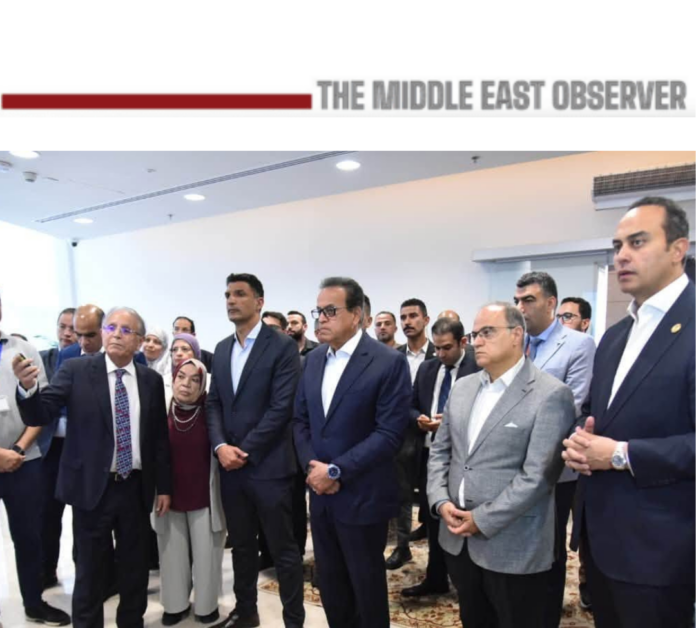
The EIPICO 3 facility, located in 10th of Ramadan City, was opened by Health and Population Minister Khaled Abdel Ghaffar in the presence of Industry Minister Khaled Hashem and senior healthcare and pharmaceutical officials. The plant is owned by Egyptian International Pharmaceutical Industries Company, or EIPICO, which is affiliated with the Arab Company for Drug Industries and Medical Appliances, known as ACDIMA.
Built on a site covering about 10,500 square metres, the factory represents an investment exceeding $100mn and is designed to manufacture biological medicines and biosimilars through an integrated process extending from genetically modified cell lines to finished pharmaceutical products, according to the health ministry and EIPICO.
EIPICO describes the plant as the first fully integrated facility of its kind in Egypt and the Middle East. The company has previously said that EIPICO 3 was designed to manufacture biological products, monoclonal antibodies and biopharmaceutical proteins.
The claim underscores the project’s strategic significance, although neither the ministry nor the company’s announcement specified which individual products have completed registration, whether all production lines have entered full commercial operation, or which international regulatory certifications have been secured.
Ahmed El-Kilany, EIPICO’s chairman and managing director, told officials during the opening that the facility had been developed using a modular construction system in cooperation with Swedish pharmaceutical engineering group Pharmadule Morimatsu.
Production sections were manufactured, equipped and tested outside Egypt before being transported to the site for installation, a process intended to improve construction precision and quality control. The plant includes bioreactors, preparation areas and automated filling and packaging lines.
Unlike conventional medicines that are generally produced through chemical synthesis, biologics are complex treatments made from living cells, microorganisms or other biological sources. Their production, purification and quality assurance are typically more demanding than those required for standard generic medicines.
Biosimilars are highly similar versions of existing biological medicines, with no clinically meaningful differences in safety and effectiveness from their reference products when approved under recognised regulatory standards. Their introduction can increase competition and broaden access to therapies that are often costly for patients and healthcare systems.
The World Health Organization has identified biosimilars as an important means of expanding access to advanced treatments, particularly in lower- and middle-income countries where medicine budgets remain constrained. It estimates that biosimilars can be substantially less expensive than their originator products, although the level of savings varies by medicine, market structure and procurement system. “WHO recommends that countries enable early market entry of generic and biosimilar medicines,” the organisation said in its pharmaceutical pricing guidance, while stressing that products must be safe, effective and quality-assured.
EIPICO 3 is expected to manufacture 14 biological products addressing cancer, blood disorders, infertility, kidney disease and anaemia, according to the government announcement. The specific medicines, production timetable and planned launch dates were not disclosed.
For Egypt, the commercial importance of the project lies not only in substituting imports but also in shifting domestic pharmaceutical production towards higher-value products.
Egypt has an established base in generic and conventional medicine manufacturing, but biologics require more specialised expertise, tightly controlled production environments, complex analytical testing and stronger regulatory oversight. Successful production at scale could therefore deepen domestic industrial capabilities and support exports to African and Middle Eastern markets.
The plant’s eventual effect on medicine prices will depend on regulatory approval, procurement volumes, production costs and the extent to which locally manufactured products replace imported therapies. Local manufacture does not by itself guarantee lower retail prices, but it can reduce foreign-currency exposure, shorten supply chains and create additional competition where products reach the market at sufficient scale.
WHO says biologics have transformed the treatment of conditions including cancer, autoimmune disease and diabetes, but their high cost has restricted access in many countries. It also notes that manufacturing capacity has increasingly expanded in middle-income economies, creating opportunities to widen the availability of advanced therapies.
EIPICO already operates three pharmaceutical plants covering a combined 130,500 square metres, with 59 production lines making 425 products and an annual capacity of about 327mn packages, according to figures released at the inauguration.
The company reported production valued at EGP10.8bn and sales of EGP9.3bn in the previous year. It exports to more than 60 markets, with annual exports estimated by the company at $60mn.
EIPICO also said it accounted for 25 percent of Egypt’s pharmaceutical exports and 30 percent of the country’s drug exports to Africa. These percentages are company and ministry figures and were not accompanied by a detailed national export dataset in the inauguration statement.
EIPICO’s earlier project disclosures had placed the original investment at about $100mn and described the facility as Egypt’s first modular biological and biosimilars plant. The factory’s formal opening therefore marks the transition from a long-running construction project towards commissioning and commercial development, although the operational status of individual products will depend on registration and validation processes.
The plant gives Egypt a platform from which to compete in a higher-value segment of the pharmaceutical industry. Its longer-term impact, however, will be determined by whether EIPICO can obtain the required approvals, achieve reliable commercial-scale production, control costs and secure sustained demand at home and in export markets.
Related news:Egypt Draft Law Transforms Future of Egypt Authority Into Strategic Investment Institution
ACDIMA’s Expanding Role in Egypt’s Drive for Self-Sufficiency and Export Excellence
The Translation Machine: How Language is Becoming Currency in Egypt’s Digital Economy