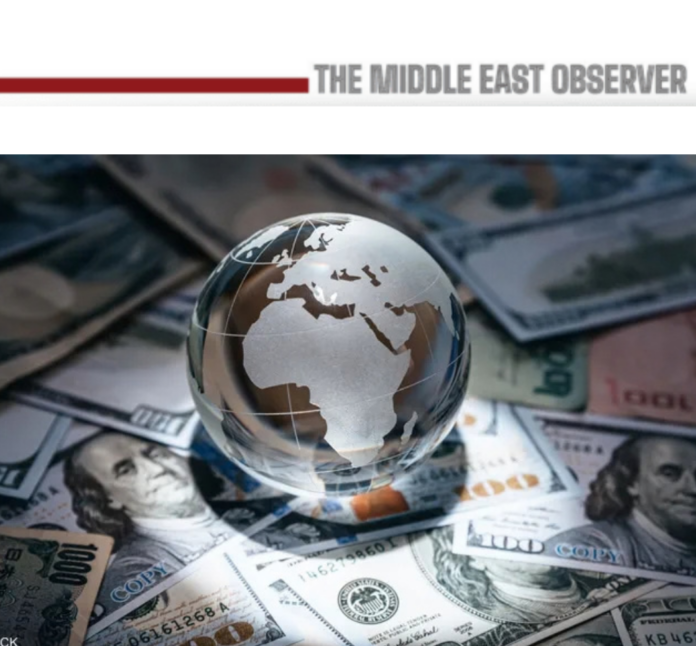
Global debt exceeded $365 trillion in the first half of 2026, extending a borrowing cycle increasingly shaped by government spending and capital-intensive investment in artificial intelligence, energy and defence.
Worldwide debt rose by more than $10 trillion to about $365.5 trillion, according to the Institute of International Finance. The total covers government, household, financial-sector and non-financial corporate liabilities across more than 100 economies.
Emerging markets accounted for most of the increase, adding $6.5 trillion to reach $110.6 trillion, led by China. The first-half increase was nevertheless less than half the $21 trillion recorded during the same period of 2025 as higher financing costs, energy prices and geopolitical disruption restrained borrowing.
The composition of the increase points to a broader structural shift. Governments are financing persistent fiscal requirements alongside rising expenditure on defence, healthcare and energy infrastructure, while corporations are raising capital for AI data centres, computing capacity and associated power networks.
Global debt now stands at about 310% of GDP, around 25 percentage points below its early-2021 peak. The IIF cautions, however, that much of that improvement reflects inflation lifting nominal economic output rather than substantial deleveraging.
The refinancing challenge remains significant. Emerging markets face more than $3.5 trillion in debt maturities during 2026, increasing sensitivity to borrowing costs and global capital conditions.
AI investment has not yet produced clear evidence of crowding sovereign borrowers out of debt markets. But rising long-term corporate financing requirements are adding to global funding demand as governments continue refinancing historically large debt stocks.
The emerging risk is therefore no longer simply record debt. It is whether governments and corporations can finance a more capital-intensive global economy without materially increasing refinancing costs or weakening debt sustainability.
Related news:
Egypt Has the Assets to Build a Global Exhibition Economy
El-Sisi Links Global Economic Stability to Security and Development at BRICS 2026
Read also:
NBE Moves to Take Over Banque Misr’s $6bn UAE Banking Platform
Cairo Language Event Expands to 18 Countries in Third Edition