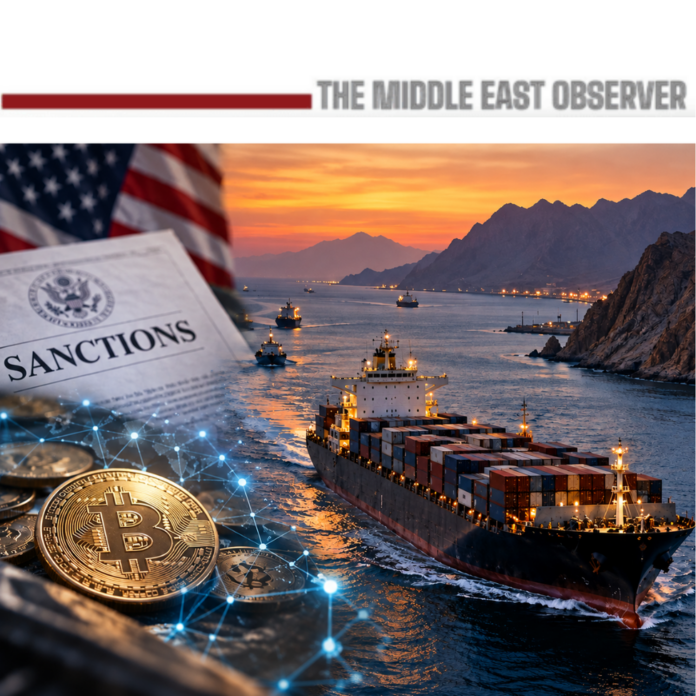
The US has sanctioned Iranian cryptocurrency exchange BitBank, widening its enforcement campaign from conventional financial channels into the digital infrastructure used to process maritime payments linked to shipping through the Strait of Hormuz.
The Treasury Department’s Office of Foreign Assets Control designated BitBank on Sept. 17, saying Iran’s previously sanctioned Hormuz Safe Marine Services Authority had used the exchange since June to transfer payments it received to the Iranian state.
Treasury separately alleged that BitBank’s controller, sanctioned Iranian financier Babak Zanjani, used the exchange between June and July to facilitate transfers of hundreds of millions of dollars in Bitcoin to the Islamic Revolutionary Guard Corps.
Hormuz Safe, itself sanctioned by Washington, operates as a digital maritime-services and insurance platform offering insurance, security, traffic-control and emergency-response services to vessels crossing the Strait of Hormuz. It accepts Bitcoin and other digital assets. Treasury alleges the platform forms part of an Iranian system for generating shipping-related revenue outside conventional Western-controlled payment channels.
The latest action also targeted BitBank developer Pishtaz Simorgh Electronic Trade Company and three Zanjani associates. The designations were imposed under Executive Order 13902 as part of Washington’s Operation Economic Outcast, which is targeting Iranian sanctions-evasion networks and digital-asset infrastructure.
The significance extends beyond cryptocurrency. By linking a digital exchange directly to payments associated with maritime passage, Washington is bringing shipping, insurance and crypto settlement into the same sanctions-compliance chain.
That raises exposure for shipowners, charterers, insurers, banks and digital-asset intermediaries dealing with Hormuz-related payment systems. The Treasury has warned that financial institutions and other parties, including non-US entities in certain circumstances, can face sanctions risk when transacting with designated persons.
The action therefore marks a broader shift in enforcement: cryptocurrency is increasingly being treated not as a peripheral sanctions-evasion tool, but as part of the financial infrastructure surrounding strategic trade routes and maritime commerce.
Related news:
Hormuz Diplomacy Signals Managed De-escalation, Not Strategic Reconciliation
Egypt’s Liquidity Boom Tests Financial Infrastructure Capacity
Read also:
Egypt’s Liquidity Boom Tests Financial Infrastructure Capacity
Egypt’s Maritime Lead Positions It for South-South Trade Shift