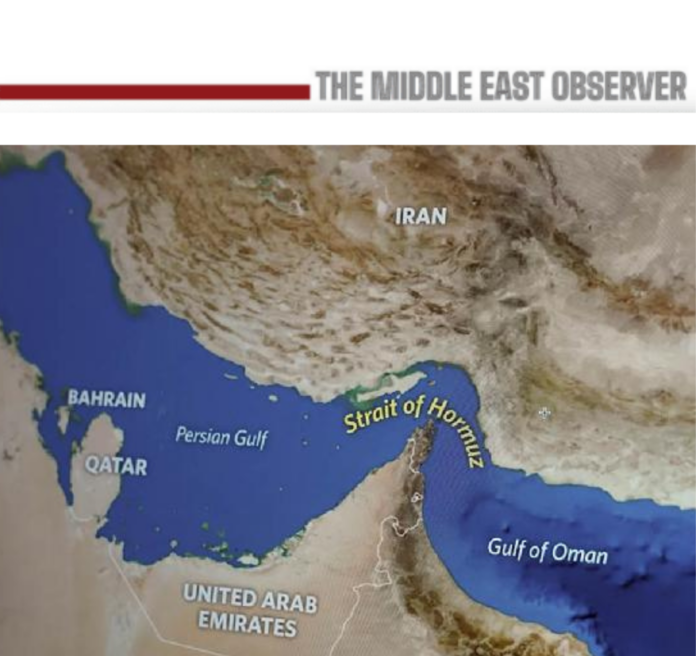
The latest diplomatic developments surrounding the Strait of Hormuz point to a strategy of managed de-escalation rather than comprehensive reconciliation. Recent developments suggest a temporary convergence of interests around restoring commercial navigation, despite continuing disagreement over broader strategic objectives. Reports that Iran is considering allowing European participation in mine-clearing operations—a notable departure from its longstanding opposition to foreign involvement—alongside discussions over a temporary 60-90 day maritime framework, and increasingly constructive public statements from both Tehran and Washington, indicate growing momentum behind efforts to reduce immediate tensions without resolving the wider geopolitical dispute.
If confirmed, Tehran’s reported willingness to accept a European role in mine-clearance operations would represent more than a tactical concession. It would suggest that Iran is increasingly prepared to compartmentalise maritime security from its wider political disputes with the West, reflecting a pragmatic response to mounting economic and strategic pressures rather than a shift in its long-term regional ambitions. Likewise, indirect negotiations facilitated by Oman — described by Doha as being in “very progressive stages”—point to an emerging diplomatic framework in which restoring maritime stability has become the immediate priority.
The commercial disruption of a maritime corridor that carries roughly one-fifth of global seaborne oil trade has steadily increased the economic incentives for Gulf energy exporters, major importing economies, international shipping companies and global insurers to contain the crisis, even as their longer-term strategic objectives continue to diverge. Higher energy prices, elevated freight rates, rising maritime insurance premiums and renewed pressure on global supply chains have reinforced the urgency of restoring confidence in one of the world’s most strategically important waterways. Reopening the Strait has therefore become an economic imperative as much as a security objective.
Equally significant is the sequencing of the negotiations. By prioritising maritime security before tackling sanctions, Iran’s nuclear programme and broader regional security issues, the parties appear to have adopted a step-by-step diplomatic approach, rebuilding confidence through limited and practical agreements before attempting a wider political settlement. History suggests this follows a familiar pattern in US-Iran relations, where interim arrangements have repeatedly served as confidence-building mechanisms that stabilise immediate crises while deferring the more politically contentious disputes.
More broadly, the negotiations illustrate an evolution in the region’s diplomatic architecture. Rather than relying exclusively on direct US-Iran engagement, the current process has increasingly been shaped by regional mediators, reflecting the Gulf states’ growing role as strategic brokers whose overriding priority is preserving regional stability, safeguarding energy exports and preventing another conflict with global economic consequences. The negotiations also reflect a broader shift in crisis management, with regional powers increasingly seeking to prevent geopolitical disputes from disrupting global trade even where they remain unable to resolve the political disputes that caused them.
These developments, however, should not be mistaken for a strategic realignment. Even if a temporary Hormuz agreement is concluded, it should be viewed as the beginning of a new negotiating phase rather than the end of the broader geopolitical confrontation. The parallel continuation of diplomacy and the sustained US military presence in the region illustrates another familiar feature of US-Iran relations: negotiations conducted alongside efforts by both sides to preserve deterrence, maintain bargaining leverage and retain credible military options. Iran’s continued insistence on maintaining a significant security role in the Strait likewise demonstrates that the underlying strategic competition remains fundamentally unchanged despite the current diplomatic momentum.
Looking ahead, the most likely trajectory remains an extended frozen conflict, in which commercial navigation gradually resumes under temporary arrangements while strategic rivalry, sanctions and intermittent security incidents continue to shape regional dynamics. The principal alternative remains a breakdown of negotiations leading to renewed escalation, triggered by a maritime incident, political miscalculation or the collapse of confidence between the parties. Neither scenario can yet be dismissed, underlining the fragility of the current diplomatic progress.
The immediate significance of the Hormuz negotiations lies less in the prospect of a lasting political settlement than in their ability to reduce the risk of another systemic energy shock. The current diplomacy should therefore be understood as an effort to manage geopolitical risk rather than resolve it, with any agreement likely to be viewed by governments, investors and commodity markets as an interim stabilisation mechanism rather than a definitive settlement.
The direction of the negotiations will ultimately depend on whether the proposed maritime arrangements can evolve beyond confidence-building measures into broader strategic dialogue encompassing sanctions, regional security and Iran’s nuclear programme. Success would increase the likelihood of a prolonged period of managed tension, while failure could quickly return the region to renewed confrontation.
Despite the growing international convergence behind efforts to restore freedom of navigation through the Strait of Hormuz, the diplomatic progress remains inherently fragile. The proposed 60-90 day framework is designed to stabilise the immediate crisis, not eliminate its underlying causes. As a result, a single drone attack, maritime incident or political miscalculation by parties opposed to de-escalation could rapidly erode the confidence created through recent negotiations and reignite regional tensions.
Until a broader regional security framework is established, the Strait of Hormuz is likely to remain not only one of the world’s busiest energy corridors but also one of its foremost barometers of geopolitical risk. While the international community increasingly recognises the importance of preventing further escalation, the global economy remains vulnerable to disruptions generated by a conflict that much of the world neither initiated nor seeks to prolong, yet whose consequences continue to extend far beyond the Gulf. The challenge is no longer simply reopening one of the world’s most strategic waterways, but ensuring that temporary crisis management evolves into sustainable regional stability.
Related news:
Between a Rock and a Hard Place: The U.S.–Israeli Predicament in the Strait of Hormuz
Hormuz Tensions Drive French Naval Deployment Toward Gulf Shipping Routes
Read also:
Orange Raises 2026 Outlook as Africa & Middle East Adds 10 Million Data Users
WE Partners with Grofa to Deliver Smart Infrastructure for New Urban Development