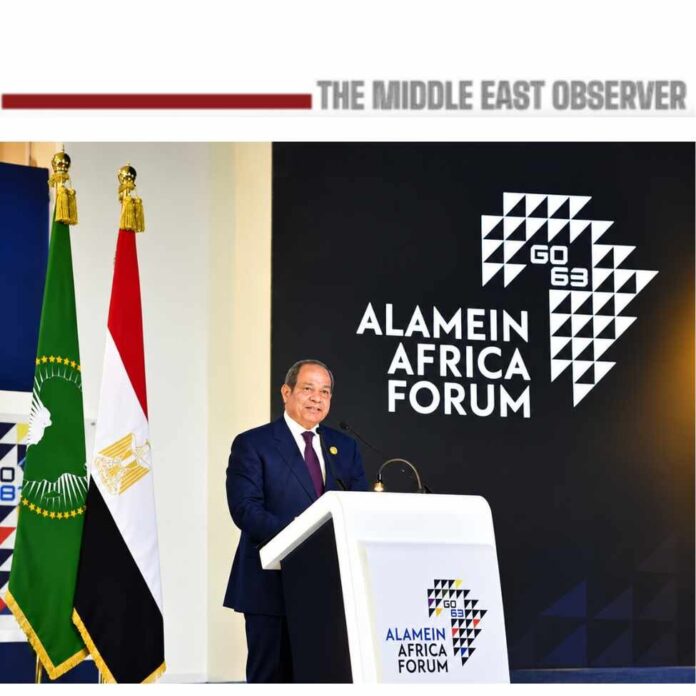
NEW ALAMEIN — African governments have set deadlines to establish a continental investment platform, develop a pipeline of bankable projects and create new financing mechanisms following the inaugural Alamein Africa Business Forum, an AU-backed gathering in Egypt aimed at converting the continent’s integration agenda into investment.
The October 2-4 meetings brought around 1,500 government officials, financiers, investors and business executives to New Alamein, alongside African heads of state and government or their representatives. The forum was organised with the African Union Commission, African Union Development Agency-NEPAD and African Export-Import Bank, and coincided with a summit of NEPAD’s five founding states and the African Union’s eighth Mid-Year Coordination Meeting.
The arrangement gave Alamein an unusual structure: business discussions were conducted alongside the continent’s political and development machinery, linking private capital, government policy and regional integration in a single three-day programme.
The forum is intended to become an institutionalised biennial African business platform hosted by Egypt, following an African Union decision earlier this year. Its inaugural agenda covered infrastructure, automotive manufacturing, critical minerals, healthcare, technology, startups, industrial production and project finance.
From Dialogue to Deadlines
The most substantive outcome came through the Alamein Declaration, adopted on October 3 by the five founding states of NEPAD — Egypt, Algeria, Nigeria, Senegal and South Africa.
Rather than limiting the meeting to broad integration commitments, the declaration attached dates and measurable objectives to the investment agenda.
An Alamein Investment Platform is to be established by the African Union summit in February 2027, bringing together private-capital pledges and investment commitments generated through the forum.
A portfolio of investment-ready flagship projects is also to be developed for private and blended financing, with future forums expected to track how many projects reach financial close.
The declaration further calls for a continental facility supporting small and medium-sized enterprises and African value chains by the AU’s 2027 mid-year meeting, alongside an objective to operationalise at least one African-led de-risking or blended-finance instrument within 18 months.
That gives Alamein a measurable test. Capital mobilised, projects prepared, financial closes achieved, companies supported and jobs created are intended to become indicators when the forum reconvenes in 2028.
First Commercial Results
The first edition produced some business agreements, although disclosed commercial commitments remain modest relative to the forum’s ambitions.
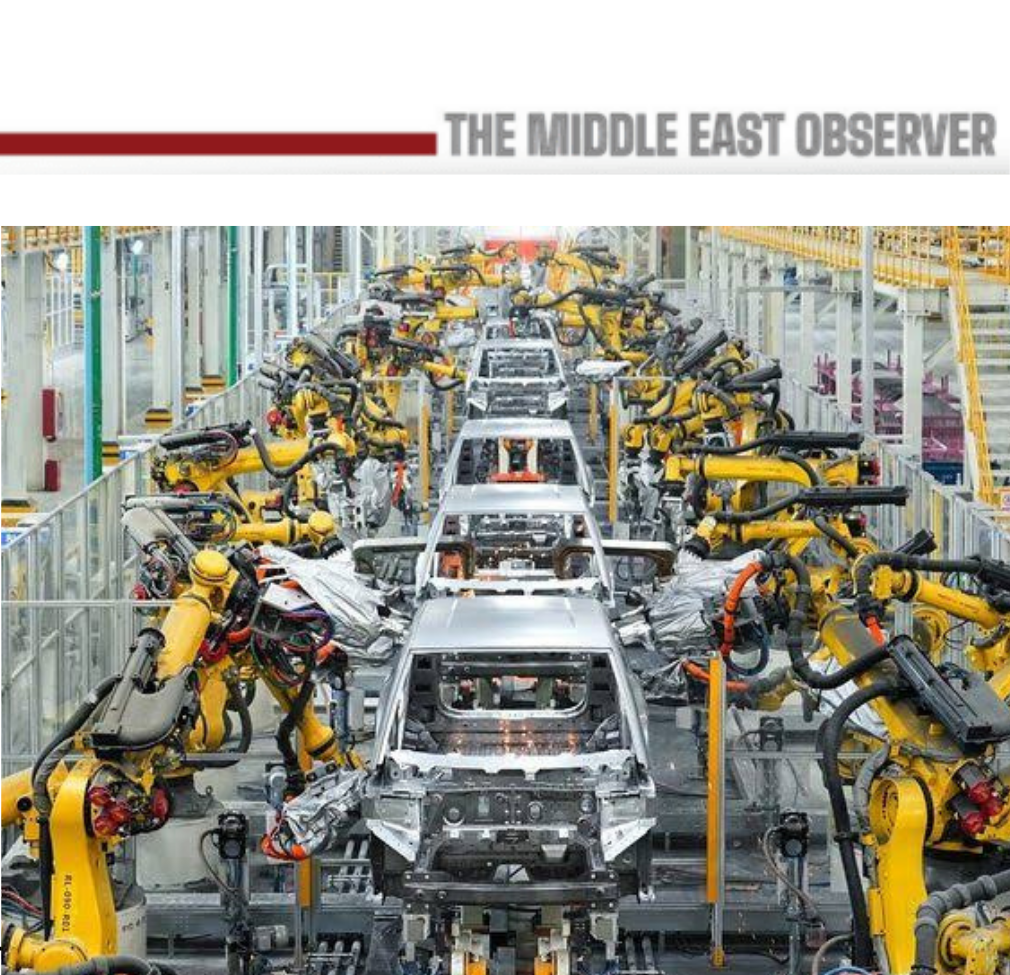
Egypt’s El Araby Group and South Africa’s Malben Engineering signed an agreement to establish a joint platform for manufacturing automotive components, aimed at linking Egyptian and South African production within African supply chains.
No investment value, production capacity or implementation timetable was disclosed.
Egypt and South Africa also launched a joint business council to connect companies and develop bilateral and cross-border projects, while the two governments agreed to establish a High Joint Committee covering economic, trade, investment and development cooperation.
Other agreements included four memoranda between Egypt and Equatorial Guinea covering agriculture, culture, tourism and aquaculture, and an agreement between the Egyptian Drug Authority and Chad’s Health Ministry covering pharmaceuticals, biological products and medical supplies.
The distinction between these outcomes is important: some create institutional channels for future business, while the El Araby-Malben agreement represents a more direct corporate manufacturing arrangement.
Dangote Raises the Investment Stakes
The forum also generated potentially more significant investment discussions that have yet to become binding transactions.
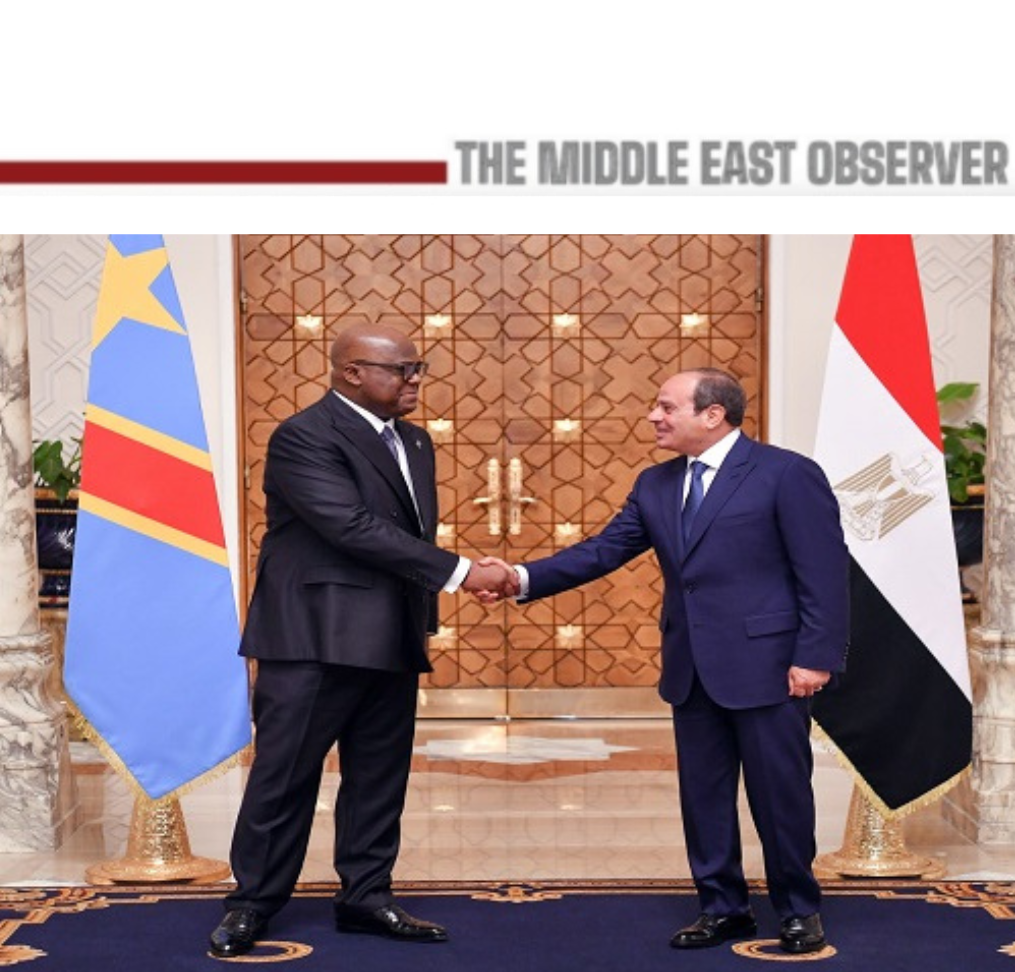
On October 3, President Abdel Fattah El-Sisi met Aliko Dangote, founder and president of Nigeria’s Dangote Group, on the sidelines of the forum. According to the Egyptian Presidency, the two examined potential cooperation in energy, fertilisers, chemicals and cement.
Dangote expressed interest in receiving Egyptian government support for prospective investments in the country, while El-Sisi said the state was prepared to provide the necessary facilitation.
The meeting elevated earlier contacts between Egyptian officials and Dangote Group to the presidential level and gave Alamein one of its clearest signals of prospective large-scale industrial interest.
Dangote Group is one of Africa’s largest industrial businesses, operating across cement, fertilisers, refining, petrochemicals and food production. That makes any eventual Egyptian investment potentially relevant not only to the domestic market, but also to Egypt’s role as a manufacturing and export base serving African, Middle Eastern and Mediterranean markets.
No specific project, investment value, site, production capacity or timetable was announced.
For now, the meeting therefore represents an investment signal rather than a concluded investment.
Finance Moves Closer to the Centre
Egyptian officials also held discussions with Afreximbank and Italy’s SACE over export finance, guarantees, risk mitigation and financing mechanisms that could support Egyptian companies expanding across African markets.
These talks may ultimately prove more important than individual memoranda if they develop into scalable financing facilities. But no large new committed facility or quantified financing package was disclosed during the forum.
That gap helps explain why the Alamein Declaration’s focus on de-risking and blended finance matters.
Africa has no shortage of announced projects. Its recurring constraint is moving projects from political endorsement and feasibility work to structures that commercial lenders and institutional investors can finance.
Why Alamein Was Created
President El-Sisi used his opening address to link economic development with political stability, functioning state institutions and stronger African productive capacity.
He said Africa’s private sector generates more than 70% of the continent’s GDP, but continues to conduct much of its business with companies outside Africa. He also pointed to information gaps that limit smaller companies’ awareness of opportunities in neighbouring markets.
Prime Minister Mostafa Madbouly developed the commercial argument further, saying Africa’s resources, young population and expanding market would deliver limited value unless converted into bankable projects, infrastructure and private-sector partnerships.
The challenge is visible in the trade data.
Despite decades of regional integration initiatives, intra-African merchandise trade remains only around 15% of the continent’s total trade by recent continental measures. The African Continental Free Trade Area is designed to change that balance, but implementation increasingly depends on transport links, financing, manufacturing capacity and cross-border investment rather than tariff reductions alone.
Egypt’s Trade Data Shows the Gap
Fresh CAPMAS figures released around the meetings showed Egypt’s trade with the other four NEPAD founding states reaching roughly $1.1bn in January-July 2026, compared with about $1bn a year earlier.
But the composition is more revealing than the headline figure.
Egyptian exports to Algeria, Nigeria, Senegal and South Africa slipped to $891mn from $901mn, while imports rose to $167mn from $114mn.
Investment flows moved more sharply. Investments from the four countries into Egypt rose to $190.7mn in FY 2024/25 from $39mn, while Egyptian investments in those markets climbed to $251mn from $143.3mn.
The latest figures therefore show investment flows between Egypt and the four states expanding far faster than merchandise trade, reinforcing Alamein’s emphasis on capital mobilisation and cross-border production.
From Political Coordination to Production
The business forum was deliberately tied to the wider African political agenda.
At the summit of NEPAD’s founding states, El-Sisi called for greater African capacity to finance and implement its own development priorities, while the resulting Alamein Declaration strengthened the emphasis on project preparation, private capital and measurable implementation under Agenda 2063.
The African Union’s Mid-Year Coordination Meeting on October 4 broadened the agenda to relations between the AU, member states and regional economic communities.
El-Sisi also argued for stronger African manufacturing and regional value chains, challenging the continent’s long-standing model of exporting raw materials while importing more expensive processed and manufactured products.
That places industrialisation at the intersection of Alamein’s political and commercial tracks.
Trade integration alone will not materially transform African economies unless it is accompanied by factories, logistics networks, power infrastructure, financing mechanisms and productive supply chains.
The Alamein Balance Sheet
The inaugural forum closes with stronger institutional than commercial results.
Its principal achievement is institutional: Alamein now has an AU-backed biennial framework connecting governments, businesses, project sponsors and African financial institutions.
Its second achievement is operational. The Alamein Declaration has placed deadlines behind an investment platform, bankable-project pipeline, SME and value-chain facility and African-led de-risking mechanism.
Its third is commercial, but still limited in scale. The El Araby-Malben automotive agreement provides an early example of the cross-border manufacturing partnerships the forum seeks to generate, while the Egypt-South Africa Business Council and bilateral agreements create channels for future transactions.
The El-Sisi-Dangote meeting gives the prospective pipeline greater weight, particularly across energy, fertilisers, chemicals and cement, but remains exploratory.
By 2028, the relevant measures will be the value of capital actually mobilised, the number of projects reaching financial close, factories and infrastructure built, companies entering new African markets and the scale of cross-border production generated.
Alamein has established the machinery. Its functionality & future growth will now depend on how much capital and how many projects move through it.
Related news:
Egypt and Rwanda Move to Build African AI Partnership
Egypt Retains Africa’s Second-Largest Economy Ranking as Reforms Strengthen Outlook