
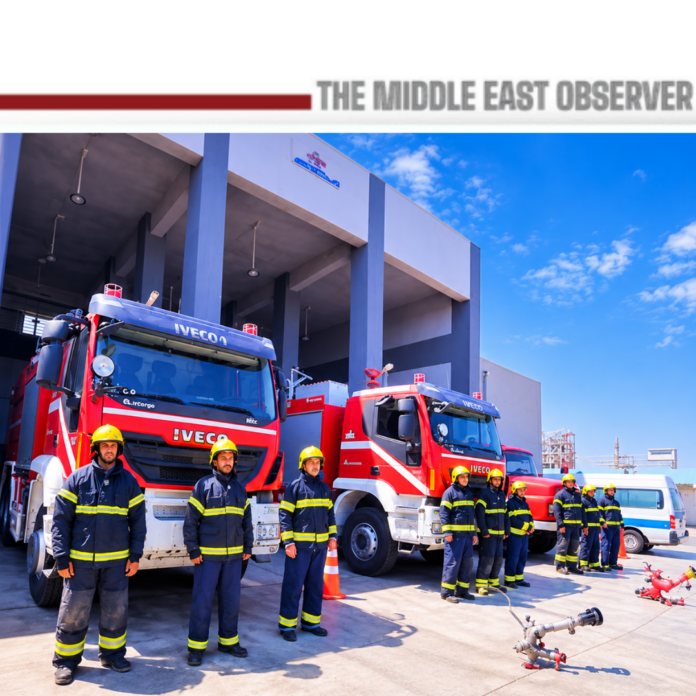
A domestic firefighting equipment testing center could help Egyptian suppliers compete in a market shaped by safety standards, although commercial gains will depend on product quality, certification and buyer demand.
CAIRO, Egypt — October 18, 2026: Egypt’s fire protection industry faces an opportunity to strengthen domestic manufacturing as safety requirements draw attention to the availability of tested and compliant equipment.
The country recorded 51,029 fire incidents in 2025, an 8.7% increase from 46,925 in 2024, according to the Central Agency for Public Mobilization and Statistics (CAPMAS). The figures underline the importance of prevention but do not directly measure equipment demand.
The issue was highlighted at FIREX Egypt 2026, held from October 12 to 14 at the Egypt International Exhibition Center in New Cairo alongside Egypt Energy, where suppliers showcased fire detection, alarm and suppression technologies.
Local Testing Supports Industrial Development
In June 2025, the General Organization for Export and Import Control inaugurated a firefighting equipment testing center in Badr City.
Its laboratories assess firefighting performance, equipment, pressure and chemical composition, providing domestic testing and conformity-assessment capabilities.
For Egyptian manufacturers, access to local testing could support product development and demonstrate compliance with relevant standards. However, testing alone does not guarantee international certification, export eligibility or commercial orders.
Opportunities Beyond Equipment Manufacturing
The industry also creates business opportunities in distribution, installation, inspection and maintenance, where recurring servicing requirements may generate ongoing revenue.
FIREX Egypt and Egypt Energy together were reported to have attracted 250 exhibitors from 25 countries, while organizers targeted more than 12,000 visitors across the two events. These figures do not establish confirmed equipment sales or investment commitments.
For manufacturers, competitiveness will depend on production costs, product reliability and the ability to meet buyers’ technical requirements. Partnerships with international suppliers could provide another route to developing local capabilities, although specific commercial agreements would need to be confirmed.
The clearest evidence of progress will be locally tested products reaching commercial buyers, followed by measurable gains in manufacturing sales and exports.
Related News:
Egypt’s Industrial Revolution: Harnessing Local Resources for Global Impact
Private Sector to Lead 83% of Egypt’s Manufacturing Investments
Read Also:
Egypt Unveils 332 Industrial Units for SMEs with 100% Financing and Digital Access
Egypt’s Industrial Expansion: $216.5 Million Investment in 3 New Free Zone Factories