


Panasonic Holdings will begin mass-producing electricity-generating window glass in April 2029, a year ahead of schedule, as Japan seeks to expand renewable energy generation beyond rooftops and establish a foothold in next-generation solar manufacturing dominated by Chinese competition.
The company said technological advances, rising demand and government support had accelerated production plans for its ENEFACE glass-integrated perovskite solar cells. Initial commercial sales began in September at its Moriguchi development facility in Osaka, with full-scale manufacturing scheduled for Nagahama, Shiga Prefecture.
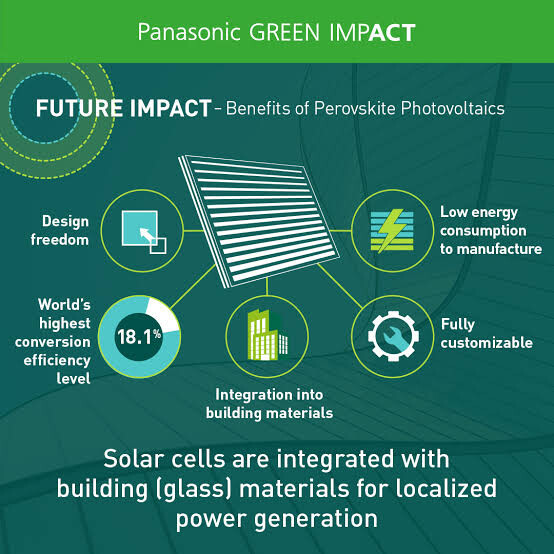
Unlike conventional solar panels, the technology integrates electricity generation into windows, facades and balcony barriers, opening new opportunities for commercial towers and densely populated cities with limited rooftop space. Panasonic can customise glass dimensions, transparency and design using proprietary inkjet coating and laser-processing technologies.
The company has achieved certified conversion efficiency of 18.1% in a small test module, although commercial-scale performance remains under development. Production glass will initially measure up to 1.8 by 1.2 metres. Panasonic aims to reduce prices to less than five times those of conventional architectural glass but has disclosed neither investment costs nor planned manufacturing capacity.
Early deployment began at Kobe’s Kamomeria port facility in September, providing practical installation experience ahead of industrial-scale production.
The project supports Japan’s ambition to deploy approximately 20 gigawatts of perovskite solar capacity by 2040, strengthening domestic energy technology and reducing dependence on imported fuels. Japan is seeking to compete in advanced photovoltaics as China maintains its dominance of conventional solar manufacturing.
For property developers, solar-generating glass could turn underused building surfaces into productive energy assets, potentially reducing electricity purchases and supporting building decarbonisation.
Related news:
Japan Targets 400MW in Tunisia as Renewable Energy Investment Accelerates
Egypt Accelerates Renewable Energy Target to 45% by 2028, Backed by EGP 160bn Grid Investment
Read also:
Tech Leaders Agree to Police Themselves — But White House AI Accord Leaves Enforcement Undefined
Starshield Dispute Exposes Ukraine’s Military Dependence as Peace Prospects Fade