

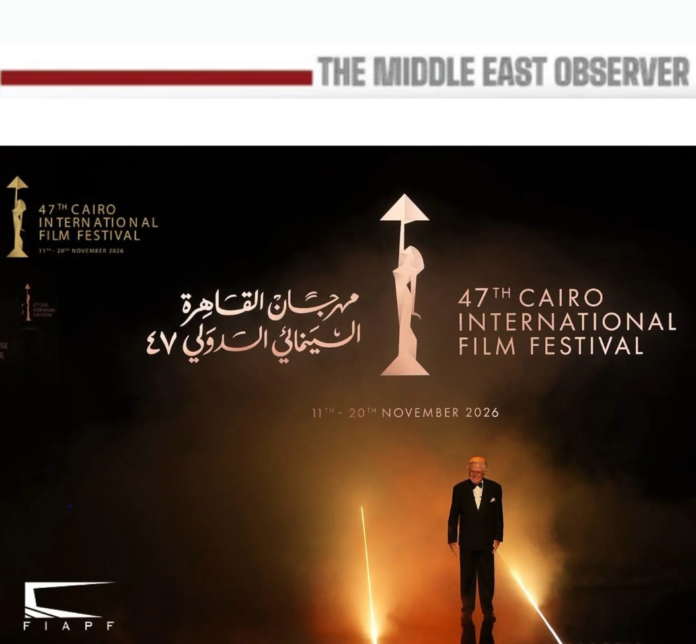
Golden Jubilee edition brings together films from 64 countries, announces new support for Egypt’s film industry and celebrates five decades of cinematic achievement.
The Cairo International Film Festival (CIFF) opened its 47th edition at the Cairo Opera House on November 11, bringing together 145 films from 64 countries as it marks 50 years since its establishment in 1976. Running until November 20, the festival combines international screenings and competitions with initiatives to restore Egypt’s cinematic heritage, support emerging filmmakers and strengthen the country’s film industry.
The opening ceremony was officially inaugurated by Abdel Aziz Konsowa, Minister of Higher Education and Scientific Research and Acting Minister of Culture, in the presence of Industry Minister Khaled Hashem, Cairo Governor Ibrahim Saber, festival president Hussein Fahmy, artistic director Mohamed Tarek and prominent Egyptian and international cinema figures.
Presented by television host Jasmine Taha Zaki, the ceremony began with Egypt’s national anthem, followed by addresses from Konsowa and Fahmy reflecting on the festival’s five-decade history and the future of Egyptian cinema.
Konsowa described the Golden Jubilee as a milestone in Egypt’s cultural history, highlighting the festival’s development from an initiative established in 1976 into an international platform connecting filmmakers, artists and audiences.
In his opening address, he said that although generations, technologies and filmmaking practices had changed over the past 50 years, Cairo had remained a meeting place for creative talent from around the world.
The minister emphasised cinema’s role in documenting social change, preserving national identity and promoting cultural dialogue, describing it as an important element of Egypt’s cultural influence.
He reaffirmed the Ministry of Culture’s commitment to supporting emerging filmmakers, expanding professional training opportunities and preserving the country’s cinematic heritage.
Konsowa also announced plans for a joint meeting involving the Ministries of Culture and Industry and the Chamber of Cinema Industry to discuss projects aimed at strengthening Egypt’s film sector.
The proposed meeting is intended to explore opportunities for developing the industry, although no specific investment commitments or implementation timetable were announced.
The festival’s international programme includes competitions, special screenings, restored Egyptian classics and professional development activities, bringing together filmmakers and audiences from different cinematic traditions.
Konsowa highlighted the second edition of the New Wave programme, which provides training and professional exposure for emerging filmmakers, and praised efforts to expand screenings across Cairo to reach wider audiences.
Festival president Hussein Fahmy used his address to reflect on cinema’s relationship with collective memory and artistic freedom, drawing inspiration from the celebrated 1969 Egyptian film Something of Fear (Shay’ Min Al-Khawf), directed by Hussein Kamal and adapted from a novel by Tharwat Abaza.
Fahmy referred to the film’s hawais, or water-control gate, and the character Fouada, who defies an attempt to deprive her community of water by opening the gate.
He presented the scene as a metaphor for the power of artistic expression, suggesting that stories and ideas, like flowing water, cannot be permanently restricted or erased.
The film’s continued resonance more than five decades after its release, he said, demonstrates Egyptian cinema’s ability to preserve human experiences and connect successive generations.
Fahmy also clarified why the festival is celebrating its 50th anniversary while holding its 47th edition, explaining that three editions had been cancelled under exceptional circumstances.
The festival was founded through an initiative by the Egyptian Society of Film Writers and Critics, headed by journalist and film critic Kamal El-Mallakh, and held its inaugural edition on August 16, 1976.
Since then, it has developed into an established international film event, hosting prominent filmmakers and performers while providing a platform for Egyptian and Arab productions.
Preserving the country’s cinematic heritage emerged as one of the ceremony’s principal themes.
Fahmy announced that seven Egyptian films had been restored for the current edition through cooperation with the Holding Company for Cultural and Cinematic Investment and the Film Restoration Centre at Media Production City.
The restored titles include Al-Mutamarridoun (The Rebels), Shafiqa Al-Qibtiya, Ma’budat Al-Jamahir (Idol of the Masses), Al-Boustagi (The Postman), Miramar, Al-Aydi Al-Na’ima (The Soft Hands) and Tarid Al-Firdaws.
The programme includes colourised versions of Idol of the Masses and The Soft Hands, while translated versions have been prepared to facilitate screenings for international festival guests.
An audiovisual presentation during the ceremony showcased examples of the restoration work and the technical improvements achieved.
Fahmy said the broader initiative aims to restore approximately 1,400 Egyptian films, a long-term undertaking intended to protect important works from deterioration and preserve the country’s cinematic history for future generations.
The ceremony also included a commemorative film honouring artists and filmmakers who have died, recognising their contributions to Egyptian and Arab cinema.
Fahmy expressed appreciation to the government institutions supporting the festival, including the Ministries of Culture, Foreign Affairs, Interior, Tourism and Antiquities, and Youth and Sports, alongside the Egyptian Tourism Promotion Authority and Cairo Governorate.
He also thanked the Cairo Opera House, headed by Reda El-Wakil, the festival’s sponsors and partners, and composer Youssef Abbas for contributing an original musical composition to the event.
Alongside the anniversary celebrations, the festival is expanding programmes designed to develop emerging filmmaking talent.
The second edition of New Wave attracted more than 850 applications from across Egypt. Following the selection process, 100 participants representing more than 23 Egyptian governorates were chosen, alongside Arab participants residing in the country.
Supported by the Drosos Foundation and the British Council, the programme offers access to festival screenings, specialised workshops and professional activities.
Organisers are also covering travel and accommodation expenses for selected participants, enabling young filmmakers from outside Cairo to participate in training and networking opportunities.
The initiative aims to expand professional development beyond the capital and introduce emerging talent to international filmmaking practices and industry networks.
The festival is also presenting Cairo Kids, a programme designed to introduce younger audiences to cinema through contemporary productions and classic films.
The programme seeks to develop children’s engagement with cinematic storytelling while connecting them with works that have shaped the country’s film heritage.
The opening ceremony also introduced the juries responsible for evaluating films across the festival’s competitions.
The International Competition jury is chaired by Moroccan-French director Nabil Ayouch. Its members include Syrian-German filmmaker Amir Fakhr El-Din, Egyptian director and screenwriter Amr Arafa, Chinese actress Fan Bingbing, Belgian director Laura Wandel, Egyptian cinematographer Mostafa Fahmy and British sound designer Paul Davies.
Other competition juries bring together filmmakers, critics, editors and cinematographers from Egypt, the Arab world, Europe and Latin America.
The Short Film Competition jury includes Iraqi director Hassan Hadi, Dutch filmmaker Stephanie Kolk and Egyptian director Mariam Abou Ouf.
The Critics’ Week jury comprises Polish film critic Adriana Bród, Tunisian-French cinematographer Frida Marzouk and Egyptian editor Heba Othman.
The Arab Cinema Horizons Competition jury includes Palestinian director Leila Abbas, Romanian cinematographer Tudor Vladimir Panduru and Egyptian filmmaker Amr Salama.
The International Federation of Film Critics (FIPRESCI) jury consists of Brazilian critic Marcelo Janot, Egyptian critic Arwa Tageldin and German critic Susan Gietl.
The Best Documentary Film jury includes German-Egyptian filmmaker Viola Shafik, Polish festival programmer Karol Piekarczyk and Syrian editor Qutaiba Barhamji.
The Best Arab Feature Film jury comprises Italian film critic and Locarno Film Festival artistic director Giona A. Nazzaro, Egyptian director Amal Ramsis and Jordanian editor and producer Laith Majali.
The ceremony also featured honorary awards recognising distinguished contributions to Egyptian, Arab and international cinema.
Moroccan filmmaker Nabil Ayouch received the Golden Pyramid Award for Lifetime Achievement in recognition of his cinematic career and artistic contributions.
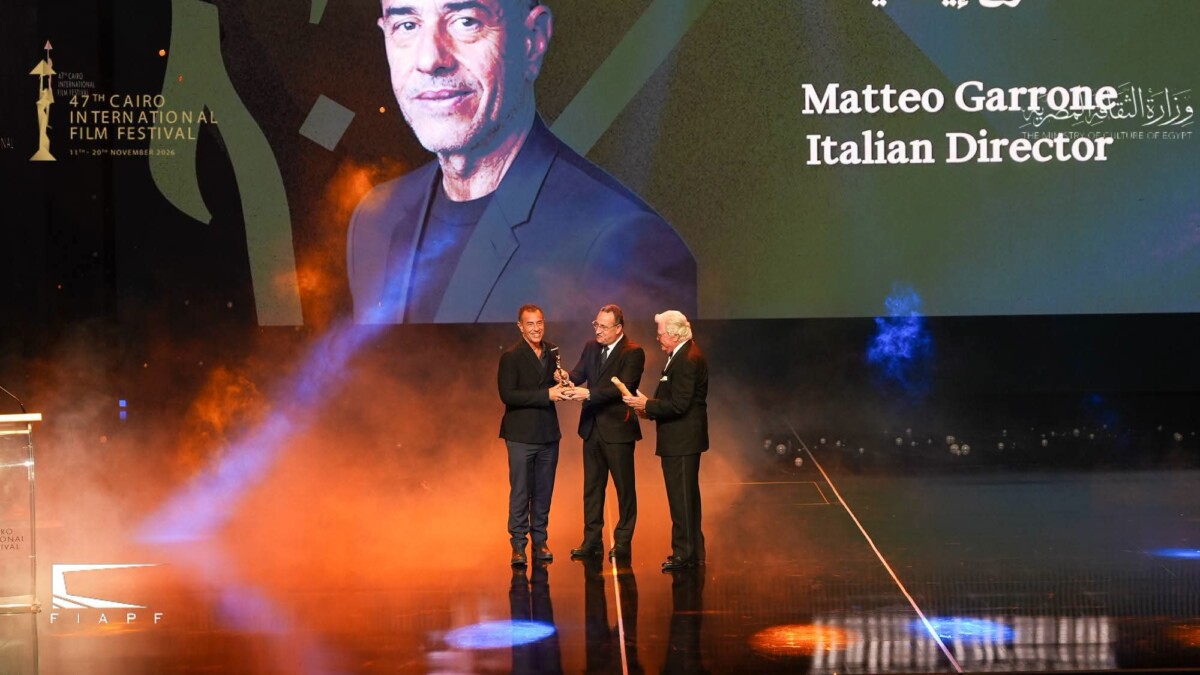
Italian director Matteo Garrone was also honoured with the Golden Pyramid Award for Lifetime Achievement, following a special presentation highlighting key milestones in his career.
Egyptian actor Asser Yassin received the Faten Hamama Award for Excellence, recognising his versatility and contributions to contemporary Egyptian cinema.
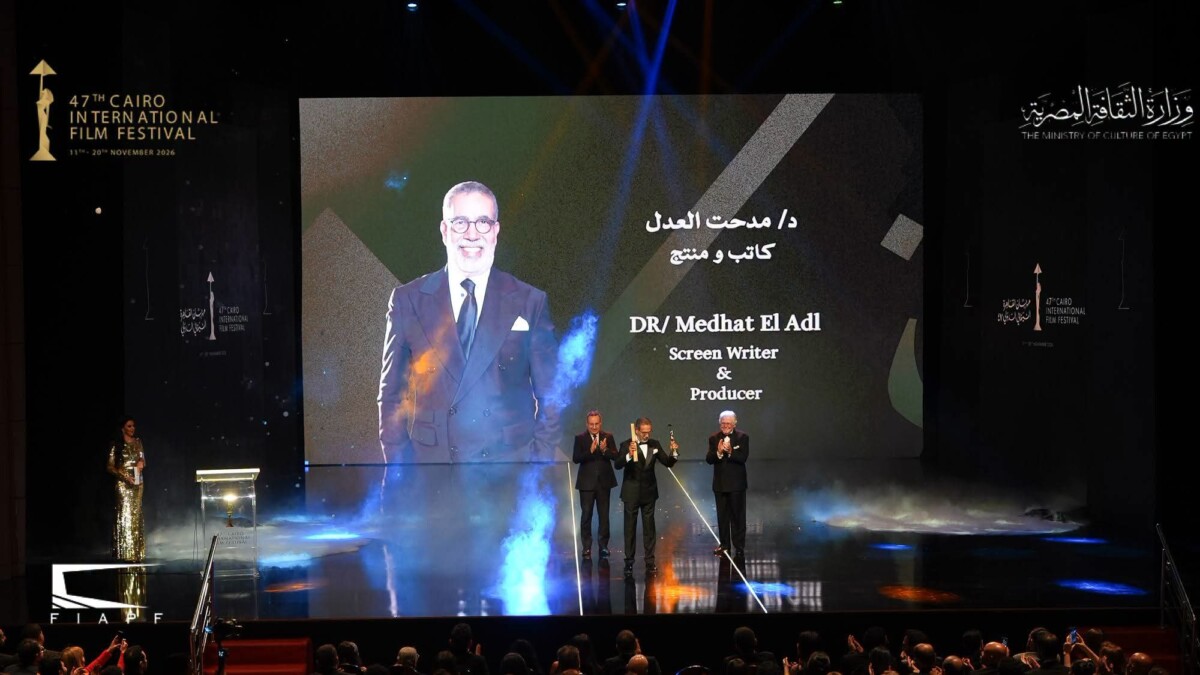
Writer and cultural figure Medhat El-Adl was presented with the Golden Pyramid Award for Lifetime Achievement for his contributions to Egypt’s artistic and cultural industries.
Veteran Egyptian actor Farouk Falawkas was also honoured with the Golden Pyramid Award for Lifetime Achievement in recognition of his long career and memorable performances.
His appearance provided one of the ceremony’s most personal moments. After accepting the award and addressing the audience, he was accompanied from the stage by his daughter following an invitation from Fahmy.
The opening evening concluded with a screening of the American film I Play Rocky, directed by two-time Academy Award winner Peter Farrelly.
The film recounts the struggle of a young Sylvester Stallone to secure the leading role in Rocky, the 1976 boxing drama he wrote, despite pressure to cast an established Hollywood star.
Its selection carries particular historical significance because both the original Rocky and the Cairo International Film Festival made their debuts in 1976.
The screening launched the festival’s programme of international competitions, special presentations, restored classics and professional activities, which continues through November 20.
With its combination of international cinema, heritage restoration, professional training and recognition of established filmmakers, the 47th edition connects the festival’s five-decade history with efforts to develop Egypt’s contemporary film industry.
As screenings and industry activities continue across Cairo, the festival offers Egyptian and Arab filmmakers opportunities to present their work alongside international productions and build professional connections beyond their domestic markets.
Related News:
1. Cairo Film Festival’s 50th Anniversary Puts Egypt’s Cinematic Heritage in Focus
2. Cairo Film Festival Expands Global Reach from Cannes to China
