

Nigeria’s $48bn refining giant prepares for its market debut after attracting nearly 3.8mn applicants, as it seeks to finance a $14.3bn expansion.
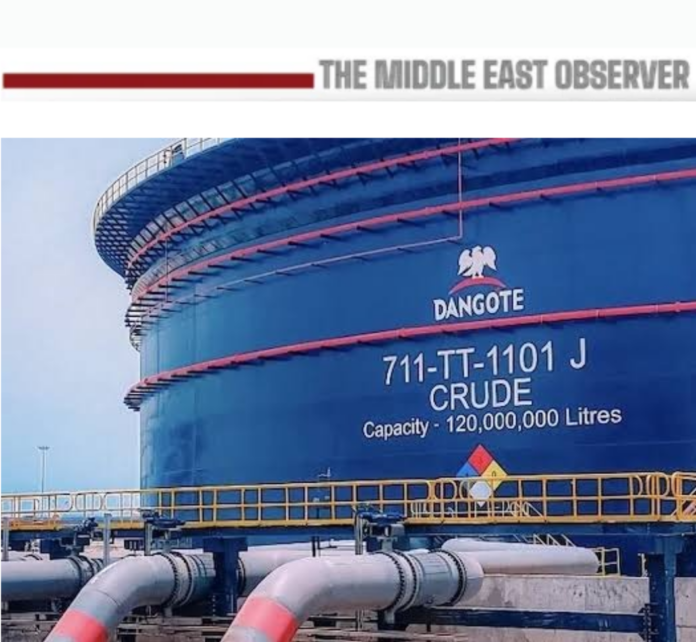
Nigeria’s Dangote Petroleum Refinery is set to make its stock market debut on December 1 following regulatory clearance for a $2bn initial public offering, Africa’s largest to date, as the company seeks to finance a $14.3bn expansion that would double its refining capacity by 2029.
Devakumar Edwin, Dangote Group vice-president for oil and gas, confirmed the planned listing on Wednesday after Nigeria’s Securities and Exchange Commission approved the share allocation on Monday.
The offering attracted applications worth ₦5.85tn, equivalent to 2.72 times the original target. Strong demand prompted an expansion of the reported allotment by 26.7 per cent to approximately 5.2bn shares, priced at ₦525 each, implying an equity valuation of around $48bn.
At that valuation, the refinery could increase the capitalization of Nigeria’s stock market by about 41 per cent and account for nearly 30 percent of its enlarged value, transforming the exchange’s investment profile while increasing its exposure to a single company.
Marketed by founder Aliko Dangote as the “people’s IPO”, the offering attracted some 3.2mn applicants seeking 100 shares or fewer. Yet the newly issued shares represent only about 4 percent of the company’s equity. Dangote is expected to retain approximately 83.5 percent ownership and state-owned NNPC Ltd about 6.5 per cent, according to a transaction adviser cited by Reuters.
The contrast between broad retail participation and concentrated ownership raises questions over secondary-market liquidity and minority shareholder influence.
Financing Africa’s industrial expansion
Built at an estimated cost of $20bn, the Lagos refinery has increased its processing capacity from 650,000 to 700,000 barrels a day, with management targeting 1.4mn by 2029.
The IPO’s gross proceeds cover about 14 percent of the projected expansion expenditure, leaving the company dependent on internally generated cash and other sources of financing.
The listing comes amid a sharp financial turnaround. Unaudited revenue more than doubled to $22.48bn in the first nine months of 2026, while net profit reached $4.73bn, reversing a $117.2mn loss a year earlier.
Higher processing volumes and stronger refining margins, supported partly by disruptions to Middle Eastern energy supplies, contributed to the improvement. Sustaining those earnings as international supply conditions normalise will be critical to financing the expansion.
Reversing Africa’s petroleum trade imbalance
According to the US Energy Information Administration, Nigeria’s seaborne petroleum product exports rose from 46,000 barrels a day in 2023 to 350,000 in the second quarter of 2026, while imports fell by approximately two-thirds.
Exports to Europe reached 130,000 barrels a day, while shipments to other African markets approached 120,000.
The shift reverses a longstanding imbalance in which one of Africa’s largest crude producers depended heavily on overseas refining capacity.
Domestic energy security nevertheless remains a challenge. Nigeria’s petrol imports rose by 47 per cent in October despite a 12 percent increase in Dangote’s domestic petrol deliveries, underscoring the difficulty of balancing national fuel requirements with international commercial opportunities.
Mobilising capital across African borders
Kenya’s approval in October of a global depositary receipt structure for the offering provides a potential template for African industrial companies seeking to raise capital beyond their domestic markets.
For Egypt and the Gulf, Dangote’s expansion presents both opportunities and competitive pressures. The refinery has already sourced crude oil from the UAE, while its growing international presence could reshape refined petroleum markets and create opportunities in industrial engineering, logistics and cross-border investment.
Dangote’s listing demonstrates the potential of African capital markets to mobilise billions of dollars for industrial development. The greater test will be whether that capital can support competitive production, sustained shareholder returns and a larger African share of the value generated by the continent’s natural resources.
Related news:
- Egypt Plans Africa Investment Platform to Expand Corporate Reach
- Egypt Advances $4.5bn Refinery Push to Cut Fuel Imports
Read Also: