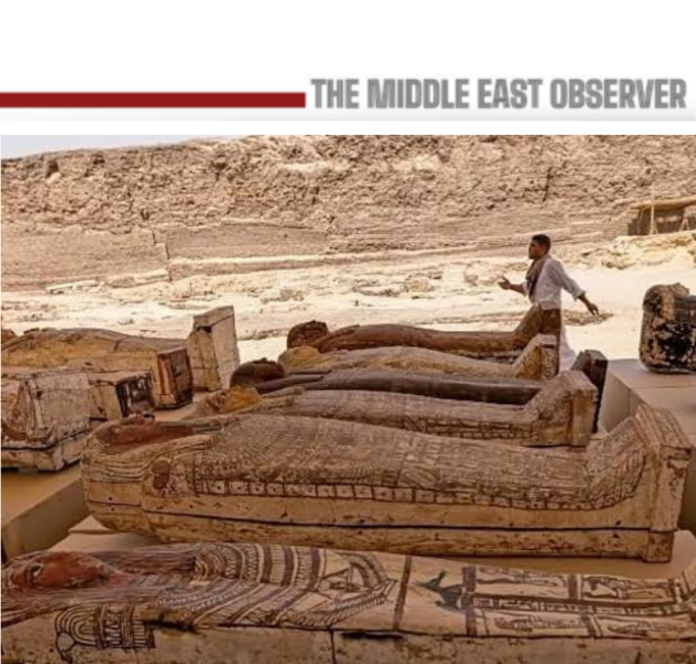
Egyptian archaeologists have uncovered two Early Dynastic tombs dating to c. 3100–2686 BC at Gabal El-Teir, a limestone escarpment overlooking the Nile in Minya Governorate, in a discovery offering rare evidence of the transition from Predynastic burial traditions to the increasingly sophisticated funerary architecture of Egypt’s earliest dynasties.
The excavation also revealed burials from the Predynastic and Late Periods, demonstrating that the cemetery remained in use for several millennia. The findings provide archaeologists with an exceptional opportunity to trace the evolution of burial customs and tomb construction from Egypt’s earliest settled communities through the emergence of the unified Egyptian state.
Researchers said one of the Early Dynastic tombs features an inward-sloping architectural design that reflects an important stage in the development of Egyptian funerary construction, while preserved stone-working marks and structural elements offer valuable insights into early quarrying and building techniques. Preliminary studies indicate similarities with royal tomb architecture at Abydos, suggesting that sophisticated construction methods and funerary traditions were already taking shape during Egypt’s First Dynasty.
The Ministry of Tourism and Antiquities said the discovery deepens understanding of Egypt’s cultural heritage and the evolution of its earliest state institutions. It also reinforces the country’s strategy of expanding archaeological research and heritage tourism across Upper Egypt, while advancing international scholarship on one of the world’s earliest and most influential civilisations.
Related news:
New Roman Tomb Discovery in Minya Reveals Ancient Burial Rituals
Tomb of King Thutmose II ranked among world’s top 10 archaeological discoveries of 2025
Read also:
How Hollywood and Luxury Brands Created a Win-Win Business Model