Egypt’s latest archaeological exhibition in Hong Kong has strengthened the case for turning the country’s travelling antiquities programme into a structured global tourism and revenue platform.
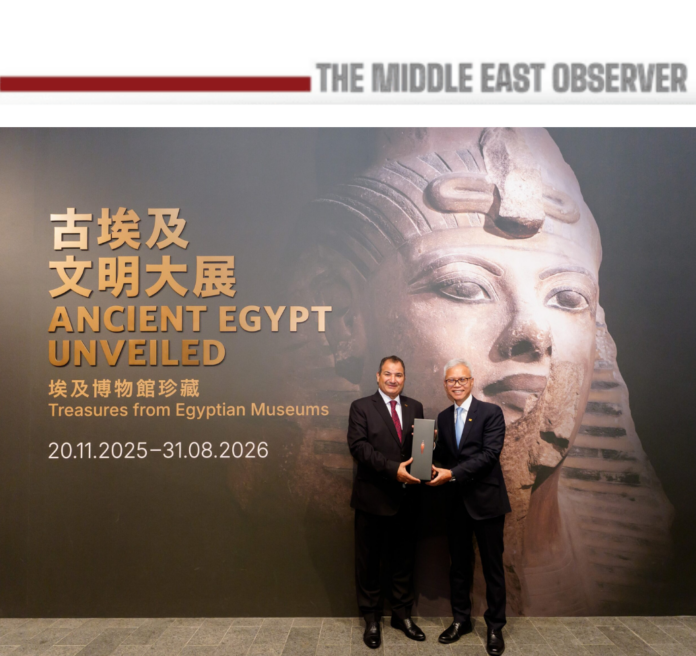
The “Ancient Egypt Reveals Its Secrets: Treasures from Egyptian Museums” exhibition concluded at the Hong Kong Palace Museum on August 31, 2026, after more than nine months from its opening on November 18, 2025. Featuring 250 antiquities drawn from Egyptian museum collections and archaeological discoveries, including material from Saqqara, it attracted more than 600,000 visitors.
The result is significant not simply as another demonstration of international fascination with ancient Egypt. Combined with recent exhibitions in Shanghai, Paris, Sydney, Rome and other major cities, Hong Kong shows that Egypt already possesses the foundations of something commercially larger: a global exhibition economy capable of generating income abroad, economic activity for host cities and new tourism demand for Egypt itself.
Shanghai provides the clearest evidence.
The On Top of the Pyramid: The Civilization of Ancient Egypt exhibition at the Shanghai Museum attracted about 2.77mn visitors. Egypt received a disclosed $5mn antiquities loan fee, while ticket and cultural-product revenues generated by the exhibition reportedly exceeded Rmb760mn.
More striking was the wider economic impact. Shanghai authorities estimated that consumption associated with the exhibition exceeded Rmb35bn, reflecting spending extending well beyond museum tickets into retail, hospitality, transport and other visitor activity.
Paris demonstrated another model. The 2019 Tutankhamun exhibition attracted more than 1.4mn visitors, while Egypt’s reported return reached approximately $9.5mn, reflecting an arrangement that included a guaranteed payment and additional income linked to attendance.
Sydney adds further weight to the case. Ramses & the Gold of the Pharaohs drew more than 508,000 visitors, while an economic-impact assessment estimated that it contributed roughly A$57mn in direct and indirect economic activity to New South Wales.
The comparison is important because the economics favour both sides.
Egypt earns lending income, international exposure and access to prospective tourists. Host cities gain museum admissions, merchandise sales, hotel demand, restaurant spending, transport activity and cultural prestige. Shanghai and Sydney demonstrate that, in successful cases, the economic value accruing to the host economy can be far larger than the fee paid to Egypt.
That makes the proposition easier to market internationally.
Egypt does not need to persuade prospective hosts solely on the cultural importance of its civilisation. The commercial statistics increasingly make the argument themselves. A major Egyptian exhibition can be presented to museums, city authorities and tourism bodies as a proven visitor attraction capable of generating substantial local economic activity.
The larger opportunity for Egypt, however, lies in converting those audiences into future arrivals.
A visitor who has paid to see Tutankhamun, Ramses or discoveries from Saqqara is already a qualified tourism prospect. Unlike conventional advertising, an exhibition identifies consumers who have demonstrated both interest in Egypt and a willingness to spend money engaging with its history.
Future exhibitions should therefore be designed around conversion as well as attendance.
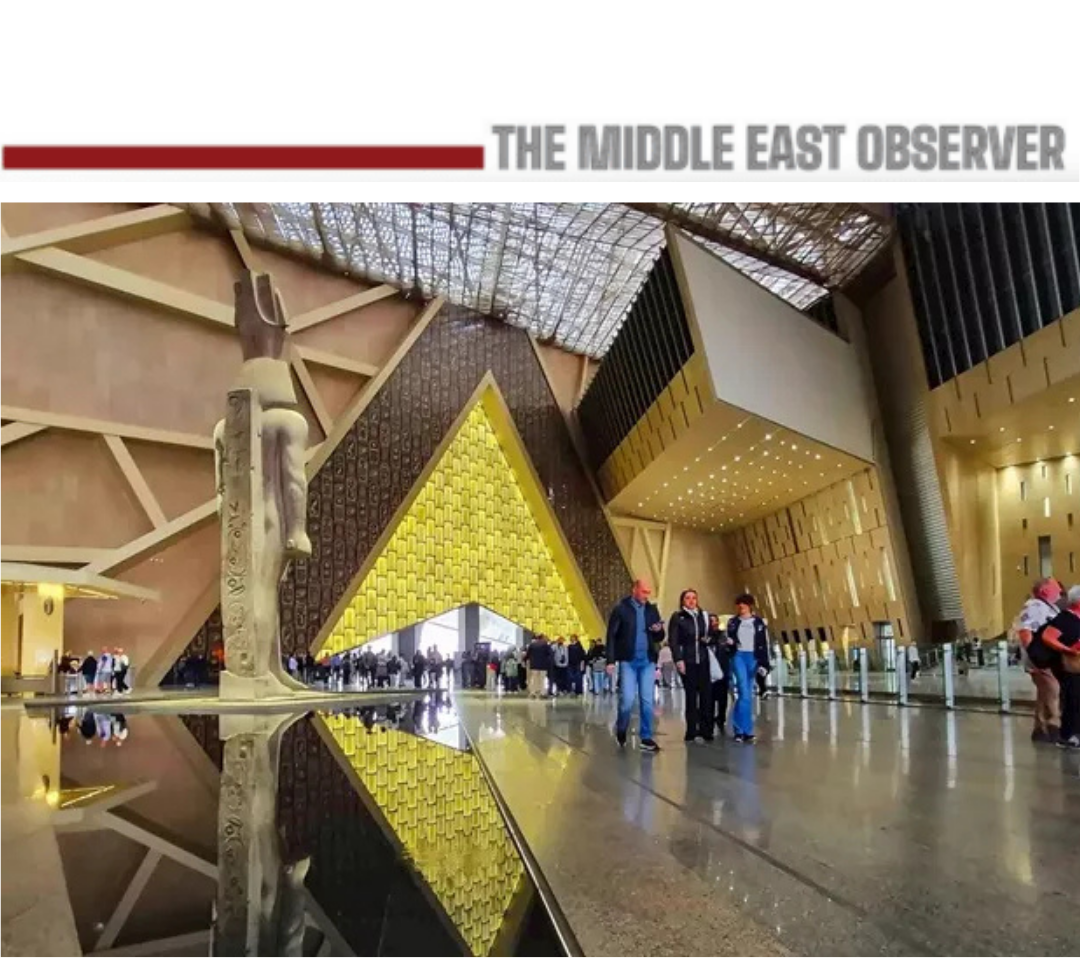
Objects connected with Tutankhamun should lead audiences towards the Grand Egyptian Museum and Valley of the Kings. Saqqara discoveries should market the archaeological landscape around Greater Cairo. Luxor collections can direct visitors towards Upper Egypt, Nile cruises and Aswan. Greco-Roman material can open a route into Alexandria, while wider exhibition programming can introduce Egypt’s Red Sea resorts and contemporary tourism offering.
QR-linked itineraries, airline partnerships, bookable packages, tour-operator promotions and trackable digital campaigns would allow Egypt to measure how many exhibition visitors progress from cultural interest to searches, enquiries, bookings and ultimately travel.
That would turn what is currently difficult-to-measure destination exposure into a quantifiable tourism acquisition channel.
The geographical scope can also widen substantially.
China has already established the scale available in East Asia. India offers perhaps the clearest next major opportunity, with more than 30mn annual outbound departures and a rapidly expanding long-haul travel market. Delhi and Mumbai could support exhibitions directly linked to Cairo, Luxor, Aswan and Red Sea packages.
South Korea offers a sophisticated, high-spending outbound market. Singapore could serve as a gateway into Southeast Asia. Canada provides substantial long-haul tourism expenditure, while Brazil, through São Paulo, could establish a stronger Egyptian cultural and tourism presence across Latin America.
The commercial terms should evolve alongside that expansion.
Future agreements could combine guaranteed Supreme Council of Antiquities fees with attendance-linked payments, merchandise and intellectual-property royalties, sponsorship participation and minimum tourism-marketing commitments from host institutions. Egypt would thereby capture a greater share of the commercial value generated around its cultural assets.
Supply is unlikely to be the fundamental constraint.
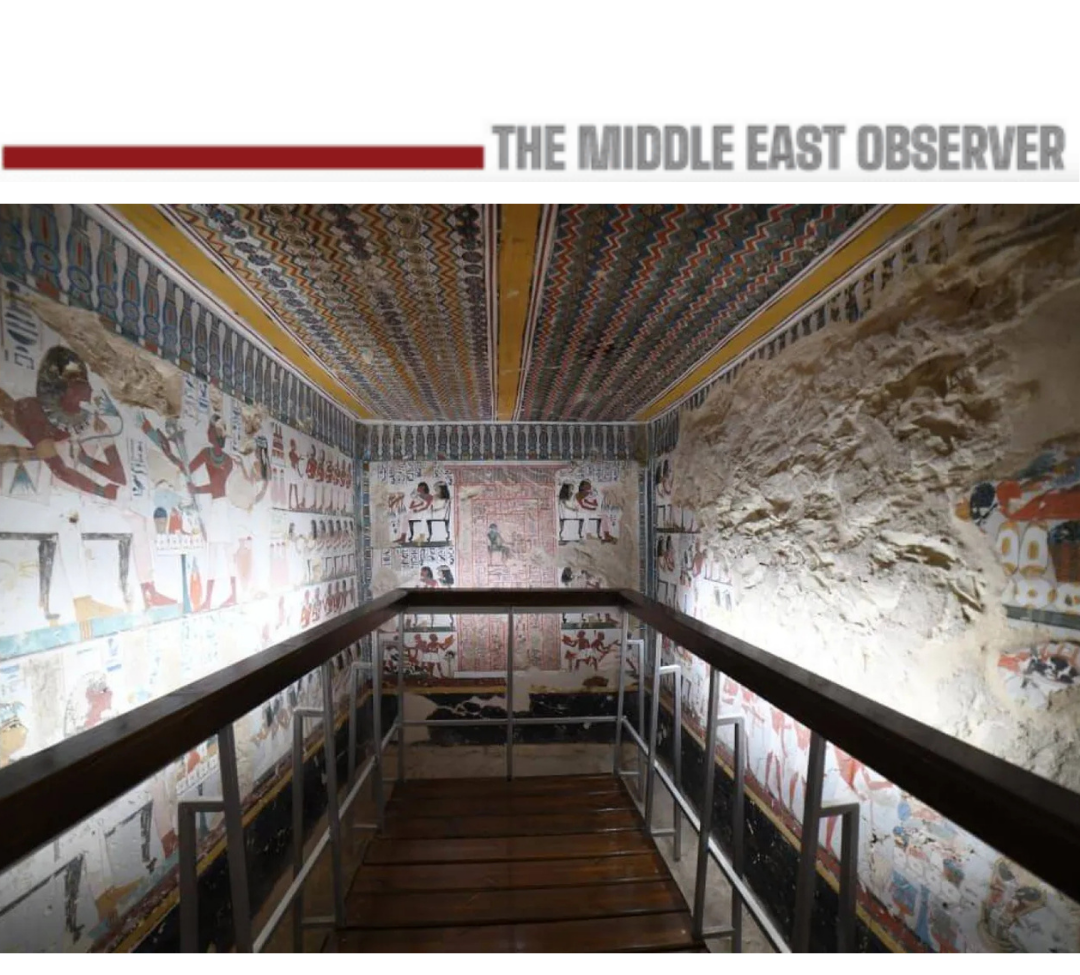
Egypt’s archaeological wealth extends far beyond the best-known objects permanently displayed in Cairo and Luxor. Collections across national and regional museums, stored archaeological material and continuing discoveries provide considerable scope to develop differentiated exhibitions without repeatedly circulating the same flagship objects.
Programmes could be built around Saqqara discoveries, royal Egypt, ancient daily life, women in ancient Egypt, religion and the afterlife, Greco-Roman Egypt, Alexandria, conservation science or archaeological discoveries themselves.
Any programme would necessarily remain subject to conservation requirements, security considerations and Egypt’s heritage regulations. But the depth of the country’s archaeological inventory means the cultural product already exists.
So does the demand.
And critically, the available evidence from Shanghai and Sydney shows that host cities have a financial incentive to participate. That changes the nature of the proposition. Egypt is not simply asking foreign museums to pay for access to antiquities; it can offer cities an event with demonstrated capacity to attract hundreds of thousands — and in some cases millions — of visitors while stimulating wider urban consumption.
Egypt is targeting 30mn annual tourists by 2030. Achieving that ambition will require not only additional hotel capacity and aviation links, but a more sophisticated system for opening new source markets and converting international interest into travel.
Travelling antiquities can form part of that system.
Hong Kong’s 600,000 visitors are therefore more than a cultural statistic. They represent a large audience already engaged with Egypt. Shanghai and Sydney add the missing commercial proof: the host market can profit substantially from that engagement as well.
That makes the global proposition unusually straightforward. The product is established. International demand is proven. Host-city economics are demonstrable. Egypt possesses an archaeological inventory deep enough to sustain multiple themes, while its tourism industry provides the final monetisation channel.
The economic structure is already largely complete. What Egypt now requires is a coordinated global plan — selecting markets, designing exhibition portfolios, standardising commercial terms and linking every overseas visitor directly into the Egyptian tourism pipeline.
Done at scale, travelling treasures would cease to be occasional cultural showcases. They could become a permanent global exhibition economy — earning abroad, marketing Egypt internationally and ultimately bringing a larger share of that value home.
Related news:
How Khufu’s Pyramid Could Hold the Key to Buildings That Last a Millennium
Saqqara Tomb Reveals Official at Heart of Egypt’s Pyramid-Age State
Read also:
Egypt Moves to Extend InstaPay Across Africa’s Payments Network
African Fermentation Research Targets Low-Cost Vitamin B2 Fortification