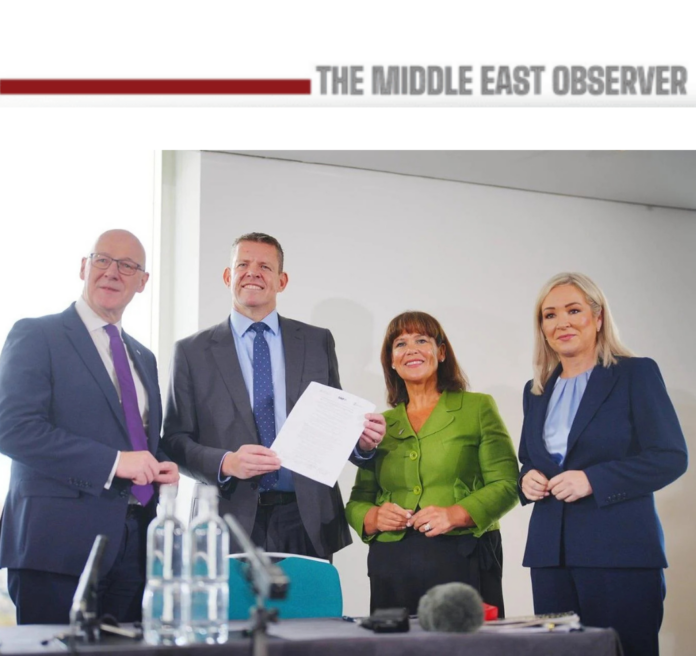
Nationalist parties governing Britain’s three devolved nations signed a joint declaration on September 14 demanding clearer democratic routes to constitutional change, marking the most coordinated challenge to the UK’s territorial settlement since Brexit.
Scottish First Minister John Swinney, Welsh First Minister Rhun ap Iorwerth and Northern Ireland First Minister Michelle O’Neill joined Sinn Féin president Mary Lou McDonald in Cardiff, where the SNP, Plaid Cymru and Sinn Féin called on Westminster to “prepare, plan and facilitate constitutional change.”
The agreement links three distinct political objectives — Scottish independence, Welsh independence and Irish reunification — while arguing that sustained democratic support for constitutional change should not be indefinitely blocked by the UK government.
Its immediate legal effect is limited. The declaration was signed in the leaders’ party capacities rather than formally on behalf of their devolved governments and creates no referendum powers or binding timetable.
The constitutional routes also remain sharply different. Northern Ireland already has a mechanism for a border poll under the Good Friday Agreement. Scotland requires Westminster cooperation for another lawful independence referendum, while Wales remains further from an immediate vote.
The summit nevertheless gives the three movements a more organised political structure, allowing them to reinforce one another’s argument that Westminster should establish clearer mechanisms for determining constitutional consent.
The meeting followed an unusual intervention from US President Donald Trump, who said during his visit to Ireland that he would “love to see” Irish reunification and later reiterated that view, while declining to endorse Scottish independence. His comments carry political weight but do not alter the legal process governing Northern Ireland’s status.
For investors, Cardiff is not yet a break-up event. No common referendum timetable exists and support for constitutional change differs substantially across the three nations. The material economic risk would emerge only if referendum pathways became credible, forcing negotiations over the division of public liabilities, fiscal transfers, taxation, market access and energy assets — alongside currency and future EU membership in Scotland’s case.
Britain’s post-Brexit constitutional challenge has therefore entered a new phase. Nationalist parties leading the three devolved administrations are beginning to coordinate pressure on Westminster for clearer democratic routes to constitutional change, turning previously separate campaigns into a broader test of how the UK manages consent within the Union.
Related news:
Andy Burnham begins UK premiership with activist agenda and immediate cost-of-living push
Hormuz Shock: UK Food Supply Chains Strained by Energy Disruption
Read also:
Saudi Startups Raise $65mn as Capital Shifts to Business Infrastructure
Trump Welcomes Chinese Carmakers, but Market Access remains a puzzle