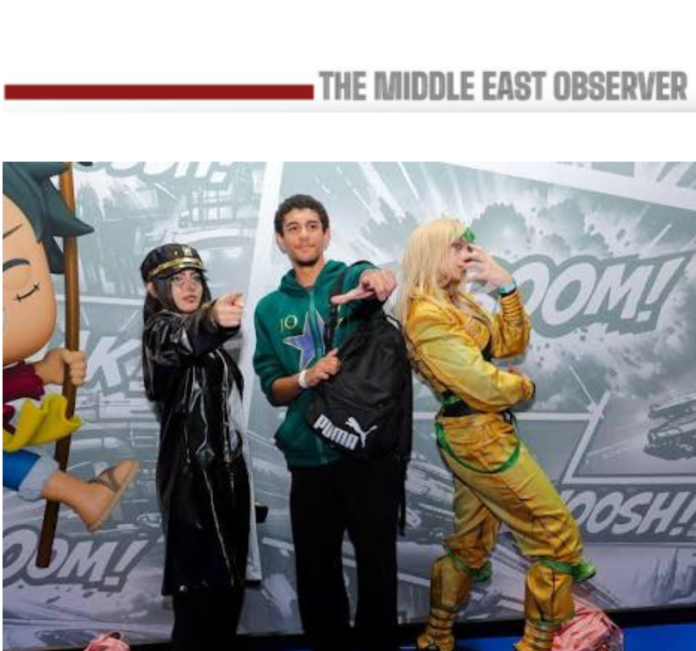
A sold-out Middle East Film & Comic Con has become the latest measure of a regional consumer market expanding beyond film and television into gaming, anime, cosplay, collectibles and digital content.
Held at ADNEC Centre from September 11–13, the event sold out its main ticket categories. Standard admission started at AED160 ($44), while premium packages reached AED5,880. Celebrity access created another revenue layer, with a John Cena autograph or photograph priced at AED900 in addition to admission.
Organisers had expected more than 46,000 visitors, over 500 brands and more than 80 entertainment acts. Final 2026 attendance has yet to be published.
Cena was joined by Simu Liu, One Piece stars Mackenyu and Jacob Romero Gibson, Spider-Verse voice actor Shameik Moore, Pom Klementieff, Charithra Chandran and Arden Cho.
But the greater economic significance lay away from the celebrity stage.
Independent artists sold original artwork, manga and merchandise; publishers showcased locally developed intellectual property; retailers traded comics, figures and collectibles; while Pokémon, One Piece and Magic: The Gathering tournaments, cosplay competitions and anime experiences extended spending across ticketing, sponsorship, retail, gaming and licensed content.
That marks the distinction between a large fandom and an emerging creative industry.
Anime and gaming demonstrate how the model works. A successful character or story can generate revenue through streaming, publishing, video games, merchandise, trading cards, live events and licensing — allowing a single intellectual property asset to be monetised repeatedly across different markets.
The underlying regional audience is already substantial. Niko Partners expects video game spending across Saudi Arabia, the UAE and Egypt to reach about $3bn by 2030, from a market that counted roughly 72mn gamers across the three countries in 2024.
Governments are increasingly treating this demand as an economic opportunity.
The UAE aims to raise cultural and creative industries to 5% of GDP by 2031. Saudi Arabia’s National Gaming and Esports Strategy targets around SAR50bn ($13.3bn) in GDP contribution and more than 39,000 jobs by 2030, alongside the development of globally competitive games.
Yet the central commercial weakness remains ownership.
Most franchises driving regional fandom — from Marvel and One Piece to major international video games and anime — remain foreign-owned. Local economies can capture spending through events, hotels, retail and production, but licensing, royalties and franchise value largely remain with overseas rights holders.
The strategic opportunity is therefore not merely to expand consumption, but to convert regional talent and audiences into locally owned intellectual property.
That will require stronger animation and game studios, copyright protection, Arabic localisation, financing, distribution, licensing expertise and merchandising networks capable of carrying Middle Eastern characters and stories across multiple formats.
Abu Dhabi Comic Con shows that the audience already exists and is willing to spend.
Related news:
NAZA Raises the Evidence — Will International Law Act?
Ghana’s Fantasy Coffins Turn Funeral Craft Into a Global Art Business
Read also:
Egypt Mobile Wallet Transactions Near EGP 3tn in First Half
Egypt High-Speed Rail Moves Into Commissioning With October Tests