Egypt’s established polyethylene export markets could provide opportunities as global buyers diversify suppliers, but spare capacity and competitive delivery costs will determine whether producers can benefit.
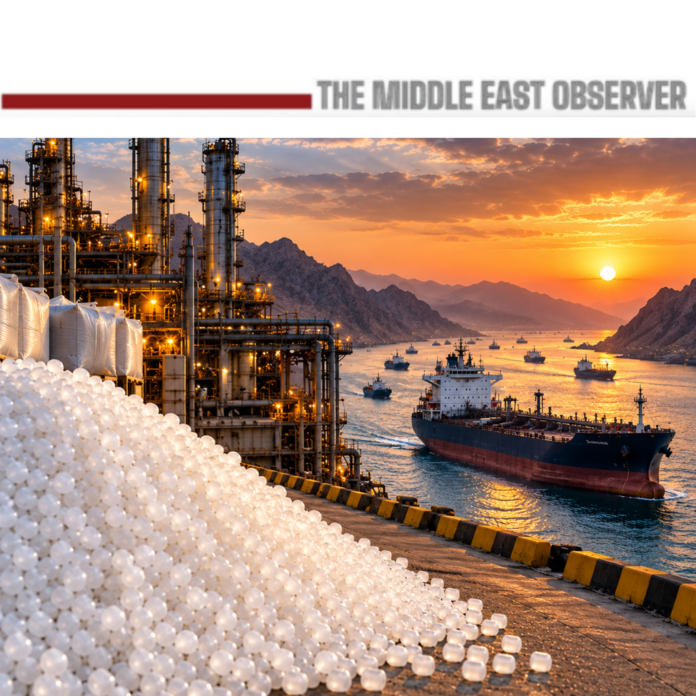
CAIRO, Egypt — October 18, 2026: Shipping disruptions through the Strait of Hormuz are prompting chemical buyers to reconsider their supply chains, creating a potential opening for Egyptian polyethylene exporters seeking additional international business.
Trade data compiled by International Trader Publications put the Middle East’s share of global polyethylene exports at approximately 43% in 2025. Gulf producers retain substantial advantages in feedstock costs and production scale, making a lasting shift away from the region unlikely even as buyers diversify suppliers.
Egypt’s Existing Export Base
The Egyptian Ethylene and Derivatives Company (ETHYDCO) produced 305,000 tonnes of polyethylene in 2025, according to figures presented at its March 2026 general assembly.
ETHYDCO reported a 5.4% increase in export sales, supported by expansion in Latin America, particularly Brazil, alongside markets in Africa, Europe and Turkey. The growth predates the current disruption and does not establish that buyers are shifting orders to Egypt because of the Hormuz crisis.
The company’s annual output also does not reveal how much additional material it could supply. Available inventory, spare capacity and existing contractual commitments would determine its ability to respond to new demand.
Export Profitability Faces a Test
Egyptian producers must compete on delivered costs, including feedstocks, production and transport. Higher global prices may improve export opportunities, but rising input costs could offset those gains.
Increasing overseas shipments must also be balanced against domestic industrial demand, particularly if diverting polyethylene from local manufacturers raises their costs.
A longer-term opportunity lies in specialized, higher-value products. In March, Egypt’s petroleum minister called for a five-year ETHYDCO expansion plan emphasizing value-added production and international competitiveness.
If shipping disruptions persist, buyers may pursue longer-term contracts with alternative suppliers. Even after trade routes normalize, some could maintain diversified purchasing arrangements to reduce future risks.
The next signal for Egypt’s polyethylene industry will be whether established exporters secure additional orders at profitable prices, rather than merely benefiting from temporary increases in global prices.
Related News :
1. From Imports to Innovation: Egypt’s Petrochemical Sector on the Rise
2. Egypt Plans First Dedicated Sodium Cyanide Plant of Its Kind in the Middle East
Read Also :
1. SIDPEC Sets Benchmark with 13.8 Million Safe Working Hours in 2024
2. Private Sector to Lead 83% of Egypt’s Manufacturing Investments