Israel is undergoing a fundamental transformation in its national security doctrine that could fundamentally redefine its national identity, democratic institutions, and global alliances, according to a provocative new analysis by a leading former defense official.
In an article published on October 12, 2026, Tamir Hayman—former head of Israeli military intelligence and current executive director of the Institute for National Security Studies (INSS)—argues that an uncodified, un-debated new doctrine is actively shaping Israeli government decisions. Hayman presents a stark interpretation of these underlying assumptions to expose their implications and spark critical public scrutiny.
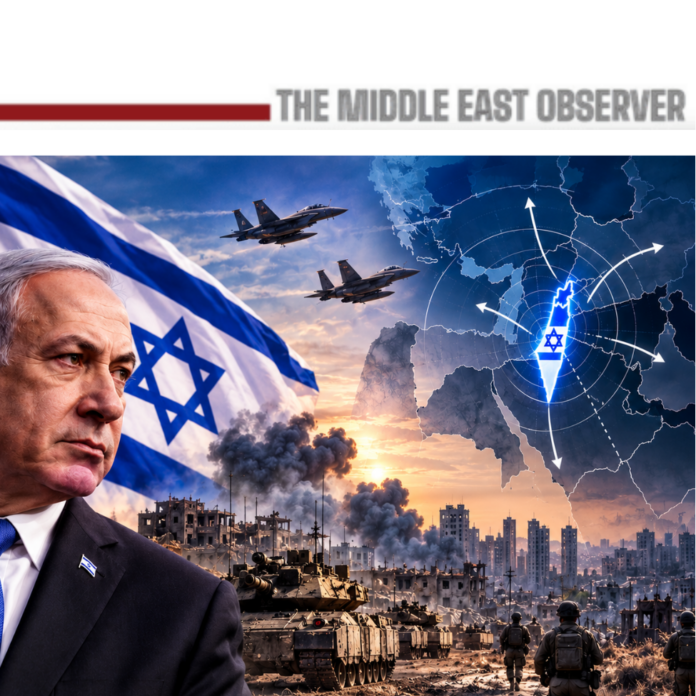
According to Hayman’s analysis, the emerging doctrine is defined by five core, disruptive pillars:
- Jewish Identity Above Democracy: The preservation of Israel’s Jewish national and religious character is increasingly taking precedence over liberal-democratic principles. This shift marks a transition from a traditional Jewish-democratic state toward a more ethnonationalist, security-driven interpretation of Zionism where minority rights and political equality are secondary to national objectives.
- Tactical, Not Strategic Peace: Diplomatic agreements with Arab countries are no longer viewed as lasting strategic objectives. Instead, they are treated as temporary, transactional arrangements serving immediate Israeli interests.
- Fragility of Arab States: Arab nations are viewed not as cohesive nation-states, but as fragile collections of tribes and ethnic groups. Under this doctrine, the fragmentation of these neighboring states is considered strategically advantageous to Israel.
- A State of Permanent Warfare: Military confrontation is normalized as a necessary and permanent condition of national security. The doctrine strongly favors preventive wars over waiting for external threats to materialize.
- Reduced Dependence on Washington: The United States is increasingly viewed through this doctrinal lens as a declining power. Proponents argue that alignment with American political values and strategic restrictions could ultimately undermine Israel’s independent objectives.
While this sweeping doctrine has never been formally adopted or publicly debated in the Knesset, Hayman warns that its assumptions are already quietly guiding the nation’s highest policy decisions, signalling a profound shift in the geopolitical landscape of the Middle East.
The article reflects on the nature of Israeli political and social thinking over recent decades, portraying the historical evolution of regional instability from the Labor Party’s pursuit of a two-state solution in the 1990s to the subsequent failures of successive governments to translate peace initiatives into a lasting settlement.
It examines how Israel’s education system reinforces territorial nationalism, particularly through representations of a “Greater Israel” that portray expanded territorial boundaries as central to the state’s national identity.
Israel’s ongoing territorial policy and the severe ethnic cleansing practices reflect a destabilizing strategic framework. Such a state mentality operates on the illusion of absolute superpower status. Extensive military campaigns in recent years have resulted in substantial civilian casualties, deep-rooted occupations, and heightened regional volatility. This aggressive pursuit of regional dominance—characterized by targeted assassinations and protracted warfare—is a path towards a strategic dead end. This warning aligns with the provocative analysis put forward by Tamir Hayman, who suggests that without a fundamental shift in vision, a long-term decline may be inevitable.
This debate unfolds against a backdrop of established international law, where Arab states hold sovereign status and UN-recognized borders. For many observers, current political trends reveal an expansionist ambition that overlooks the external dependencies that made its past successes possible. While the United States has accommodated these ambitions for decades, Washington now risks entangling itself in a predicament from which it may struggle to emerge. Ironically, Israel increasingly views its primary benefactor as a declining power. This raises a critical, defining question: if Washington were to withhold its military and diplomatic support, could Israel truly stand on its own?
Related news:
A Common Arab Strategic Vision in an Era of Regional Blocs
The Middle East’s Agricultural Transformation Creates New Investment Frontiers
Read also:
The Green Uprising: Smashing the Zionist Grip on European Politics
Global Powers Seek Containment as Iran Confrontation Risks Regional War