For decades, agriculture in the Middle East was viewed primarily through the lens of scarcity. Limited rainfall, expanding deserts, and chronic water shortages appeared to constrain the region’s ability to produce sufficient food for a rapidly growing population. Today, however, that narrative is changing. Across the Middle East, governments and private investors are deploying unprecedented capital into advanced farming technologies, water infrastructure, and supply-chain modernization, transforming agriculture from a strategic necessity into one of the region’s most promising long-term investment opportunities.
Driven by population growth, geopolitical uncertainty, climate adaptation, and ambitious national food security strategies, the Middle East is increasingly redefining how food is produced, traded, and financed. While natural resource constraints remain significant, innovation is enabling countries to extract greater value from every hectare of productive land and every cubic metre of water.
Understanding Agricultural Land Across the Region
According to the World Bank, based on the Food and Agriculture Organization (FAO) methodology, agricultural land includes three categories: arable land, permanent crops, and permanent pasture used for livestock grazing. As a result, countries with extensive rangelands may rank highly despite having relatively limited cultivated farmland, making it important to distinguish between total agricultural land and intensively farmed cropland.
Measured by total agricultural surface area, Saudi Arabia possesses the region’s largest agricultural footprint, although much of this consists of rangeland supporting camel, sheep and goat production. Commercial crop cultivation is concentrated in irrigated regions such as Al-Qassim, Al-Jouf, Hail and Tabuk, where advanced irrigation systems support cereals, vegetables and forage production.
Iran follows with one of the Middle East’s most diversified agricultural sectors, producing wheat, barley, fruits, pistachios, saffron and livestock across a broad range of climatic zones. Yemen and Syria also maintain extensive agricultural landscapes, although years of conflict and economic disruption have significantly reduced productivity. Iraq continues to rely on the historic Tigris-Euphrates basin, where irrigation modernization and salinity management remain critical to restoring output.
Egypt presents perhaps the region’s most distinctive agricultural geography. Although agricultural land represents only a small proportion of the country’s total territory, nearly all cultivation is concentrated within the fertile Nile Valley and Delta. Large-scale reclamation initiatives—including the Toshka Project, the New Delta Project, and the Future of Egypt initiative—are gradually expanding productive farmland beyond the traditional Nile corridor, reinforcing Egypt’s long-term food security strategy.
Land Availability Does Not Equal Agricultural Productivity
Examining agricultural land as a proportion of national territory provides a different perspective. Saudi Arabia records one of the region’s highest shares largely because of its extensive grazing lands, while Syria, Yemen and Lebanon devote comparatively large portions of their territory to agriculture. Iran maintains a balanced mix of irrigated farming, rain-fed agriculture and livestock production, whereas Egypt demonstrates how intensive irrigation, multiple cropping seasons and modern farming techniques can generate high agricultural output from a relatively small land base.
The comparison illustrates a broader reality: competitive advantage in Middle Eastern agriculture increasingly depends less on land availability than on water efficiency, technology adoption and supply-chain integration.
Where Investment Capital Is Flowing
Controlled-Environment Agriculture
Protected agriculture has become one of the fastest-growing investment segments across the Gulf Cooperation Council (GCC). Greenhouses, hydroponics and vertical farms allow year-round production while reducing water consumption by up to 90–95% compared with conventional open-field farming. Leading operators such as Pure Harvest Smart Farms and Bustanica have demonstrated the commercial viability of climate-controlled food production, attracting institutional investors seeking scalable solutions to regional food security challenges.
Demand is simultaneously expanding for supporting technologies, including LED lighting, climate-control systems, automated nutrient management, robotics and modular farming infrastructure.
Water Technologies
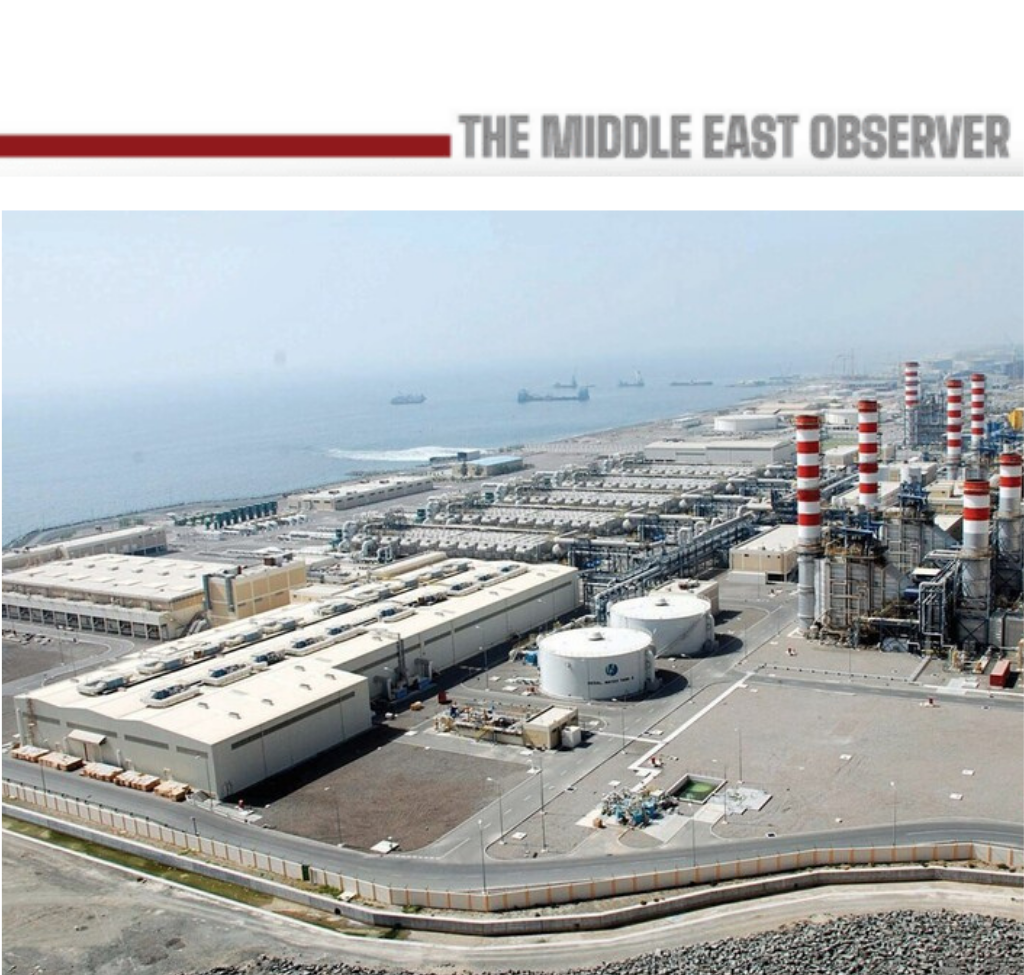
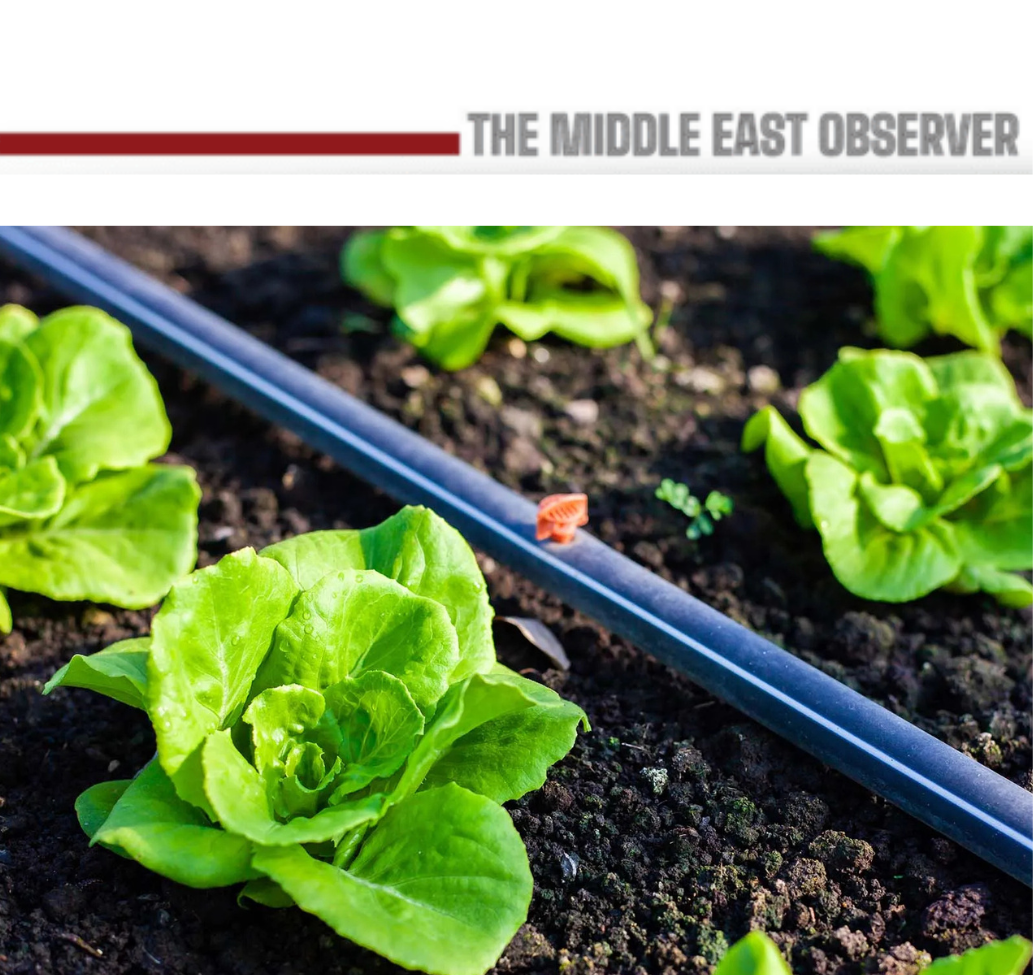
Water scarcity remains the defining challenge for Middle Eastern agriculture. Since irrigation accounts for the overwhelming majority of freshwater consumption across the region, governments are investing heavily in precision irrigation, wastewater reuse, desalination and digital water management.
Artificial intelligence, satellite monitoring, Internet of Things (IoT) sensors and drone-based crop surveillance increasingly enable farmers to optimise irrigation schedules, detect plant stress earlier and improve resource efficiency while reducing production costs.
Digital Agriculture
Agriculture is also becoming a data-driven industry. Digital platforms connecting farmers directly with wholesalers, processors and retailers are improving price transparency while reducing post-harvest losses. Artificial intelligence is increasingly supporting yield forecasting, pest detection, disease monitoring and predictive weather analytics, enabling producers to make more informed operational decisions.
At the same time, blockchain-enabled traceability systems and digital certification platforms are strengthening export competitiveness by helping producers meet increasingly stringent international food safety and sustainability standards.
Food Processing and Cold-Chain Infrastructure
Investment opportunities increasingly extend beyond primary production. Processing facilities, refrigerated logistics, packaging centres and export terminals are becoming essential components of regional food security strategies. As governments seek to reduce food imports while increasing value-added agricultural exports, demand for integrated cold-chain infrastructure continues to accelerate.
Why the Middle East Is Emerging as a Strategic Agricultural Investment Hub
Several structural trends are underpinning long-term investment growth.
First, food security has become a national strategic priority. Governments across the GCC and North Africa increasingly view domestic agricultural production as an essential component of economic resilience, prompting sustained investment in controlled-environment farming, water infrastructure and agricultural research.
Second, sovereign wealth funds and private investors are allocating greater capital to AgTech companies specialising in precision farming, biotechnology, automation and climate-resilient production systems. Egypt’s emergence as one of Africa’s leading AgTech ecosystems further strengthens its role as a gateway between African agricultural innovation and Middle Eastern capital.
Third, regional producers are expanding their export capabilities by improving quality standards, adopting internationally recognised certification systems and strengthening logistics networks. These developments are enabling Middle Eastern agricultural products to compete more effectively in European, Asian and African markets.
Finally, governments are accelerating investment in agricultural biotechnology, including drought-tolerant crop varieties, salt-resistant seeds and advanced breeding technologies designed to improve productivity under increasingly challenging climatic conditions.
A Sector Undergoing Structural Transformation
Agriculture in the Middle East is no longer defined solely by climatic constraints. Instead, it is increasingly characterised by technological innovation, strategic investment and regional cooperation. Geography remains a significant challenge, but it is also driving the adoption of solutions that position the region among the world’s leading laboratories for water-efficient agriculture.
For investors, technology providers and agribusiness companies, the region offers opportunities extending well beyond farming itself. From artificial intelligence and biotechnology to desalination, logistics and food processing, Middle Eastern agriculture is evolving into a diversified investment ecosystem where innovation, rather than land availability alone, will determine future competitiveness.