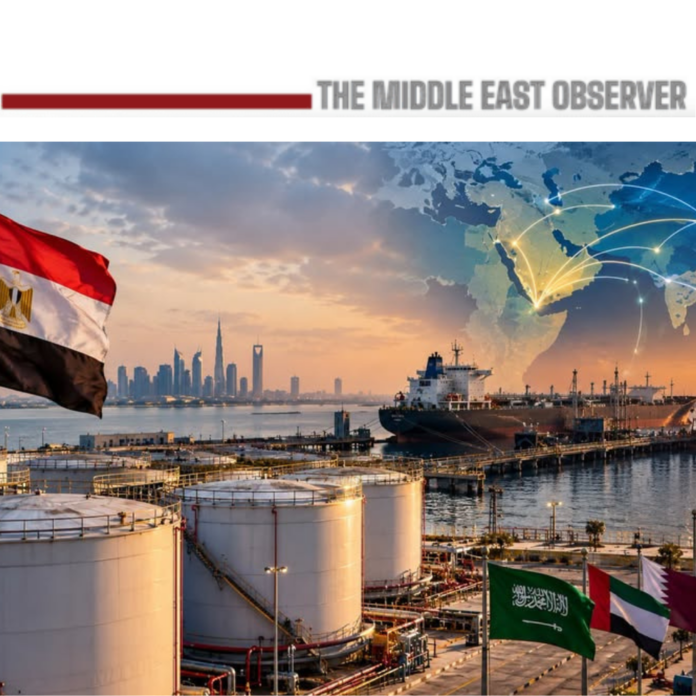
Growing Gulf and Asian interest in storage and re-export facilities is accelerating Egypt’s efforts to turn the Suez Canal corridor into an international logistics and industrial hub, as Regional shipping disruptions drive businesses to diversify global supply chains.
Foreign Minister Badr Abdelatty said on 15 October that Gulf and Asian countries were increasingly seeking facilities in Egypt to store, redistribute and re-export goods, particularly petrochemicals. He identified the Suez Canal Economic Zone (SCZone) as a potential base for international distribution, but disclosed neither the prospective investors’ identities nor their financial commitments.
The interest follows disruptions to shipping through the Strait of Hormuz and the Red Sea linked to the Iran & Houthi conflict. These have increased the commercial value of regional inventories and alternative distribution networks, potentially allowing Egypt to capture more income from international trade beyond Suez Canal transit fees towards establishing a Regional Hub for storage & redistribution.
Existing investments demonstrate how that transformation is taking shape. In July, Dubai-based DP World opened its Sokhna Logistics Park, securing initial customer agreements covering tea, consumer goods and telecommunications equipment. The facility provides warehousing, customs handling and regional distribution services.
In August, Egypt’s Petroleum Ministry confirmed the establishment of Fujairah Alamein Oil & Gas to develop petroleum storage and trading facilities at El Hamra on the Mediterranean. Separately, UAE-based AD Ports Group has been linked to negotiations over Red Sea petroleum storage leases and has an East Port Said industrial-zone development agreement involving an estimated $120 million initial programme.
Asian participation is also expanding. On 13 October, China’s Xiamen C&D signed a preliminary agreement for a dry-bulk terminal at Alexandria’s El Max port, incorporating storage and cargo-handling infrastructure. Egypt has also pursued industrial cooperation with South Korean and Thai businesses, although specific new storage commitments from those discussions remain unconfirmed.
The opportunity extends beyond petroleum to grain storage, food processing and agricultural commodities, potentially strengthening regional food security and providing businesses with more flexible inventory and distribution networks.
The economic shift is already visible in the financial performance of Egypt’s maritime infrastructure. Suez Canal Authority revenue rose 23% to $4.67 billion in fiscal 2025/26, according to Chairman Osama Rabie, although it remained roughly half the $9.4 billion record achieved in fiscal 2022/23.
Separately, the SCZone reported record revenue of EGP 15.9 billion ($314 million), up 37%, with dollar-denominated receipts reaching $246 million. Industrial zones and other non-port activities increased their share of total revenue from 8% to 19%, demonstrating growing diversification beyond traditional port operations.
The zone also reported contracts for 117 industrial projects worth $7.26 billion during fiscal 2025/26, indicating a broader investment pipeline beyond the latest storage enquiries. These are contracted project values, not evidence that the full amounts have been disbursed.
Egypt is meanwhile working with Saudi Arabia to strengthen coordination among Red Sea coastal states, recognising that maritime security, efficient customs procedures and reliable transport connections are essential to attracting long-term investment.
For Egypt, the opportunity is to convert transit-dependent income into a broader stream of earnings from storage leases, cargo handling, processing, manufacturing and exports. For international businesses, diversified distribution facilities could improve inventory security and reduce exposure to individual shipping chokepoints, although they cannot eliminate maritime risks entirely.
The decisive test will be whether today’s demand for alternative storage develops into permanent industrial and logistics investment, creating jobs, strengthening foreign-currency earnings and establishing Egypt as a more resilient international trade hub even after shipping conditions stabilize.
Related News:
Suez Canal Large-Ship Traffic Jumps Tenfold as CMA CGM Restores Services
Egypt–Saudi Energy Pact Targets Petrochemicals, Industrial Investment and Supply Security
Read Also: Oman’s Border Markets Could Bridge Supply Gaps Across Three Gulf Economies
Egypt Expands Mediterranean Energy Hub as $24.9bn Import Bill Tests Resilience