
Egypt ties Qatar in the 2026 ranking, while $566mn in new solar financing highlights the opportunities and execution risks facing its green economy.
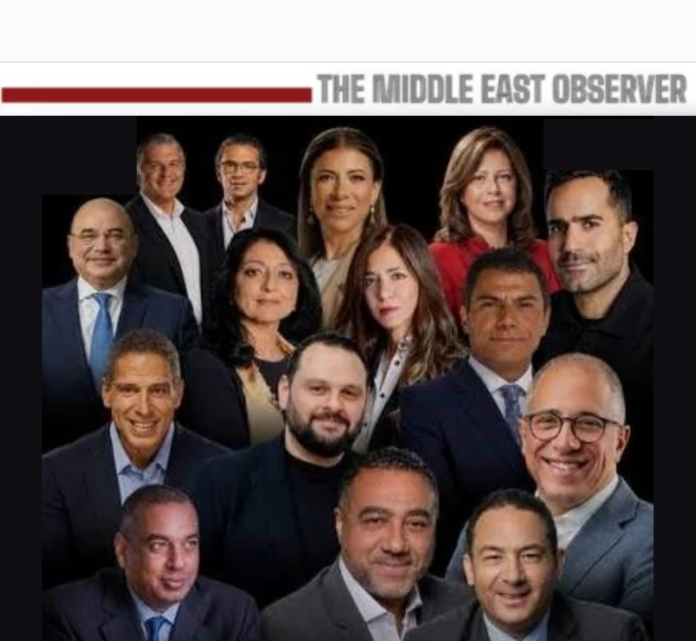
CAIRO, October 27 — Egypt increased its representation in Forbes Middle East’s Sustainability Leaders ranking to 14 entries in 2026 from 12 a year earlier, tying Qatar for third place regionally, as a separate $566mn financing package for a major solar-and-battery project highlighted the growing scale of green investment.
The UAE led the ranking with 75 entries, followed by Saudi Arabia with 29. Egypt’s 14 entries represent 15 executives across nine sectors, including renewable energy, finance, manufacturing, real estate and telecommunications.
Yet the increase came as Forbes expanded its overall list from 126 entries in 2025 to 145 this year. Egypt’s share therefore remained broadly unchanged, suggesting stronger absolute representation rather than a decisive gain in regional standing.
Solar Financing Adds Weight to Green Ambitions
Two companies associated with ranked Egyptian leaders, Hassan Allam Utilities and Infinity Power, secured up to $566mn in debt financing for the Nefer Minya solar-and-storage project, announced separately from the Forbes ranking.
The package covers approximately 74% of the project’s reported $764mn cost. The development combines 1.2 gigawatts-peak of solar capacity with 600 megawatt-hours of battery storage, allowing electricity generated during the day to serve peak demand after sunset.
A 25-year power purchase agreement with the Egyptian Electricity Transmission Company provides a long-term framework for electricity sales. The European Bank for Reconstruction and Development says the project will supply power at a lower cost than conventional generation, although construction and commercial risks remain.
Hassan Allam and Amr Allam ranked fourth in family businesses, with their group’s renewable-energy investments exceeding $3.5bn and 3.3 GW of projects under development.
Infinity Power’s Mohamed Ismail Mansour ranked third in renewable energy. The company operates approximately 1.3 GW of renewable capacity across Egypt, South Africa and Senegal.
The distinction between operating assets and projects under development is critical: financing and planned capacity do not yet translate into electricity sales or investment returns.
Finance and Industry Drive Wider Investment
Beltone Holding’s Dalia Khorshid ranked third in financial services, with Forbes highlighting $20mn in sustainable funding and six specialized lending products. EFG Holding’s Hanaa Helmy ranked fourth, supported by Bank NXT’s $47.8mn social-financing portfolio.
Manufacturing investment added another dimension. Moustafa Shaikhon of the Suez Canal Economic Zone ranked third among free-zone leaders, with projects including a $210mn solar manufacturing complex and a $50mn energy-storage factory.
Elsewedy Electric’s Manal Hassan ranked eighth in manufacturing after the company reported a 38% reduction in Scope 1 and 2 emissions intensity against its 2023 baseline. Qalaa Holdings’ Ghada Hammouda ranked 10th in investment and holdings, with an 11.5% annual decline in reported greenhouse-gas emissions.
These figures show different forms of progress, but financing commitments, planned factory output and emissions reductions cannot be treated as equivalent measures of profitability.
Property and Telecom Broaden the Picture
Real estate accounted for four Egyptian entries, representing SODIC, Orascom Development Egypt, Madinet Masr and Tatweer Misr.
El Gouna more than doubled its solar capacity to 15.8 MW in 2025, while other developers pursued efficient buildings, water recycling and smart infrastructure.
Juhayna’s Seif Thabet was recognized for sustainable agricultural activities covering 10,000 feddans.
In telecommunications, Vodafone Egypt’s Ayman Essam ranked seventh after the company matched its purchased electricity consumption with renewable energy. Orange Egypt’s Hesham Mahran ranked 10th, with renewable sources accounting for 44% of electricity supply.
Delivery Remains the Commercial Test
The ranking highlights sustainability activity across major Egyptian industries, but its commercial significance will depend on execution.
Energy developers must bring financed projects into operation, manufacturers must turn new capacity into competitive production, and lenders must demonstrate viable returns from sustainable-finance portfolios.
Forbes assessed entries separately within their industries using company questionnaires, sustainability reports and official disclosures, rather than a single measure of financial or environmental performance.
For investors, the next meaningful indicators will be electricity delivered, operating costs reduced and earnings generated—not simply recognition in a regional ranking.
Related news:
1. Egypt Expands Mediterranean Energy Hub as $24.9bn Import Bill Tests Resilience
2. Egypt-China Ventures Plan $500m Power Equipment Expansion
Read also:
1-Sungrow Starts $50mn Egypt Battery-Storage Plant
2-When Electricity Becomes a Business: Who Will Control Egypt’s Next Power Market?