

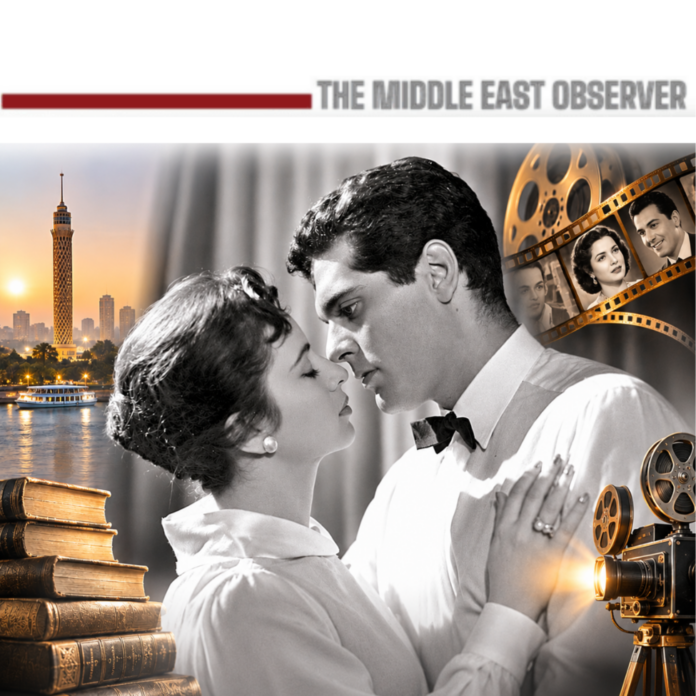
Special Editorial Series: Egypt’s Soft Power – Past, Present & Future
When Cairo Spoke, the Arab World Listened
There was a time when Cairo’s films, music and radio broadcasts helped shape the cultural identity of an entire region. Egyptian stars became household names, its dialect travelled across borders, and its universities attracted generations of Arab students. But what made Cairo the Arab world’s cultural capital — and why is that influence harder to sustain today?
The answer lies beyond artistic talent. Egypt’s golden age was built on industries and institutions that transformed creativity into lasting regional influence, offering lessons for a country now competing in a very different media landscape.
Cinema: The Industry Behind Egypt’s Cultural Rise
Egypt’s cultural leadership began before the 1952 Revolution. A defining milestone came in 1935, when Talaat Harb established Studio Misr, helping develop the infrastructure for commercial filmmaking and laying the foundations for an industry that would reach audiences across the Arab world.
During the 1950s and 1960s, Cairo earned its reputation as the “Hollywood of the Arab World”. Stars including Faten Hamama, Omar Sharif, Soad Hosny and Rushdy Abaza became familiar across the region, while films exploring family life, romance and social change helped popularise Egyptian colloquial Arabic.
Under President Gamal Abdel Nasser, state involvement expanded, supporting ambitious productions while introducing tensions over censorship and artistic independence. Shadi Abdel Salam’s The Mummy (1969) demonstrated Egyptian cinema’s ability to explore historical identity beyond mainstream entertainment.
Egypt’s advantage was not simply its famous stars. It had developed studios, production expertise and distribution networks capable of delivering films consistently to regional audiences.
Music, Radio and Education: Influence Beyond the Screen
Music reinforced that reach. Umm Kulthum, Mohamed Abdel Wahab and Abdel Halim Hafez became defining voices of Arab music, their recordings and performances connecting audiences across national borders.
Egyptian Radio began regular broadcasting in 1934, while Sawt al-Arab, launched in 1953, carried political and cultural messages throughout the region. During the Nasser era, broadcasting became associated with Arab nationalism and anti-colonial movements, extending Cairo’s influence beyond entertainment.
Al-Azhar and Egyptian universities provided another enduring channel of influence, attracting students and scholars from abroad and establishing intellectual and professional relationships that often continued long after graduation.
Together, cinema, music, broadcasting and education created overlapping networks that made Egyptian culture familiar across generations. This combination, rather than any single artistic achievement, helped establish Cairo’s regional cultural leadership.
Why Egypt’s Golden Age Matters Today
Egypt’s cultural influence now faces a different test. Streaming platforms and expanding regional production industries have weakened the distribution advantages that once helped Egyptian films and music dominate Arab markets. Audiences have more choices, while producers must compete for financing, attention and international distribution.
Yet digital technology also creates opportunities to restore historic works, reach younger audiences and distribute new productions globally. The challenge is turning those opportunities into sustainable businesses rather than relying on the continued popularity of Egypt’s cultural heritage.
That requires investment in creative talent, modern production facilities, intellectual property protection and distribution partnerships capable of generating revenue beyond the domestic market.
For cultural institutions, investors and policymakers, the lesson is practical: cultural success should be measured not only by famous performers or international recognition, but also by new audiences, skilled employment, sustainable production and lasting commercial partnerships.
Egypt’s golden age demonstrates that cultural influence is built through more than exceptional artists. It requires industries capable of transforming creativity into works that travel, generate revenue and remain relevant across generations.
For Egypt, the lesson is not to recreate the past, but to rebuild the conditions that made its cultural leadership possible. The real measure of future success will be whether Egyptian cinema, music and creative industries can attract new audiences, sustain investment and compete internationally — rather than depend on the reputation of a celebrated era.
Related News:
Cairo Film Festival’s 50th Anniversary Puts Egypt’s Cinematic Heritage in Focus
Read Also:
Can AI Turn Egypt’s Cultural Influence into a Global Export Industry?
Cairo Film Festival’s 50th Anniversary Puts Egypt’s Cinematic Heritage in Focus