
Independent concept stores across the Middle East and North Africa are expanding their physical presence despite the rise of online shopping, with retailers in Egypt, Morocco and Tunisia using curated local products, personalised service and hospitality to attract customers while adopting e-commerce to reach wider markets.
The trend reflects a shift towards experience-led retail, where stores compete through distinctive products, independent designers and customer relationships rather than convenience alone. Recent openings and expansion plans indicate continued investment in the model, although comparable sales and profitability data are unavailable to establish its financial performance across the region.
In Cairo, Maison69, founded by Amir Fayo in 2016, combines international fashion labels with Egyptian designers, art and hospitality. Its New Cairo destination, opened in 2022, includes restaurants, a bookshop and exhibition space alongside its retail collections.
According to a November 2026 report by Vogue Arabia, Maison69 operates two locations and has chosen to focus on physical shopping rather than launching an online store. Social media helps attract customers, while the stores allow visitors to examine materials, try on clothing and discover collections in person.
Madu, another Cairo-based concept retailer established in 2019, has adopted a different strategy, combining physical expansion with digital sales. The company operates four locations and is preparing a fifth at the Marriott Zamalek, according to the same report.
Its collections feature handmade homeware, clothing and accessories from Egyptian and international artisans. Madu also works with Threads of Hope, which trains and employs refugee and migrant women in traditional crafts, creating opportunities for their products to reach customers.
The retailer launched online shopping in 2024, extending access to its collections beyond its physical locations while maintaining an emphasis on craftsmanship and product discovery.
The growing interest in experience-led retail is also visible in Cairo’s newer multi-brand destinations. In 2026, Egyptian fashion retailer Drop opened a 1,100-square-metre flagship at One Ninety in New Cairo, combining fashion retail with social and hospitality experiences, according to EnterpriseAM.
In Marrakech, Moro has developed a business combining Moroccan-made clothing, glassware, jewellery and skincare with a café and boutique accommodation since opening its physical destination in 2020.
As documented by Vogue Arabia, Moro’s founders initially developed their skincare brand, The Moroccans, in 2016 using prickly pear seed oil sourced from Essaouira. The business subsequently expanded its product range through collaborations with Moroccan artisans and women’s cooperatives.
Moro introduced e-commerce in 2024, enabling customers who discovered its products in Marrakech to make purchases after returning home. Its physical destination remains a central part of the business, with accommodation and dining attracting visitors beyond conventional shopping.
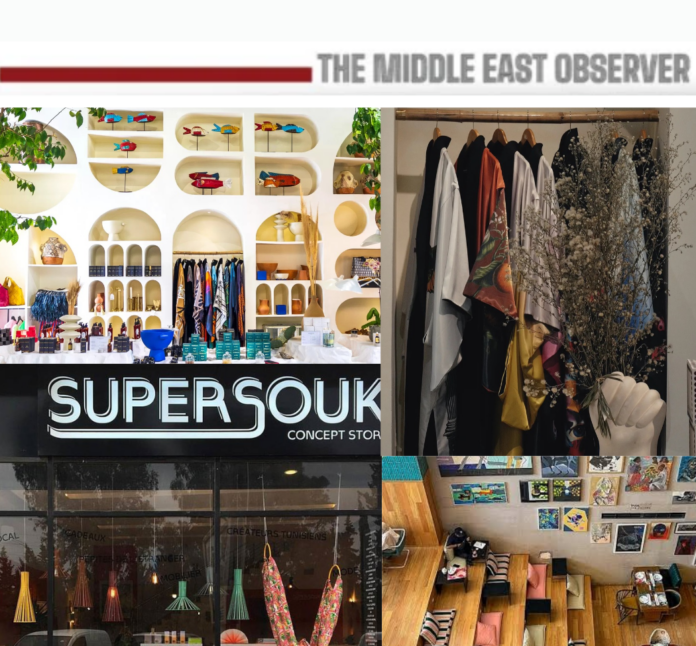
In Tunisia, Supersouk represents more than 200 Tunisian brands, offering handmade footwear, ceramics, clothing and accessories. According to Vogue Arabia’s reporting, the retailer prioritises small-scale production and local craftsmanship while giving independent designers access to customers through a shared retail environment.
Supersouk also offers exclusive products under its Marlo & Isaure collection, including decorative glassware made from recycled materials, helping distinguish its merchandise from conventional multi-brand retail offerings.
The concept is gaining attention in the Gulf, where retailers and major commercial groups are creating opportunities for emerging regional brands.
In Dubai, The Giving Movement introduced a curated selection of UAE-based labels at its City Walk store in May 2026, while The Edit Dubai has provided temporary retail space for emerging local designers.
Majid Al Futtaim also launched its Ma’an initiative with Dubai SME in April 2026, providing eligible UAE-based businesses with access to its retail and leisure ecosystem, including opportunities through THAT Concept Store and Mall of the Emirates.
The initiative illustrates how established retail operators can help smaller businesses gain visibility and access to customers, although these programmes differ from independently operated concept stores.
The model has also expanded internationally through entrepreneurs from the region. Egyptian sisters Taya and Tary Sawiris founded luxury concept retailer Tasoni in Switzerland in 2014, later expanding to Zurich and a second location in Andermatt.
Tasoni introduced e-commerce in 2025 while retaining its emphasis on personalised styling and in-store relationships, according to Vogue Arabia. Its approach demonstrates how digital platforms can support product discovery and repeat purchases without replacing physical retail.
For independent designers and small producers, concept stores can provide access to established retail locations and merchandising expertise without the investment required to operate standalone shops. Retailers, meanwhile, can differentiate their offerings through exclusive collections, local craftsmanship and personalised services.
However, the business model faces commercial challenges, including the cost of maintaining physical premises, managing specialised inventories and providing individual customer attention. Online platforms also offer greater convenience and wider product selection, intensifying competition.
The available evidence demonstrates continued investment and expansion among selected concept retailers, but it does not establish whether they outperform conventional stores or e-commerce businesses in sales growth, profitability or customer retention.
For concept stores across the Middle East and North Africa, the emerging strategy is to combine digital reach with distinctive physical experiences that encourage customers to visit, discover products and develop lasting relationships with brands.
Related News:
1. From ‘Made in Egypt’ to a Global Export Miracle
2. Primark Launches First UAE Store in Dubai Mall
Read Also:
1. MAGRABi and Rivoli Merge to Transform Middle East Eyewear Market
2. Americana, ADNOC Distribution to Open Up to 200 Restaurants Across Three Markets