Growing demand for nutritious, convenient and functional foods is encouraging Egyptian manufacturers to reformulate products, expand healthier portfolios and invest in one of the country’s fastest-growing consumer segments.
Consumer preferences are reshaping Egypt’s food industry as greater nutrition awareness, rising obesity rates and increasing interest in preventive healthcare influence purchasing decisions. Consumers are placing greater emphasis on nutritional value, ingredient transparency and convenience, creating new commercial opportunities for manufacturers, retailers and investors. Rather than viewing healthy eating as a niche lifestyle choice, food companies increasingly regard it as a long-term growth market driven by structural changes in consumer behaviour.
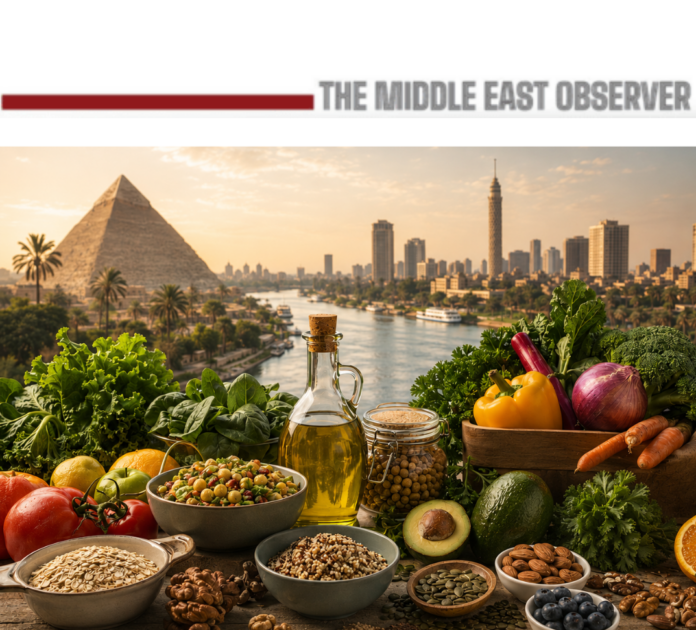
The shift is reinforced by global nutrition trends. Consumers are looking beyond calorie counts to foods that provide higher nutritional value, including products rich in protein, dietary fibre, probiotics and natural ingredients while containing less added sugar, sodium and saturated fat. International consumer research consistently identifies protein as one of the fastest-growing nutrition priorities worldwide, alongside demand for minimally processed foods and simpler ingredient lists. Reflecting these trends, the global protein ingredients market is projected to reach approximately US$126 billion by 2028, encouraging manufacturers to reformulate existing products and develop nutrition-focused product lines.
Although global interest in GLP-1 weight-management therapies has influenced food innovation in several international markets, Egypt’s healthy food sector continues to be driven primarily by expanding nutrition awareness, growing fitness participation, preventive healthcare initiatives and increased consumer education through digital media. Urbanisation, the expansion of modern retail formats, online grocery platforms and food delivery services are also improving consumer access to healthier food options.
Nutrition experts continue to stress that long-term health depends on balanced dietary patterns rather than individual “superfoods” or marketing claims. As a result, consumers are becoming more discerning, favouring products that offer genuine nutritional value supported by transparent labelling and evidence-based health claims.
Manufacturers Respond Through Innovation
Egyptian food manufacturers are increasingly adapting their portfolios to meet changing consumer demand. One notable example is Juhayna, which expanded its dairy range with Greek yogurt to serve consumers seeking higher-protein products with probiotic benefits. The popularity of Greek yogurt illustrates the broader shift toward foods that combine convenience with enhanced nutritional value.
Specialised retailers have also capitalised on this trend. Healthy & Tasty Supermarket focuses on healthier grocery alternatives, offering sugar-free snacks, gluten-free products, organic foods, protein supplements and functional beverages. Rather than competing directly with conventional supermarkets on volume, the retailer serves a rapidly growing consumer segment prioritising health and wellness.
Alongside established manufacturers, Egyptian startups continue introducing lower-calorie foods, sugar-free products, fibre-rich cereals and healthier snack alternatives. Collectively, these businesses demonstrate how changing consumer preferences are encouraging companies to diversify beyond traditional processed foods and develop higher-value product categories.
Reformulation Becomes a Competitive Advantage
The industry’s transformation extends well beyond launching new products. Manufacturers are increasingly reformulating established brands by reducing added sugars, lowering sodium, replacing artificial ingredients and improving nutrition labelling while preserving familiar taste profiles. Reformulation enables companies to respond to changing consumer expectations while maintaining brand loyalty.
This strategy aligns with international public health recommendations promoting lower consumption of free sugars, saturated fats and salt while encouraging greater intake of fruits, vegetables, whole grains and lean proteins. As nutrition labelling plays a growing role in purchasing decisions, transparent ingredient lists and credible nutritional claims are becoming important competitive differentiators.
Retailers are also expanding healthier private-label product ranges, allowing them to compete on both affordability and nutrition while broadening consumer access to healthier food choices.
Investment Opportunities Across the Value Chain
The transformation extends across Egypt’s food value chain. Growing demand for healthier products is creating investment opportunities in functional foods, protein-enriched dairy products, healthier snacks, whole-grain products, plant-based alternatives, organic ingredients, personalised nutrition and digital health platforms that support dietary planning.
Manufacturers are also investing in research and development, cleaner ingredient sourcing, sustainable packaging and supply-chain improvements. Companies increasingly compete not only through price but also through product formulation, nutritional quality, branding, convenience and distribution capabilities. Those able to combine scientific credibility, affordability and consumer convenience are expected to strengthen their market position as healthier eating becomes increasingly mainstream.
The shift also complements Egypt’s broader public health priorities, which encourage balanced diets, regular physical activity and improved nutrition to reduce obesity and other non-communicable diseases. As public policy, consumer awareness and private-sector innovation increasingly reinforce one another, healthier eating is becoming embedded within the country’s broader food economy.
From Wellness Trend to Growth Strategy
Healthy eating is evolving from a consumer lifestyle preference into a structural growth driver for Egypt’s food industry. For manufacturers, the competitive advantage is increasingly shifting from producing larger volumes to delivering greater nutritional value through innovation, reformulation and product differentiation. As healthier diets become more mainstream, the sector’s next phase of growth is likely to be defined as much by product quality, transparency and innovation as by production capacity, positioning Egypt’s food industry for sustained long-term expansion.
Related news:
Morocco Eyes Growth Above 5.3% as Tourism, Industry and Diaspora Transfers Drive Economic Expansion
Simple Dietary Shifts for a Healthier Ramadan
Read also:
How Digital Health Is Reshaping Healthcare Delivery in Egypt
El-Sisi Launches The Octagon, Charting Egypt’s Next Phase of Security and Reform