

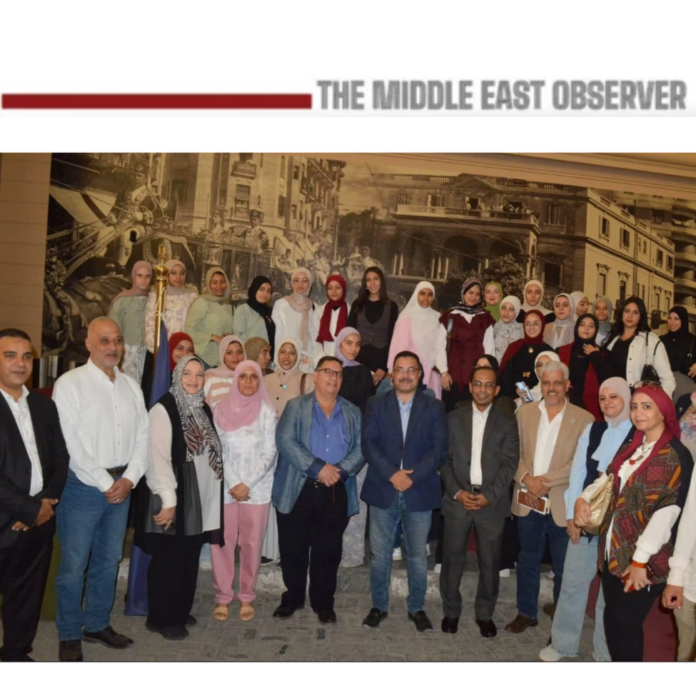
CAIRO— The Royal Carriages Museum marked the sixth anniversary of its reopening on Thursday, October 29, with a cultural programme featuring heritage exhibitions, student projects, educational workshops, artistic performances and community activities. The event was held under the patronage of Sherif Fathy, Minister of Tourism and Antiquities, and supervised by Dr Hisham El-Leithy, Secretary-General of the Supreme Council of Antiquities.
The event was inaugurated by Dr Ahmed Hamida, Head of the Museums Sector, in the presence of Prof. Dr Ashraf Abou El-Yazid, Head of the Central Administration for Cairo and Giza Museums, Amin El-Kahki, Director General of the Royal Carriages Museum, as well as museum officials, specialists and students.
Dr Ahmed Hamida highlighted the museum’s importance in preserving Egypt’s heritage and presenting its historical and cultural value, while emphasising its role in offering visitors an enriching museum experience.
Prof. Dr Ashraf Abou El-Yazid also underlined the museum’s contribution to safeguarding Egyptian heritage and introducing visitors to its historical significance.
Ashgan El-Nahas, Director of the Public Relations and Media Department and Institutional Development Official at the Museums Sector, said the celebration reflected the museum’s cultural role in preserving Egyptian heritage, raising archaeological awareness and encouraging community participation through an engaging visitor experience that combines knowledge and enjoyment.
A Celebration Bringing Heritage and Education Together
The programme featured a range of activities connecting the museum’s historical collection with educational and community engagement. These included the temporary exhibition “A Journey Through Royal Heritage”, showcasing student projects inspired by the history of the Muhammad Ali dynasty and royal carriages.
The event also featured the archival exhibition “From the Ink of Documents to the Brilliance of Artefacts”, alongside educational workshops entitled “The Royal Emblem” and “The Garment of History”.
Other activities included guided museum tours, programmes for people with disabilities and artistic performances by the Nile Troupe of the General Authority for Cultural Palaces, featuring Tanoura and traditional folk arts.
The Stories Behind Egypt’s Royal Carriages
Beyond its exhibitions and educational activities, the Royal Carriages Museum preserves a collection of carriages that offers insight into Egypt’s royal ceremonies, diplomatic relations and everyday life inside the palaces.
Among its most notable exhibits is the Grand Private Alay Carriage, presented by French Emperor Napoleon III and Empress Eugénie to Khedive Ismail on the occasion of the inauguration of the Suez Canal in 1869. Its story is linked to one of Egypt’s most significant historical events of the 19th century and reflects the diplomatic relations between the Egyptian royal court and the French Empire.
The enclosed, four-wheeled carriage features two facing passenger seats, an elevated driver’s seat and a rear platform designated for an accompanying staff member. It was drawn by eight horses, accompanied by a ninth horse ridden by a guide, while a team of attendants helped organise the procession and assist passengers.
The carriage remained part of royal history into the 20th century. King Farouk I ordered its restoration, and it was used on royal occasions, including his wedding to Queen Farida in 1938. The carriage was also associated with the opening of Parliament during his reign, according to historical information published by the museum.
Alay and Half-Alay Carriages
The museum also displays other carriages associated with the official and ceremonial life of the royal family, including those known as “Alay” and “Half-Alay” carriages. They were used in official processions and formed part of the wider royal transportation system.
The Grand Private Alay Carriage was accompanied by one regular Alay carriage and two Half-Alay carriages.
Together, these vehicles reflect the careful organisation of royal processions, in which each carriage, horse and attendant had a specific role.
The Caravan Carriage: Transportation Behind Royal Life
Not all historical carriages were designed for royal appearances and ceremonies. The museum’s collection also includes a large, four-wheeled wooden carriage known as the “Caravan”, manufactured in England during the reign of Khedive Ismail.
Unlike the ornate ceremonial carriages, it was used to transport furniture and kitchen supplies. Its features included exterior sides covered with zinc sheets, a front driver’s seat, a rear door and iron handles fixed to the upper part of its structure. It was drawn by two pairs of horses and operated by two drivers.
The Caravan carriage reveals another side of life within the royal institution, illustrating the practical transportation arrangements that supported everyday activities in the palaces.
Preserving More Than Carriages
The museum’s collection extends beyond carriages to include horse equipment, saddles, bridles, ceremonial accessories, official uniforms worn by staff and oil paintings depicting members of the royal family.
These objects help reconstruct the wider world in which the royal carriages operated, from the horses and attendants involved in processions to the craftsmanship and organisation required to maintain the royal stables.
The museum houses 46 royal carriages, including 22 described as particularly rare, alongside around 600 other artefacts and objects connected to the history of royal transportation. Its collection is displayed across seven exhibition halls, offering visitors an overview of different aspects of Egypt’s royal transport and ceremonial history.
The museum’s origins date back to 1863, when the Khedivial Carriages Department was established. It was renamed the Sultanate Carriages Department in 1914 and the Royal Stables Administration in 1922. Part of the building was converted into a museum in 1978.
By preserving these carriages and their associated objects, the Royal Carriages Museum offers visitors more than an opportunity to view historical means of transport. It provides a window into the royal ceremonies, diplomatic relations and practical arrangements that shaped royal life in Egypt.
Related News:
Instagram and Egypt Launch Pioneering AR Experience to Revitalize Ancient Heritage
Egypt’s Royal palaces relatively open its doors to public
Read Also:
Sixth chariot of King Tutankhamun moved to the new museum
Khufu’s Solar Boat Begins Its Journey Back to Life at the Grand Egyptian Museum
