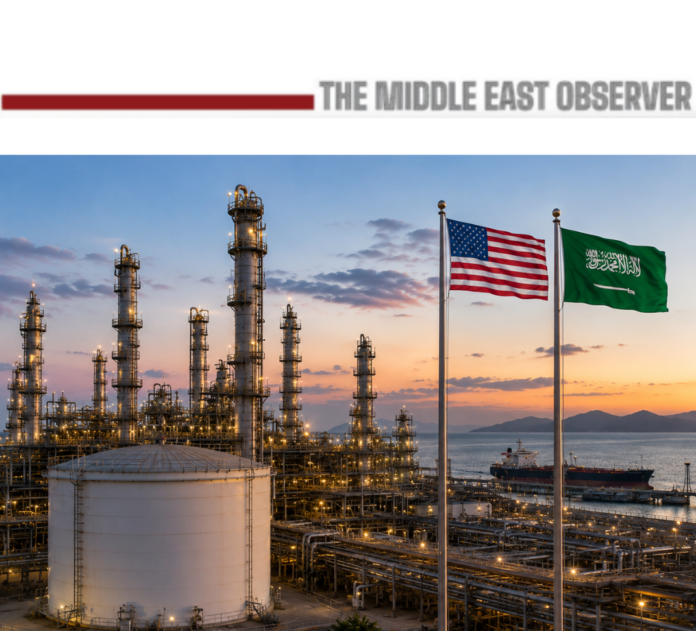
A U.S.–Saudi private consortium has advanced plans for a US$5 billion integrated refinery and export hub, underscoring the Gulf’s growing investment in energy infrastructure designed to strengthen export resilience while expanding higher-value petroleum product exports beyond traditional crude shipments. The project has entered the final stage of site selection, with a preferred host location expected to be announced before the end of 2026.
The MERA Oil consortium—comprising Texas-based MWG Enterprises, Patel Family Office, and PWS, an associate of Saudi Arabia’s AHQ Group—is evaluating three undisclosed locations within the Gulf Cooperation Council (GCC). The selected site will lie outside the Strait of Hormuz, providing direct access to international shipping routes while reducing exposure to one of the world’s most strategically important energy transit corridors.
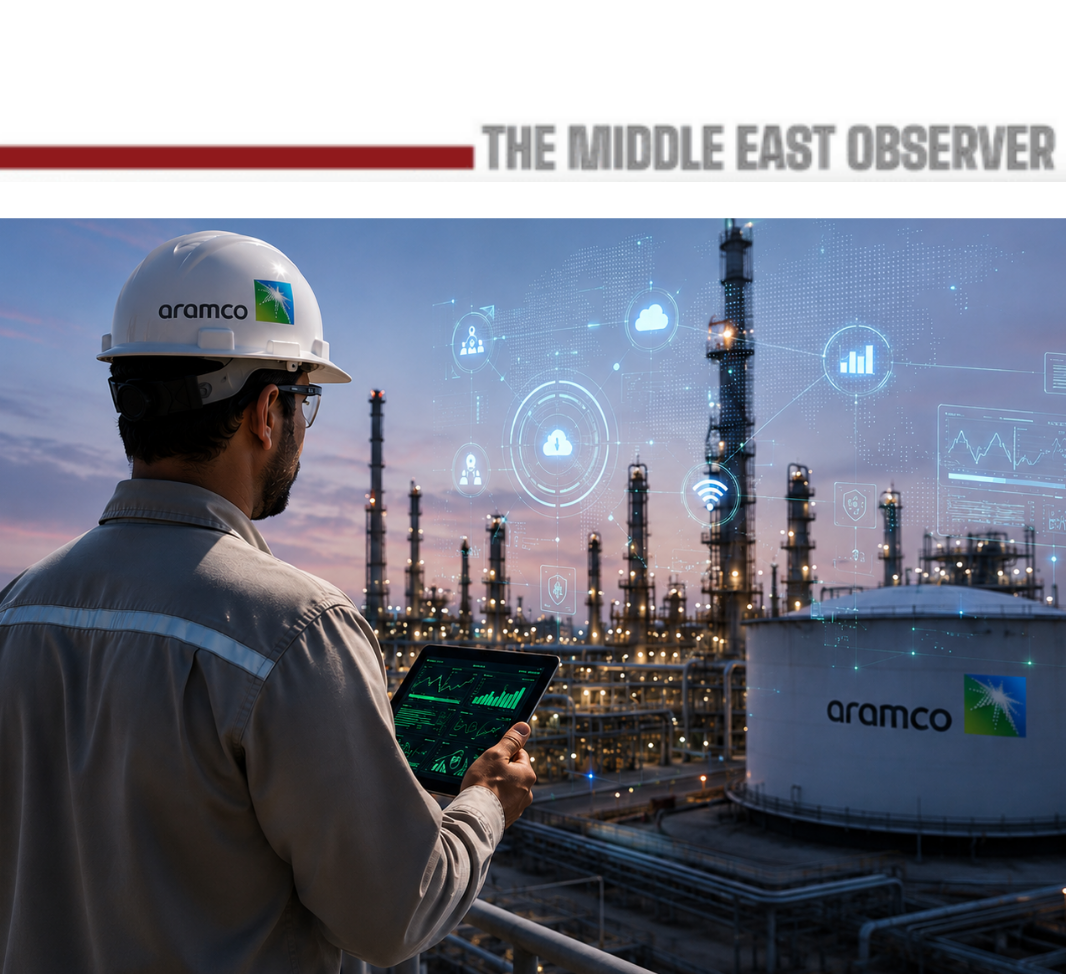
The proposed first phase comprises a 200,000-barrel-per-day refinery integrated with a deep-water port, large-scale crude and refined-product storage facilities, and marine export infrastructure. Rather than exporting crude alone, the complex is designed to produce higher-value refined petroleum products, particularly diesel and aviation fuel, allowing Gulf producers to capture greater value across the downstream energy chain while expanding regional refining capacity.
The initiative reflects a broader regional strategy to diversify export routes and reinforce supply-chain resilience following recent geopolitical tensions that highlighted the vulnerability of energy shipments through the Strait of Hormuz. Across the Gulf, governments and private investors have accelerated investment in integrated refining, storage and logistics infrastructure capable of maintaining uninterrupted exports during periods of regional instability.
The project, however, has not yet reached a Final Investment Decision (FID). The consortium said regional site evaluations have been completed following nearly three years of technical assessment, with detailed discussions under way with the shortlisted host jurisdictions. A preferred location is expected to be selected before the end of 2026, after which the project will proceed to detailed engineering, permitting and regulatory approvals. A pre-feasibility study covering refinery configuration, logistics, capital requirements and execution planning has already reached an advanced stage. Construction remains subject to regulatory approvals, environmental permits, long-term crude supply and customer off-take agreements, project financing and a Final Investment Decision. Subject to these milestones, mechanical completion is targeted by the end of 2029, followed by commissioning and commercial operations.
While the consortium has not disclosed the three shortlisted locations, industry analysts point to Fujairah in the UAE, Duqm in Oman and Yanbu on Saudi Arabia’s Red Sea coast as among the few ports possessing the deep-water infrastructure, industrial land and export logistics required for a project of this scale. Fujairah is one of the world’s largest oil storage and bunkering hubs with direct access to the Gulf of Oman. Duqm has emerged as a major industrial and refining centre on the Arabian Sea, while Yanbu is connected to Saudi Arabia’s East–West crude pipeline network, providing an export route that bypasses the Strait of Hormuz entirely. None of these locations has been confirmed by MERA Oil.
Industry analysts also note that the final host country is likely to be determined by more than port infrastructure alone. Fiscal incentives, regulatory certainty, access to long-term crude feedstock, financing conditions and the potential to integrate future petrochemical, low-carbon fuel and export-oriented industrial developments are expected to play an important role in the consortium’s investment decision.
If approved, the refinery would rank among the Gulf’s largest privately sponsored downstream energy investments of the decade, reflecting a wider regional shift towards integrated refining, export infrastructure and higher-value fuel production as Gulf economies seek to diversify beyond crude exports while strengthening long-term energy security, industrial competitiveness and supply-chain resilience.
Related news:
China’s “Petroyuan” Gains Traction Amid Gulf Tensions
Read also:
Egyptian–UAE Consortium Plans €200m Tourism Investment in Morocco’s Essaouira