MUSCAT — S&P Global Ratings more than doubled Oman’s 2026 economic growth forecast to 3.5% from 1.6%, as higher hydrocarbon production and unobstructed trade routes allow the sultanate to capture an economic premium from disruption around the Strait of Hormuz.
The agency on September 25 affirmed Oman’s BBB-/A-3 sovereign ratings with a stable outlook, forecasting growth to accelerate from 2.3% in 2025. S&P expects crude production to rise towards 1.2mn barrels per day during its forecast period, supporting average real GDP growth of about 2.4% over 2027–29.
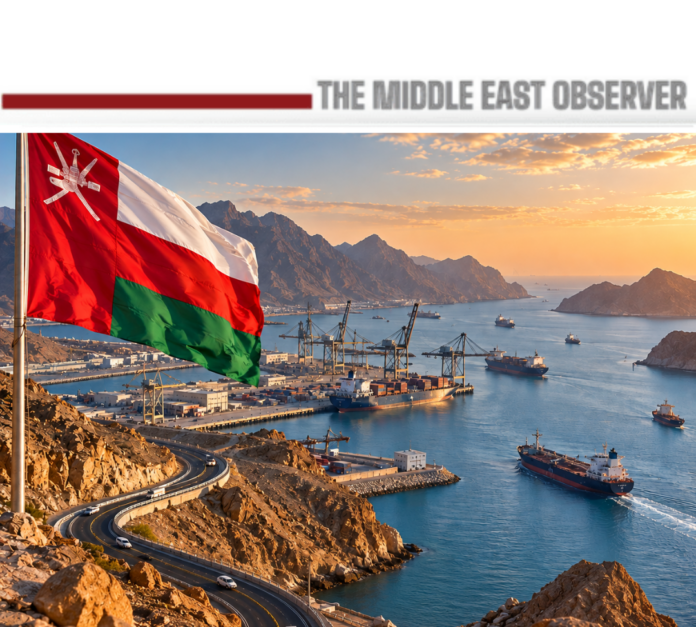
Oman’s advantage is partly geographical. Much of its crude, LNG and refined-product export infrastructure has direct access to the Gulf of Oman or Arabian Sea, reducing dependence on transit through Hormuz at a time when flows from inside the Gulf remain disrupted.
The rating action coincides with mounting evidence that this location is giving Oman a broader role in regional logistics. Duqm provides Arabian Sea access for refining and industrial activity, Sohar serves as a major industrial and logistics centre on the Gulf of Oman, while Salalah anchors an Indian Ocean container and transshipment network.
The rerouting is extending beyond Oman’s own exports. Reuters reported in September that ship-to-ship oil-transfer capacity near Sohar was becoming constrained as more than 60mn barrels of Saudi crude were marketed for transfers in the area after disruption to Saudi Arabia’s alternative Red Sea export route.
The shift is also visible outside energy. Goods worth Dh1.7bn ($463mn) moved through the Sharjah-Oman logistics corridor during its first three months, with trade value rising 66% as companies increasingly used Omani ports and overland connections to reduce exposure to disrupted Hormuz shipping. More than 34,000 truck movements were recorded over the period.
The immediate economic gain remains partly cyclical. Higher oil prices, increased hydrocarbon output and temporarily diverted regional trade could moderate if Gulf shipping normalises. S&P also warned that intensified attacks on Omani infrastructure or higher conflict-related expenditure could weaken growth and reverse recent fiscal consolidation.
The longer-term advantage is more structural. The conflict has demonstrated the strategic value of Oman’s ports, refining assets, industrial zones and road links as an external gateway for Gulf economies seeking routes beyond Hormuz. Whether current diversions persist or not, that resilience strengthens Oman’s case for further investment in logistics, storage, refining and export-oriented industry.
Related news:
How Gulf Energy Logistics Could Evolve After the Hormuz Crisis
Strait of Hormuz Tensions Reshape Global Energy Markets
Red also: