China’s industrial advantage was built on more than cheap labour. Its networks of suppliers, engineers, infrastructure and specialised skills show why manufacturing ecosystems — rather than individual factories — increasingly determine industrial competitiveness.
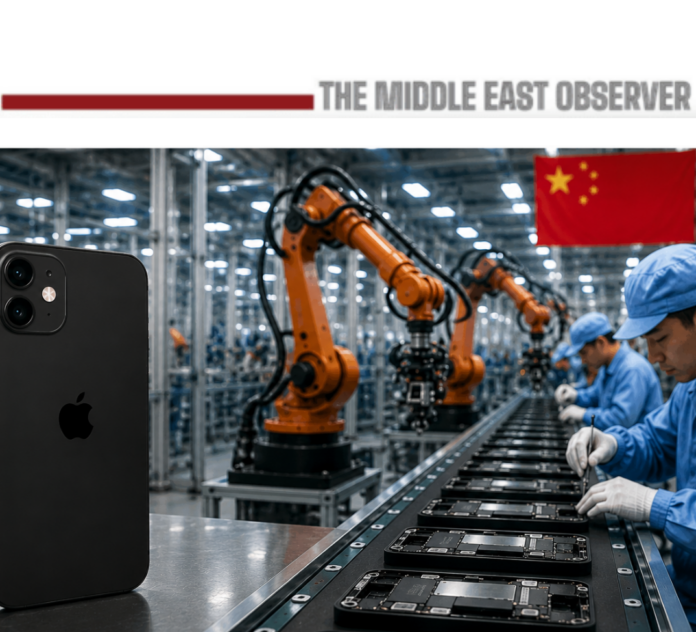
A $10 iPhone does not exist. But historical estimates that put the cost of final assembly at around that level expose a useful misconception about manufacturing economics.
Physically assembling an iPhone in China represented only a small fraction of the finished product’s value. The expensive elements lay elsewhere: semiconductors, displays, cameras, intellectual property, software and margins captured across the supply chain.
That raises a more important question than what an assembly worker costs: why did China become so effective at manufacturing complex products at enormous scale?
The answer was never simply cheap labour. China developed an industrial ecosystem in which suppliers, engineers, machinery, infrastructure and factories reinforced one another, making production easier to improve and scale.
Beyond Cheap Labour
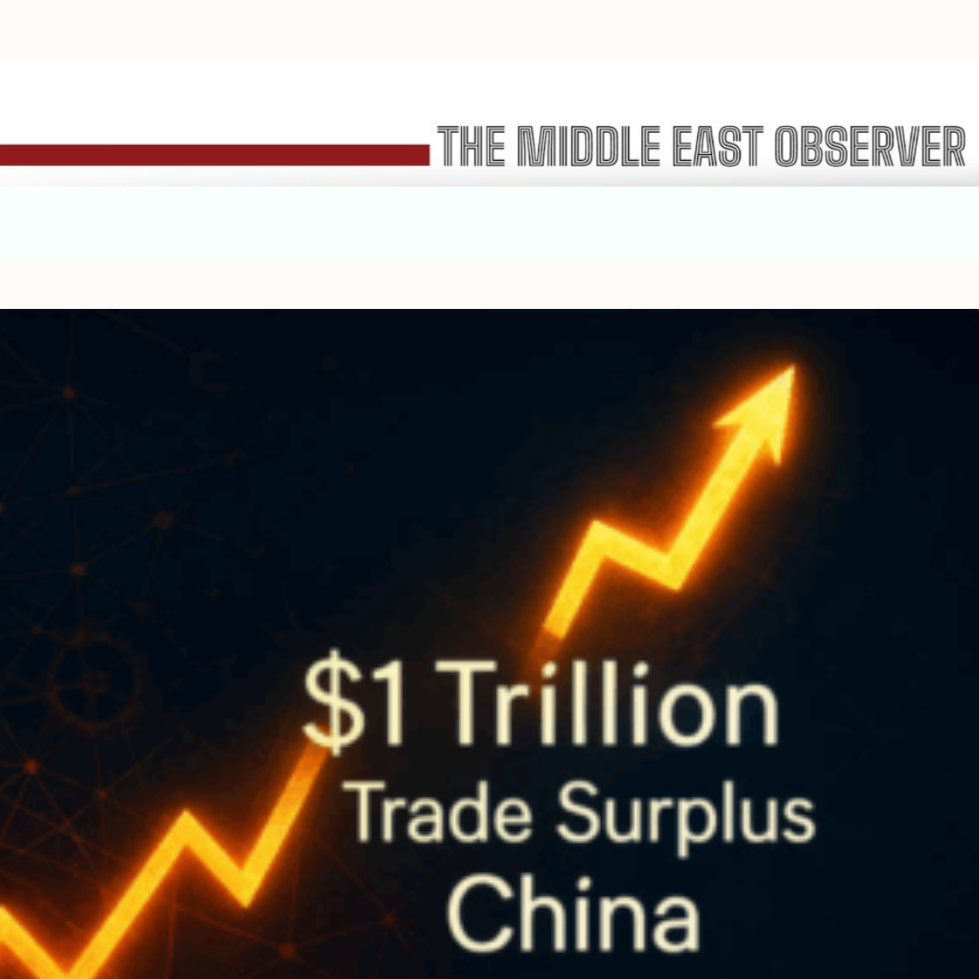
UNIDO estimates that China accounted for 31.8 percent of global manufacturing value added in 2023, up from 3 per cent in 1990. The US, the next-largest manufacturing economy, accounted for roughly 15 per cent.
Scale changes industrial economics. Tooling, machinery and engineering costs can be spread across millions of units, while large orders make specialised suppliers commercially viable.
But scale alone does not create expertise.
Apple chief executive Tim Cook has emphasised China’s concentration of specialised manufacturing skills, particularly tooling and precision engineering. The advantage is not simply workers at a particular wage, but engineers, technicians, toolmakers and suppliers concentrated in one industrial system.
Nor did that ecosystem emerge by accident. China paired foreign investment and export-oriented special economic zones with infrastructure and supplier development, embedding manufacturing capability in domestic industrial clusters. Policy then shifted towards developing indigenous technological capabilities.
When the Factory Becomes an Ecosystem
A sophisticated electronics plant depends on businesses beyond its gates: component manufacturers, tooling companies, testing facilities, logistics operators, automation specialists and equipment suppliers.
In China’s industrial clusters, many sit within relatively tight geographical networks. That proximity allows suppliers to respond quickly to design changes, engineers to troubleshoot alongside manufacturers and prototypes to move into mass production without rebuilding the supply chain.
Apple says its supply chain encompasses thousands of supplier facilities across more than 60 countries. China’s advantage is therefore not that every component originates there. It is the concentration of capabilities required to turn a design into millions of finished products.
From Assembly to the Industrial Stack
This is where the economics of the supposed $10 iPhone become revealing.
Cheap final assembly was never the principal source of China’s manufacturing power. High-value components, software, intellectual property and design were often supplied or controlled elsewhere.
China’s next industrial challenge was to change that equation.
Beijing has pushed domestic industry deeper into semiconductors, electric vehicles, batteries, renewable-energy equipment, industrial machinery, robotics and automation.
The objective is increasingly to control more of the industrial stack — not merely the finished product, but the machinery, components, materials and technologies required to manufacture it.
The goal is no longer simply to make more. It is to capture more of the value created by what is made.
China’s Advantage Meets Its Limits
The model nevertheless faces pressure.
China’s population is ageing, its labour force is no longer expanding as it once did and manufacturing wages have risen. Tariffs, US-China competition and pandemic-era disruption have also encouraged multinational companies to pursue China Plus One strategies.
Apple provides a prominent example. India has emerged as an increasingly important iPhone manufacturing centre and is expected to account for roughly a quarter of global production in 2026. Vietnam has also expanded its role in electronics supply chains.
Yet diversification demonstrates the durability of China’s model as much as its vulnerability.
Moving final assembly is easier than reproducing the ecosystem that supports it. Decades of supplier development, engineering expertise, tooling capability, infrastructure and industrial know-how cannot readily be replicated elsewhere.
UNIDO reported that global manufacturing production increased just 0.5 per cent quarter on quarter in the final three months of 2025, while China outperformed every major region.
China is becoming more expensive and geopolitically more complicated. Its manufacturing ecosystem remains difficult to reproduce.
The Next Manufacturing Model
That is perhaps the most important lesson for countries seeking to capture production shifting away from China.
Attracting a multinational factory is not the same as building an industrial base. Localizing assembly is not the same as industrializing.
Governments can offer land, tax incentives and infrastructure to secure an assembly plant. But if components and machinery are imported and engineering expertise remains external, relatively little value may be retained locally.
Industrialization should therefore be measured not simply by factories opened, but by supplier depth, engineering capability, productivity, technological ownership and domestic value added.
China’s experience demonstrates why those capabilities take time to accumulate. Its advantage was not simply the worker on the assembly line, but the industrial system surrounding that worker.
For emerging manufacturing economies, the lesson is straightforward: a factory can be attracted with incentives. An industrial ecosystem has to be built.
The next manufacturing race will not simply be about who offers the cheapest assembly line. It will be about who can build the deepest industrial system around it.
Related news:
ELITE Solar Bets on Egypt as Next Global Clean Energy Manufacturing Hub
ENPPI Turns Egyptian Engineering Expertise into a Multi-Billion-Dollar Export Business
Read also:
A Common Arab Strategic Vision in an Era of Regional Blocs
Morocco Overtakes South Africa in Industrial Competitiveness Ranking