Tax-exempt instrument will be open to individuals and companies, allowing principal and returns to settle future tax liabilities
Egypt plans to issue the first tax certificates in its history during FY 2026/27, opening a new financing channel that will allow taxpayers to invest available liquidity with the government and later use both the certificate value and its tax-exempt return to settle future tax liabilities.
The first issuance is expected to be available to a broad range of taxpayers, including individuals and private and public-sector companies, with major state-owned companies and entities potentially among the subscribers, according to government officials cited by Asharq Bloomberg.
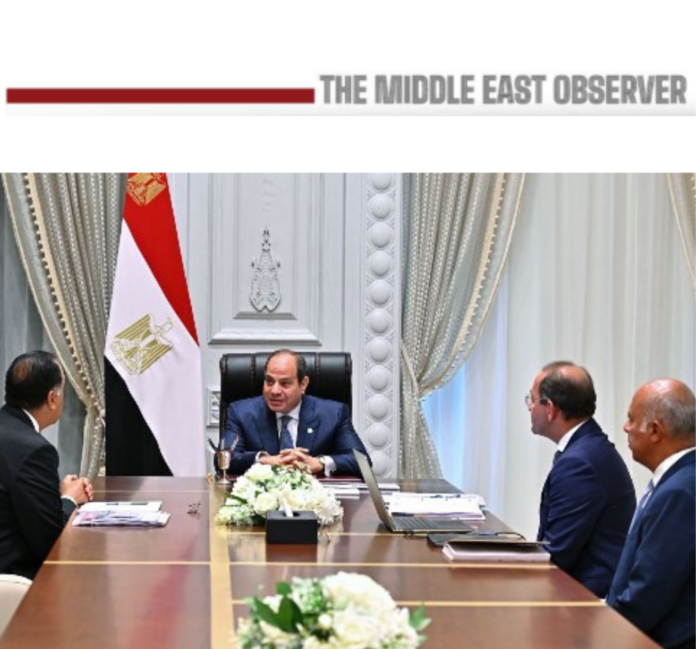
The latest details follow President Abdel Fattah El-Sisi’s approval on August 10 of a proposal to issue tax certificates financed by taxpayers and deductible from their future tax obligations. The Presidency said the instruments would carry a “favourable and appropriate” return, with the aim of reducing government financing requirements and consequently lowering debt-servicing costs.
The precise yield, maturity, issuance size and subscription and redemption conditions have yet to be announced as the Finance Ministry and Egyptian Tax Authority complete the framework governing the new instrument.
Tax-Free Return Against Future Liabilities
Under the proposed structure, taxpayers with available liquidity would be able to subscribe to the certificates and earn a return that government officials say will be fully exempt from tax.
The certificate’s principal and the return due on it could subsequently be used to settle the subscriber’s future tax liabilities.
The Egyptian Tax Authority has described the certificates as a new benefit for taxpayers, particularly compliant taxpayers, and part of the Finance Ministry’s broader effort to develop its relationship with the tax community around greater trust, partnership and incentives.
The Authority said the instrument would provide taxpayers with a dual benefit: the ability to generate a return on available liquidity while retaining the value of the certificate for use against future tax obligations under the rules being prepared.
For the Treasury, the mechanism would provide access to funds before the corresponding taxes would normally be collected, potentially reducing part of the government’s need to raise financing through other channels.
The final financial impact will depend heavily on the return offered and the terms governing redemption.
Existing Law Provides the Legal Basis
Although the certificates have not previously been issued in practice, their legal foundation dates back more than two decades.
Article 115 of Income Tax Law No. 91 of 2005 authorises the finance minister to issue tax certificates subscribed to by taxpayers and carrying a tax-exempt return determined by the minister. It also provides for both the certificates and their returns to be used in settling taxes due.
The current initiative therefore represents the activation of an existing statutory mechanism, rather than the introduction of an entirely new concept into Egyptian tax law.
This also distinguishes the planned tax certificates from Egypt’s conventional sovereign sukuk programme. Egypt has separately developed local and international sovereign sukuk as government debt instruments; the Ministry of Finance reported that the country’s first local sovereign sukuk was issued in November 2025.
The tax certificates, by contrast, are linked directly to the subscriber’s future tax liabilities.
Part of Egypt’s Financing and Tax Reform Strategy
The initiative comes as Egypt seeks to diversify government financing sources and reduce debt-servicing costs.
Finance Minister Ahmed Kouchouk said earlier this year that the government planned to expand its use of new financing instruments while reducing reliance on expensive borrowing. The government’s medium-term targets include lowering financing needs to around 10% of GDP and reducing debt-servicing costs to 35% of budget expenditure.
The Ministry of Finance has also reported declining domestic borrowing costs, with average yields on local government securities falling by about 2.5 percentage points during the first half of FY 2025/26.
The tax-certificate proposal was announced alongside a broader review of Egypt’s fiscal performance. During the August 10 meeting, Kouchouk said real economic growth reached 5.2% during the first nine months of FY 2025/26, while the Presidency reported progress in reducing budget-sector debt, broadening the tax base and strengthening non-tax revenues.
El-Sisi also directed the government to launch a third package of tax facilitations, continuing measures aimed at simplifying procedures, improving taxpayer services and strengthening confidence with investors.
First Issuance Planned for FY 2026/27
The tax-certificate initiative has now progressed from presidential approval towards implementation.
Government officials cited by Asharq Bloomberg say the first issuance is planned during the current FY 2026/27, providing a clearer timetable than was available when the proposal was initially announced.
The Egyptian Tax Authority has meanwhile said that the detailed rules and mechanisms governing the certificates are being completed. Tax Authority adviser Ragab Mahrous has separately indicated that the regulatory rules are expected within about three weeks of the August 10 announcement.
That timetable points to greater clarity on the framework around the end of August or beginning of September, but it does not constitute an official issuance date.
The remaining details — particularly the yield, maturity, size of the first issuance, subscription requirements and redemption rules — will determine how attractive the certificates are to taxpayers and how significant they become within Egypt’s wider financing strategy.
For taxpayers, the proposition is the opportunity to earn a tax-free return on available liquidity while retaining the investment for settlement of future tax liabilities. For the government, it offers another channel through which to diversify financing and potentially reduce borrowing costs.
The first FY 2026/27 issuance will provide the initial test of whether Egypt can turn a provision embedded in its tax law for more than two decades into an effective new financing instrument.
Related news:
Foreign Buying Persists Despite Tax and Classification Uncertainty
Egypt Offers Concessional Financing to SMEs Joining Simplified Tax System
Read also:
Bullying: The Hidden Violence Undermining Our Societies
The Truth Road: Sinai’s Untapped Frontier for Experiential Tourism