

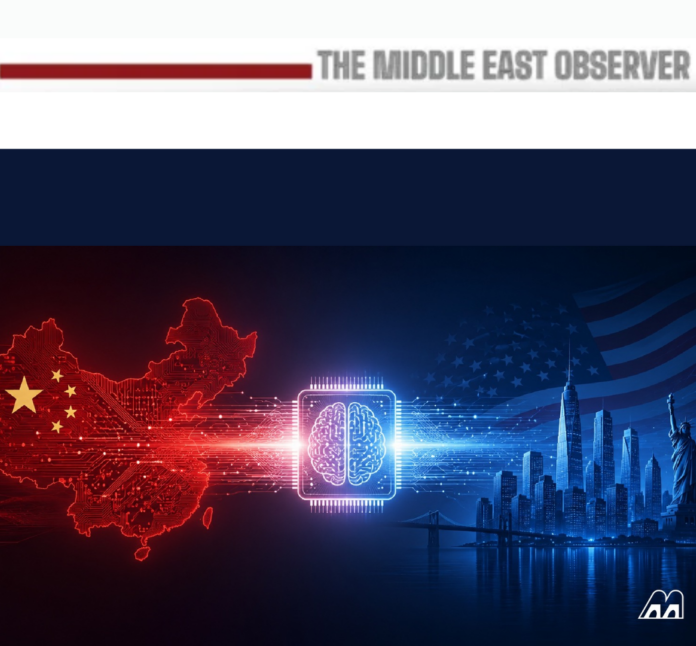
Austria’s central bank has deployed a Chinese artificial intelligence model to investigate banks’ exposure to private credit, estimating that comparable US-based AI alternatives could have cost more than €5mn extra, according to the Financial Times Group’s The Banker.
The Oesterreichische Nationalbank (OeNB) used MiniMax M2.7, developed by Chinese AI company MiniMax, to research and classify 68,205 financial counterparties, addressing a longstanding difficulty in tracing lending relationships across the opaque private-credit market.
The model was deployed on the central bank’s own infrastructure rather than accessed through an external AI service, allowing researchers to conduct large-scale automated investigations while retaining local control over model operations.
The €5mn figure represents a reported estimate of the additional cost of alternative AI models, rather than independently verified cash savings. The central bank’s published research confirms that externally supplied large language models would have made the exercise prohibitively expensive but does not disclose a detailed comparative cost calculation.
The findings, published in the OeNB’s Financial Stability Report on November 11, identified €12bn in Austrian financial institutions’ private-credit exposure at the end of 2025. Banks accounted for €4.4bn, insurers €6.2bn and pension funds €1.4bn.
Bank exposure represented less than 0.5% of assets, leading researchers to conclude that directly measured private-credit positions currently pose no material threat to Austrian financial stability. They nevertheless warned that opaque structures, cross-border links and potential indirect losses warranted continued scrutiny.
The investigation also demonstrates the growing commercial challenge posed by Chinese AI developers to established American suppliers. Open-weights models that institutions can deploy locally offer an alternative for data-intensive financial research, although comparative performance, licensing and infrastructure costs remain important considerations.
For banks and regulators, the emerging question is not simply which country develops the most powerful AI models, but which technology can deliver reliable, secure and auditable analysis at a sustainable cost.
Related news:
IMF Warns 22% of Global Banking Assets Vulnerable to Financial Shocks
Can Digital Banking Help Expand Financial Inclusion in Egypt?
Read also:
Middle East Concept Stores Expand as Online Shopping Reshapes Retail
NBE Signs EGP 975mn KOUN Loan as Ras El Hekma Project Advances Deliveries
