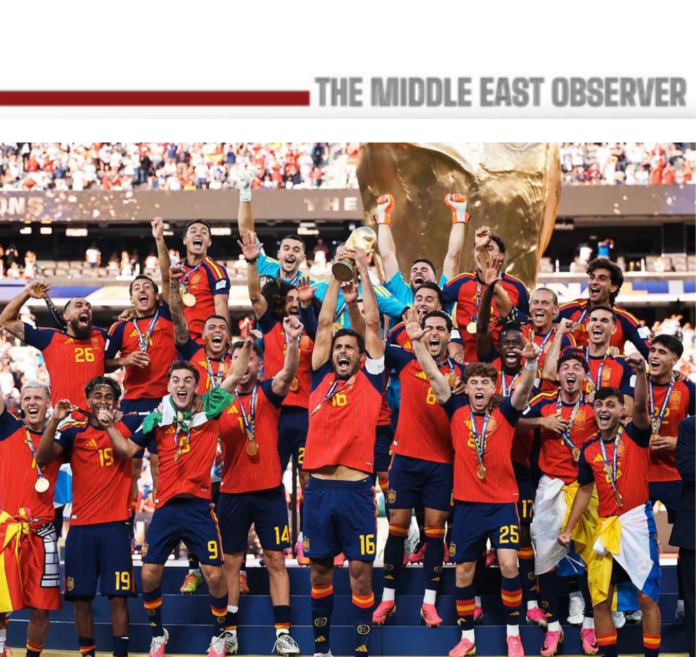
By the time Spain lifted the FIFA World Cup trophy above the heads of more than 80,000 spectators at New York New Jersey Stadium on 19 July, the world’s largest football tournament had delivered nearly six weeks of unforgettable drama, historic firsts and compelling storylines. The first 48-team World Cup succeeded in expanding football’s global reach without diminishing its competitive intensity, producing new contenders, memorable upsets and fresh starts while demonstrating that the traditional balance of power is steadily evolving.
From Europe’s resurgence to Africa’s strongest collective performance in World Cup history, from Lionel Messi’s likely farewell to the emergence of Lamine Yamal as football’s newest global icon, the 2026 tournament marked the beginning of a new era. Yet beyond the celebrations, it also left FIFA confronting difficult questions over officiating consistency, governance and the credibility of the Video Assistant Referee (VAR) system—issues that would ultimately become almost as widely debated as the football itself.
At the centre of the tournament stood Spain, a team that combined tactical intelligence, technical excellence and remarkable maturity to deservedly reclaim football’s greatest prize sixteen years after its historic triumph in South Africa.
Spain Return to the Summit
Spain arrived in North America as one of the favourites but without the overwhelming expectations that surrounded defending champions Argentina or France’s star-studded squad. Under head coach Luis de la Fuente, however, La Roja had quietly evolved into one of the world’s most complete teams.
Unlike the Spain of 2010, whose dominance was built almost exclusively on prolonged possession, this generation combined technical control with greater athleticism, vertical attacking play and relentless pressing. The philosophy remained recognisably Spanish, but it had become faster, more direct and considerably more adaptable.
The emergence of 19-year-old Lamine Yamal symbolised that transformation. Already one of football’s brightest talents, Yamal provided creativity and unpredictability on the right flank, while Nico Williams stretched opposing defences with pace and direct running from the opposite wing. Together, they offered Spain a level of attacking dynamism rarely associated with previous generations.
Behind them, Rodri once again demonstrated why many regard him as the world’s finest holding midfielder. Calm under pressure, tactically disciplined and exceptional in possession, he dictated Spain’s rhythm throughout the tournament while shielding one of the competition’s most organised defensive units.
Spain progressed confidently through the group stage before overcoming increasingly demanding opponents in the knockout rounds. Each victory reinforced the impression of a side growing stronger as the tournament advanced. Unlike many previous champions that relied heavily on moments of individual brilliance, Spain consistently controlled matches through collective organisation, intelligent movement and tactical discipline.
By the time they reached the final, they had established themselves as arguably the tournament’s most complete team.
A Final Worthy of the Occasion
The championship match brought together two contrasting football stories.
Argentina sought to become the first nation since Brazil in 1962 to retain the World Cup, while Lionel Messi pursued what many believed would be the perfect conclusion to an extraordinary international career. Spain, meanwhile, aimed to confirm that a new generation had successfully restored one of football’s great powers to the summit of the global game.
The final itself developed into a fascinating tactical contest.
Spain dominated possession from the opening whistle, patiently circulating the ball while limiting Argentina’s opportunities to launch counterattacks. Rodri controlled the midfield, Yamal repeatedly challenged Argentina’s defence and Nico Williams continuously stretched the field with his pace.
Argentina defended with remarkable determination. Goalkeeper Emiliano Martínez produced several outstanding saves to frustrate Spain, while the experienced defensive partnership absorbed sustained pressure throughout normal time. Despite Spain creating the clearer opportunities, the match remained goalless after 90 minutes.
The balance finally shifted in extra time.
With Argentina increasingly pinned inside its own half and reduced to ten men following Enzo Fernández’s dismissal, Spain intensified its pressure. In the 106th minute, Nico Williams reacted brilliantly to keep a loose ball alive inside the penalty area before delivering it into the path of substitute Ferran Torres.
The forward required only a single touch to write his name into Spanish football history.
His powerful left-footed finish flew beyond Martínez and into the corner of the net, giving Spain the lead their performance had richly deserved. Although Argentina continued fighting until the final whistle, La Roja controlled the closing minutes with remarkable composure before celebrations erupted around the stadium.
For Spain, the victory represented far more than a second World Cup title.
It confirmed the successful completion of one of international football’s most impressive generational transitions. Following the retirement of legends such as Andrés Iniesta, Xavi Hernández, Sergio Busquets and Iker Casillas, many questioned whether Spain could ever recreate the extraordinary success of the 2008–2012 era.
Instead, a new generation had written its own chapter.
Rather than attempting to imitate the past, De la Fuente’s side modernised Spanish football. Possession remained central, but it was now used as a platform for rapid attacking transitions rather than an objective in itself. The result was a team capable of dominating technically while also matching the physical intensity demanded by contemporary international football.
The End of an Extraordinary Era
For Argentina, defeat carried an emotional significance extending well beyond the result.
At 39, Lionel Messi entered the tournament widely expected to make his final World Cup appearance. Although no longer capable of influencing matches with the relentless consistency that defined his peak years, the Argentine captain remained the emotional and creative leader of the defending champions throughout the competition.
His journey to another final demonstrated the remarkable longevity of one of football’s greatest careers. Yet against Spain’s younger, faster and tactically superior side, Argentina struggled to impose its usual rhythm.
When the final whistle sounded, Messi embraced several Spanish players before acknowledging the Argentine supporters who had travelled across North America hoping to witness one last triumph. Images of the veteran captain leaving the field in tears quickly became one of the tournament’s defining moments.
The symbolism was impossible to ignore.
As Messi’s extraordinary World Cup story appeared to reach its conclusion, another football generation officially took centre stage. Spain’s youthful champions—led by Yamal, Williams, Pedri, Cubarsí and Rodri—now inherit the responsibility of shaping the international game over the coming decade.
The changing of the guard had finally arrived.
A Trophy Ceremony Rich in Symbolism
The presentation ceremony reflected the growing intersection between football, global politics and commercial influence.
Following Spain’s victory, FIFA President Gianni Infantino joined U.S. President Donald Trump in presenting medals to the players before captain Rodri received the FIFA World Cup Trophy. Canadian Prime Minister Mark Carney and Mexican President Claudia Sheinbaum, representing the tournament’s three host nations, also participated in the ceremony.
While trophy presentations routinely feature heads of state and senior political figures, this occasion attracted unusual attention. Trump remained on the podium as Spain prepared to celebrate, prompting a mixture of applause and boos from sections of the crowd before eventually stepping aside for Rodri to lift the trophy. The episode quickly became one of the tournament’s most discussed non-football moments, highlighting the increasingly visible relationship between international sport, political leadership and FIFA’s expanding global profile.
For Spain, however, the ceremony belonged to the players. As golden confetti filled the stadium and teammates celebrated around Rodri, the image symbolised the return of one of football’s traditional powers to the pinnacle of the sport.
The Tournament’s Outstanding Nations
Although Spain deservedly claimed the title, the 2026 FIFA World Cup showcased a broader shift in the international football landscape. Several nations confirmed their status among the elite, while others emerged as genuine contenders capable of challenging the traditional hierarchy.
Spain – Worthy World Champions
Spain combined technical superiority with tactical flexibility more effectively than any other team in the tournament. Their ability to dominate possession without sacrificing attacking pace distinguished them from previous Spanish generations and established a blueprint likely to influence international football over the coming decade.
More importantly, Spain won not because of one outstanding individual, but because of collective excellence. Every department functioned cohesively, from goalkeeper to attack, making La Roja arguably the most complete World Cup champions since Germany’s triumph in 2014.
Argentina – A Proud Defence of the Crown
Although Argentina fell one match short of retaining the title, reaching consecutive World Cup finals represented another remarkable achievement.
Lionel Messi once again inspired his country through crucial stages of the tournament, while Emiliano Martínez reaffirmed his reputation as one of football’s finest tournament goalkeepers. Argentina’s resilience and competitive spirit ensured that the defending champions remained among the world’s leading football nations despite the disappointment of the final.
France – Mbappé’s Tournament
France once again demonstrated exceptional squad depth and attacking quality.
Although Les Bleus were unable to reach the final, Kylian Mbappé finished as the tournament’s leading scorer, reinforcing his position as arguably the world’s most dangerous forward. At just 27 years of age, he now appears well positioned to become the defining player of the next World Cup cycle.
England – Another Step Forward, Another Missed Opportunity
England continued their recent trend of consistently reaching the latter stages of major tournaments.
Their disciplined performances and tactical maturity once again underlined the progress achieved under successive coaching regimes. Yet another semifinal exit also reinforced the persistent challenge facing English football—transforming promising campaigns into major international titles.
Norway – Europe’s Biggest Surprise
Among European nations, Norway produced one of the tournament’s greatest shocks by eliminating five-time world champions Brazil.
The victory demonstrated that Europe’s competitive depth continues to expand beyond its traditional powers. Norway’s disciplined organisation and fearless attacking approach earned widespread admiration and established the Scandinavian nation among the tournament’s most impressive performers.
The Beginning of Football’s New Generation
Beyond the results themselves, perhaps the most enduring football story of the 2026 World Cup was the unmistakable transition from one generation to another.
For nearly two decades, international football revolved around Lionel Messi and Cristiano Ronaldo, supported by contemporaries such as Luka Modrić, Robert Lewandowski and Neymar. Their rivalry defined an extraordinary era that transformed the global popularity of the sport.
North America 2026 represented the first World Cup in which a younger generation clearly assumed centre stage.
Lamine Yamal emerged as football’s newest global superstar, displaying remarkable composure and creativity despite his youth. Nico Williams confirmed his status among Europe’s elite wingers, while Rodri’s influence throughout the tournament highlighted the growing importance of intelligent midfield control in modern football.
Elsewhere, players such as Jude Bellingham, Jamal Musiala, Kylian Mbappé and several emerging South American and African talents reinforced the impression that international football has entered one of its most competitive periods in decades.
Unlike previous eras dominated by one or two outstanding national teams, today’s global game appears increasingly balanced. The technical and tactical gap separating football’s traditional giants from emerging nations continues to narrow, making future World Cups significantly more unpredictable.
A Tournament That Expanded Football’s Horizons
The 2026 edition also represented FIFA’s most ambitious organisational undertaking.
For the first time, 48 nations competed across three host countries in a tournament comprising 104 matches. Prior to kick-off, critics questioned whether expansion would dilute the quality of competition or produce one-sided group-stage encounters.
Instead, the opposite largely occurred.
The expanded format enabled several emerging football nations to demonstrate genuine competitiveness against established powers. The additional qualification places rewarded football’s global development without noticeably reducing overall quality, while the Round of 32 created additional knockout drama and broadened worldwide interest throughout the competition.
The tournament’s commercial success, strong attendances and global television audiences are likely to encourage FIFA to continue expanding football’s international footprint in future editions.
Nevertheless, the World Cup also highlighted challenges that accompany such growth, including increased fixture congestion, player workload, complex logistics and, perhaps most importantly, greater scrutiny of refereeing standards under the expanded global spotlight.
More Than a Champion
Spain will deservedly be remembered as the 2026 FIFA World Cup champions.
Their victory reflected outstanding coaching, intelligent squad development and a style of football that successfully balanced tradition with modern tactical innovation. Sixteen years after Andrés Iniesta’s famous goal secured Spain’s first World Cup, another generation had written its own place in football history.
Yet the significance of North America 2026 extended well beyond the identity of the champions.
It marked the successful introduction of a larger, more inclusive World Cup, showcased the emergence of a new generation of global stars and demonstrated that international football’s competitive landscape is evolving more rapidly than ever before.
If Spain represented the tournament’s greatest footballing success, another story was unfolding simultaneously.
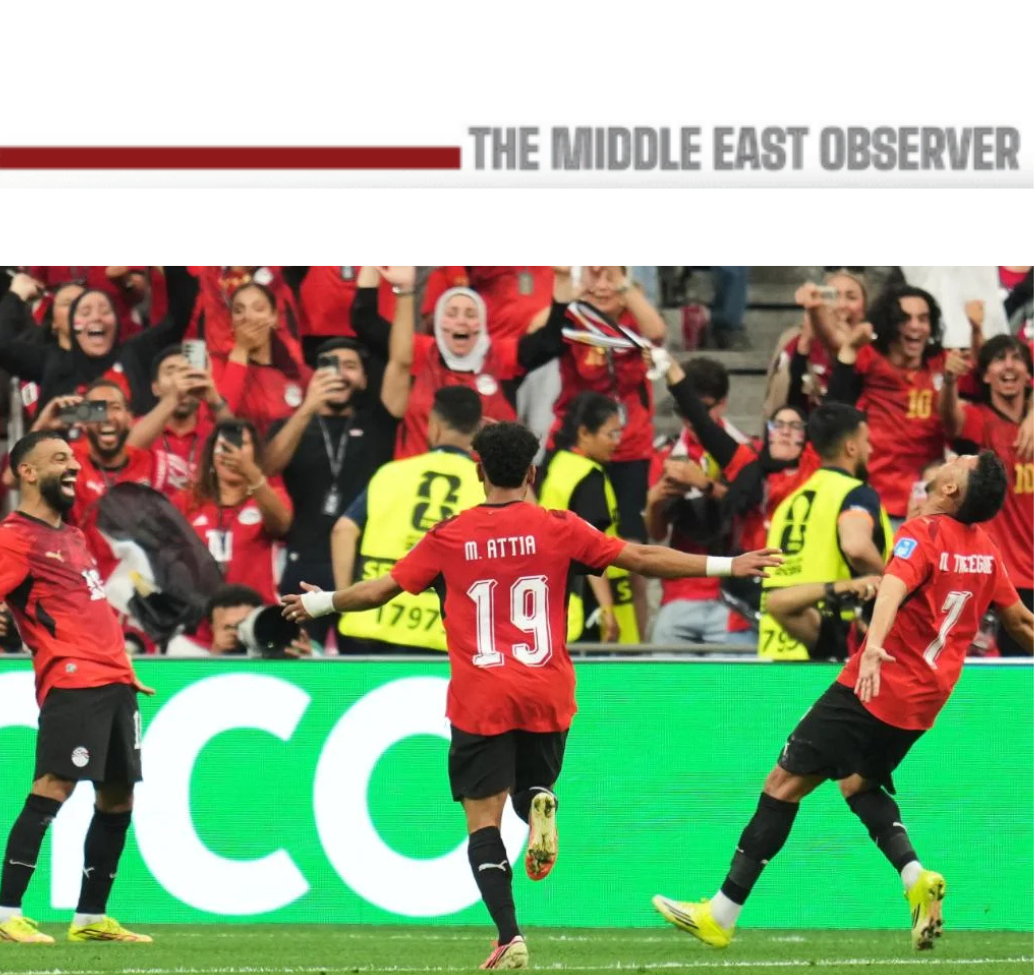
Away from the celebrations in New York, Africa quietly produced its strongest collective World Cup performance in history. Morocco confirmed that its remarkable run in Qatar was no isolated achievement, while Egypt captured worldwide attention with an extraordinary campaign that transformed perceptions of African football before ending in one of the tournament’s most fiercely debated matches.
That remarkable African story—and the controversy surrounding Egypt’s elimination—would ultimately become one of the defining legacies of the 2026 FIFA World Cup.
Related news:
Spain Top FIFA Rankings Ahead of 2026 World Cup Group Stage
Egypt’s World Cup Awakening: Why One Victory Means Far More Than Three Points
Read also:
Jordan’s Exports Rise 9% as Industry and Logistics Drive Trade Recovery
Tabby Becomes Licensed Consumer and SME Lender in Saudi Arabia