

Climate event poses risks to growth, sovereign finances and food security as adaptation funding gap widens
Investors, lenders and policymakers are facing rising climate risks after the African Development Bank (AfDB) warned that a developing El Niño could inflict between US$10 billion and US$20 billion in economic losses on Africa’s most vulnerable economies, posing risks to economic growth, public finances and food security.
Anthony Nyong, the AfDB’s Director of Climate Change and Green Growth, told Reuters that the hardest-hit countries could see gross domestic product (GDP) reduced by an average of 1–2 per cent, while widespread crop losses and infrastructure damage could increase migration from severely affected regions.
The estimate is among the first comprehensive economic assessments by a multilateral development bank of the potential impact of the developing climate event on Africa. It comes as meteorological agencies monitor warming sea-surface temperatures in the equatorial Pacific that are expected to produce El Niño conditions, although the event’s ultimate strength remains uncertain. Reuters reported that the AfDB is preparing to review its investment portfolio in response to the growing risks.
Climate risks extend beyond agriculture
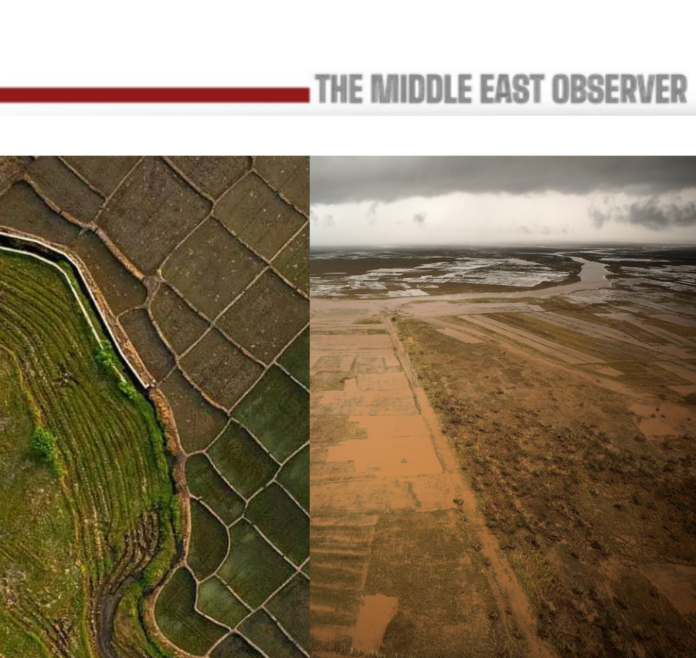
El Niño is a naturally occurring warming of the central and eastern Pacific Ocean that alters global atmospheric circulation and rainfall patterns. In Africa, it has historically brought prolonged droughts to much of southern Africa while increasing flooding risks in parts of eastern Africa, affecting agriculture, hydropower generation, transport infrastructure and water supplies.
The World Meteorological Organization (WMO) has forecast a high probability that El Niño conditions will persist into late 2026 but has not formally classified the event as a “super” El Niño, underscoring the uncertainty surrounding its eventual intensity.
The AfDB warned that a severe event would reduce agricultural production while forcing governments to increase spending on food imports, emergency relief and infrastructure reconstruction. At the same time, weaker economic activity could erode tax revenues and foreign-exchange earnings, placing additional pressure on countries already facing elevated borrowing costs.
Nyong said repeated climate shocks risk creating a “climate finance trap,” in which governments divert scarce resources away from education, healthcare and productive investment towards emergency response and reconstruction.
Sovereign finance under increasing pressure
The warning carries growing implications for investors.
Major credit-rating agencies, including Moody’s Ratings, S&P Global Ratings and Fitch Ratings, have increasingly highlighted climate vulnerability as a structural factor affecting sovereign creditworthiness, particularly for lower-income economies with limited fiscal buffers and high dependence on climate-sensitive sectors.
Higher fiscal deficits, weaker export earnings and rising food-import bills could increase refinancing requirements for several frontier African economies, potentially widening sovereign bond spreads if climate-related losses prove more severe than expected.
The AfDB itself has approved more than US$220 billion in financing since its establishment in 1964, making climate resilience increasingly important for the long-term performance of infrastructure, agriculture, energy and private-sector investments across the continent.
Food inflation and commodity markets
Agriculture is expected to remain the principal transmission channel for the economic shock.
Nyong said African farmers are projected to lose approximately US$327 million in income this year, while fisheries output could decline by 1–4 per cent. He added that maize prices in the most vulnerable markets could double if prolonged drought significantly reduces harvests.
Higher food prices would contribute to inflation, increase food-import requirements and place additional pressure on government budgets already constrained by elevated debt-servicing costs.
World Bank research indicates that El Niño can affect agricultural production across more than one-quarter of global cropland, with average yields of maize, wheat and rice generally declining during major episodes, although impacts vary considerably between regions.
Historically, major El Niño episodes have also been associated with increased volatility in international agricultural commodity markets, particularly for maize, coffee, cocoa and sugar, although the scale of price movements depends on regional weather conditions and global inventories.
Lessons from previous events
The risks are supported by recent experience.
The 2015–16 El Niño, among the strongest on record, contributed to severe drought across southern Africa, leaving around 40 million people requiring humanitarian assistance, according to regional authorities and the WMO. More recently, the 2023–24 El Niño contributed to drought across southern Africa and widespread flooding in eastern Africa, disrupting agricultural production, transport networks and energy infrastructure.
Countries identified by the AfDB—including Sudan, South Sudan, Somalia, Mali, Burundi, the Democratic Republic of Congo and Nigeria—already face varying degrees of conflict, displacement or institutional fragility, increasing their vulnerability to climate-related shocks.
Adaptation finance gap widens
To prepare for the developing climate risks, the AfDB plans to review its investment portfolio while working with governments to mobilize additional resources from international climate-finance mechanisms.
Nyong estimated Africa’s adaptation requirements could approach US$100 billion over the coming year, roughly double previous estimates.
According to the United Nations Environment Programme (UNEP), developing countries are projected to require between US$310 billion and US$365 billion annually by 2035 for climate adaptation, while current international public adaptation finance remains substantially below those levels, highlighting the scale of the global financing gap.
Insurance and resilience
Climate risks are also drawing greater attention from insurers and reinsurers.
The African Risk Capacity has issued more than 300 sovereign climate-risk insurance policies and paid over US$250 million in claims since its creation, demonstrating the growing role of risk-transfer mechanisms in supporting governments following climate-related disasters.
However, analysts generally agree that insurance alone cannot offset the economic costs of increasingly frequent extreme weather events. Long-term resilience will depend on sustained investment in irrigation, flood protection, early-warning systems, climate-smart agriculture and resilient transport and energy infrastructure.
Market outlook
Whether economic losses ultimately approach the AfDB’s upper estimate will depend on how Pacific Ocean temperatures evolve over the coming months and on the geographic distribution of droughts and floods across the continent.
Regardless of the event’s eventual intensity, the warning reinforces a broader trend already evident in global capital markets: climate resilience is becoming an increasingly important consideration in sovereign credit assessments, infrastructure financing, insurance pricing and agricultural investment decisions.
For governments, development lenders and institutional investors, adaptation spending is increasingly being viewed not simply as environmental policy but as an essential component of long-term economic stability and financial resilience.
Related news:
Climate Crisis Escalates: Earth Enters Era of Near-Permanent Heat Records
Egypt Pushes Africa’s Food Security Agenda at G20’s Historic Meeting
Read also:
Egyptian startups secure $3.5mn as investors favour infrastructure
Andy Burnham begins UK premiership with activist agenda and immediate cost-of-living push