

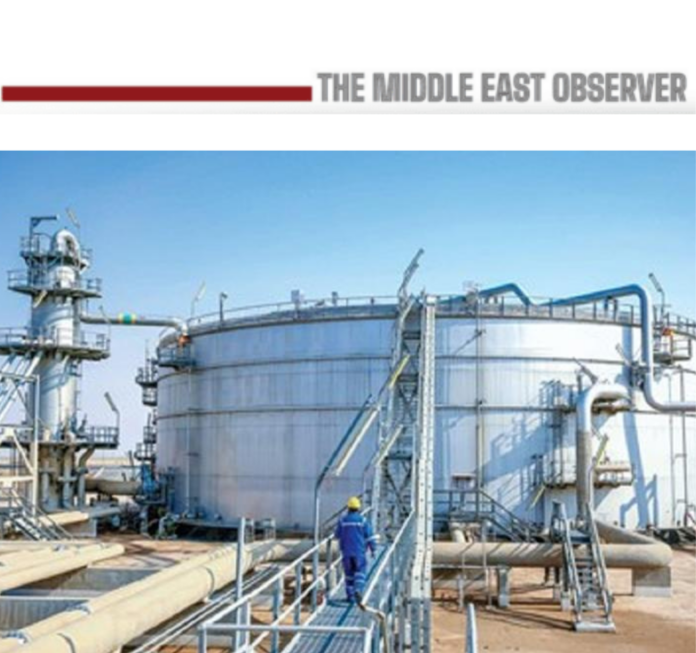
Largest foreign investment in Kuwait positions Gulf infrastructure as a resilient asset class despite regional tensions
Kuwait Petroleum Corporation (KPC) has agreed a US$16 billion infrastructure partnership with Blackstone, Brookfield Asset Management and KKR, unlocking US$7.85 billion from its crude-oil pipeline network as the Gulf state accelerates investment to expand production capacity while retaining full control over one of its most strategic energy assets.
The transaction, known as Project Peregrine, is the largest foreign direct investment announced in Kuwait’s history, according to KPC, and underscores continued international appetite for contracted Gulf energy infrastructure despite heightened geopolitical tensions across the Middle East. Reuters reported that the agreement follows months of negotiations and remains subject to customary regulatory approvals.
Under the 20.5-year lease-and-leaseback structure, Kuwait Oil Company (KOC), KPC’s upstream subsidiary, will transfer the economic rights of 13 crude-oil pipelines spanning approximately 320 kilometres into a newly created joint venture.
KOC will retain a controlling 51% stake, while Blackstone, Brookfield and KKR will each hold equal portions of the remaining 49%. Kuwait will continue to own the physical assets and retain exclusive responsibility for operating, maintaining and managing the country’s crude production and export system.
Rather than privatising strategic infrastructure, the transaction monetises future pipeline revenues. Investors receive contracted tariff-based cash flows linked to transported volumes, while KOC secures immediate capital without relinquishing ownership or operational authority.
“This transaction represents the largest foreign direct investment in Kuwait’s history and a defining milestone for our country’s economic development,” Sheikh Nawaf Saud Al-Sabah, Deputy Chairman and Chief Executive of KPC, said.
Financing supports long-term investment
The US$16 billion valuation reflects the enterprise value of the infrastructure partnership rather than the cash received by Kuwait. KOC expects approximately US$7.85 billion in upfront proceeds, broadly corresponding to the consortium’s 49% economic interest.
Although the companies have not disclosed the final financing structure—including debt levels, tariff arrangements or expected investor returns—Reuters reported during the bidding process that earlier financing discussions envisaged substantial project debt alongside investor equity, consistent with global infrastructure transactions. Centerview Partners, HSBC and JPMorgan advised on the deal.
The proceeds will support KPC’s objective of increasing sustainable crude production capacity to 4 million barrels per day by 2035, while helping finance broader investment across upstream production, refining and associated energy infrastructure.
Capital recycling becomes Gulf standard
Project Peregrine extends a financing model increasingly adopted by Gulf national oil companies.
ADNOC raised billions of dollars through crude- and gas-pipeline partnerships beginning in 2019, while Saudi Aramco completed landmark oil- and gas-pipeline leaseback transactions in 2021 before expanding the model to the Jafurah gas development.
These structures separate infrastructure cash flows from sovereign ownership. Governments retain strategic control while institutional investors gain access to stable, long-duration revenues that are generally less sensitive to daily commodity-price movements than upstream oil production.
According to S&P Global Commodity Insights, demand for contracted energy infrastructure has remained resilient as pension funds, insurers and alternative asset managers continue to seek long-duration assets capable of generating predictable cash flows despite higher global interest rates. That trend has increasingly directed private capital towards Gulf energy infrastructure, where low production costs and state-backed operators provide relatively strong credit fundamentals.
Strategic financing—not a liquidity necessity
Kuwait’s decision to attract private capital is strategic rather than driven by a shortage of financial resources.
While the Kuwait Investment Authority manages one of the world’s largest sovereign wealth funds, infrastructure monetisation enables the government to diversify funding sources, preserve long-term sovereign assets and redirect capital tied up in mature infrastructure towards higher-return upstream investments.
The transaction also reflects Kuwait’s broader efforts to modernise financing mechanisms as it pursues significant energy-sector investment over the coming decade.
Geopolitical resilience
Although the agreement was signed during heightened regional tensions and continuing security concerns surrounding Gulf energy infrastructure, the project itself predates the latest escalation. Reuters first reported KPC’s infrastructure monetisation plans several months earlier, indicating that the transaction forms part of a long-term capital strategy rather than an emergency response to regional conflict.
Its successful execution nevertheless demonstrates that large institutional investors continue to distinguish between short-term geopolitical volatility and the long-term commercial value of strategic Gulf energy infrastructure.
Market assessment
For Kuwait, Project Peregrine immediately unlocks US$7.85 billion while preserving sovereign ownership and operational control of critical energy infrastructure. The longer-term value, however, will depend on whether those proceeds accelerate production growth and generate returns exceeding the long-term cost of the leaseback commitments.
For Blackstone, Brookfield and KKR, investment performance will depend less on daily oil-price movements than on transported volumes, financing costs, tariff design and the operational resilience of Kuwait’s pipeline network over the next two decades.
Beyond Kuwait, the transaction reinforces a broader shift in global infrastructure investing. As governments seek new sources of capital without surrendering strategic assets, Gulf national oil companies are increasingly transforming mature energy infrastructure into investable platforms for institutional capital. Whether Project Peregrine becomes the benchmark for the region’s next generation of infrastructure partnerships will depend on its financial performance, execution and the continued willingness of global investors to commit long-term capital to one of the world’s lowest-cost oil-producing regions.
Related news:
Kuwait at 65: A Strategic Partnership with Egypt Poised for Deeper Economic Integration
SUMED Reinforces Energy Security Role in Global Oil Transport
Read also:
Egyptian Petrojet–Enppi Consortium Wins Place on Oman’s $6bn EPC Framework
Egypt Prepares to Launch Its First Virtual Hospital in Ismailia