Concrete built the modern Middle East. The next challenge may be making it last longer.
Researchers and construction-material companies are developing “self-healing” concrete designed to seal small cracks before water and salts penetrate deeply enough to damage reinforced structures. For Egypt, where coastal development, underground transport and infrastructure investment are expanding, the technology raises a financial question: can spending more on concrete today reduce maintenance costs over several decades?
Concrete that repairs itself
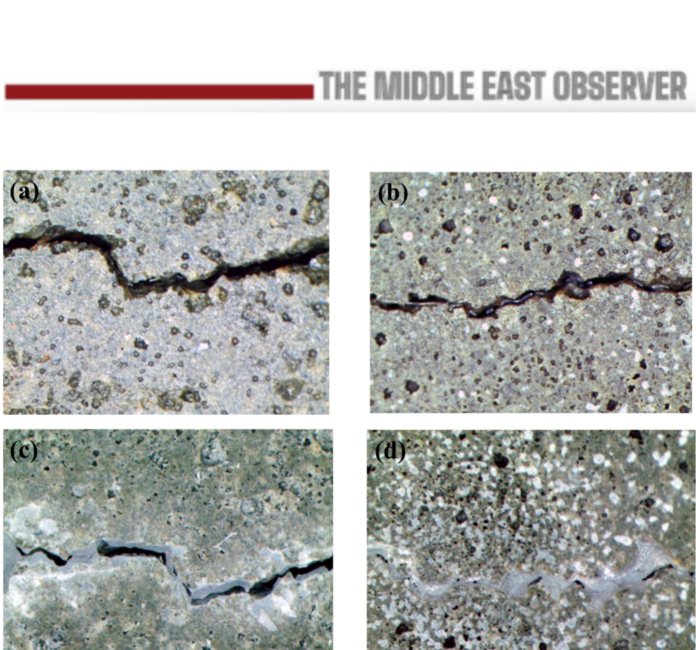
Bacterial self-healing systems incorporate microorganisms and nutrients into concrete, often using protective carriers or encapsulation. When cracks allow moisture to enter, bacterial activity can produce calcium carbonate — essentially limestone — which helps seal the fracture and restrict further water penetration.
Commercialisation has moved beyond the laboratory. Netherlands-based Basilisk, whose technology originated at Delft University of Technology, markets microorganism-based systems capable of repairing cracks of up to about 1mm.
But the technology remains emerging rather than mainstream. Performance varies according to formulation, crack size and environmental conditions.
Egypt as a testing ground
The proposition could be particularly relevant to Egypt, where Mediterranean and Red Sea developments, ports, tunnels and underground transport face long-term challenges from water ingress and salinity. New Alamein illustrates the scale of coastal construction now under way.
Proven alternatives already exist, including sulphate-resistant cement, low-permeability concrete, waterproofing systems and protective reinforcement. Self-healing concrete should therefore be viewed as a complement rather than a substitute.
Its strongest argument is economic.
The technology effectively exchanges part of an asset’s uncertain future operational expenditure for a more predictable upfront capital premium.
Costs vary considerably. Estimates for microbial systems vary widely, with some studies and industry assessments suggesting premiums can reach 25 to 50 per cent depending on formulation, scale and application. But that does not translate into an equivalent increase in the cost of a bridge or tunnel because concrete represents only one component of total project expenditure.
The potential return comes later.
Reinforced concrete exposed to water and salts can require repeated crack repair, waterproofing and eventually corrosion remediation. Self-healing systems seek to reduce those interventions by sealing microcracks before they become pathways for moisture and chlorides.
For infrastructure operators, direct repair expenditure is only part of the calculation. Closing a railway tunnel, traffic lane or port facility can impose economic costs substantially greater than the materials and labour required for the repair itself.
Academic modelling suggests self-healing technologies could extend maintenance intervals and asset lives, but long-term commercial evidence remains limited. The real test is whether the higher construction cost produces a lower whole-life cost.
An industrial opportunity for Egypt
Egypt’s large cement industry and domestic construction market could provide a platform for localisation if pilot projects establish a commercial case.
Universities, cement producers and contractors could test bacterial cultures, encapsulation systems and concrete formulations under Egyptian conditions, focusing initially on tunnels, coastal structures and water infrastructure.
The sustainability argument is also relevant. Cement production is energy- and carbon-intensive. Extending the useful life of concrete could reduce the materials required for repeated repair and replacement, shifting the decarbonisation debate from simply reducing emissions per tonne towards extracting more years of service from every tonne produced.
Trials would need to measure more than whether cracks close. Initial costs, permeability, reinforcement corrosion, maintenance expenditure, downtime and service life would determine whether the technology offers a genuine commercial advantage.
A regional market
Success in Egypt could provide a route into a wider Middle Eastern market.
Saudi Arabia’s infrastructure programme is generating demand for materials capable of enduring severe heat, salinity and other environmental stresses. Yet those same conditions mean technologies developed in European laboratories cannot simply be assumed to perform identically in Cairo or Riyadh.
Local testing, certification and long-term performance data will be essential.
Conventional durability solutions will therefore dominate Middle Eastern construction in the near term. The more realistic opportunity is targeted deployment where difficult maintenance and operational disruption make lifecycle economics more important than achieving the lowest initial construction price.
Self-healing concrete will not mean the end of cracks, nor can bacteria compensate for poor construction or serious structural damage. Its promise is more practical: preventing small defects from becoming expensive ones.
For a region investing heavily in infrastructure expected to serve generations, the next construction revolution may be measured not simply by how quickly the Middle East builds, but by how long what it builds can endure.
Related news:
New Clay Technology Challenges Traditional Cement Production
Net-Zero Cement Production: A Step Towards Sustainability
Read also:
Damietta Incident: Between the Media Narrative and the Possibility of a False Flag Operation