Healthcare reconstruction project marks one of Damascus’ largest post-conflict public infrastructure initiatives as authorities seek to restore essential medical services through international partnerships.
Syria has awarded Canada-based InterHealth Canada a contract to rehabilitate and modernise 14 public hospitals, marking one of the country’s most significant healthcare reconstruction initiatives in recent years as Damascus seeks to rebuild essential public services through international expertise and institutional investment.
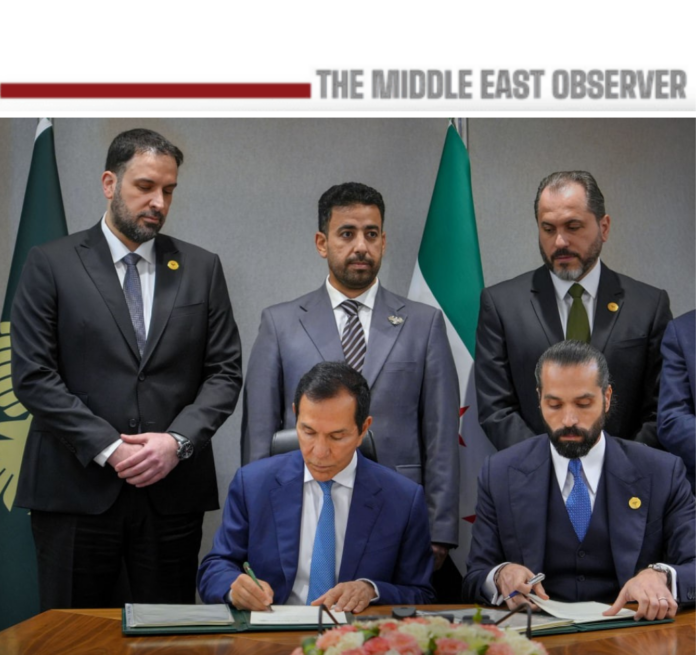
The agreement was signed between SARH Holding Company, the investment arm of the Syrian Sovereign Fund, and InterHealth Canada in coordination with the Ministry of Health. Financial terms were not disclosed. The two-year programme will upgrade hospital infrastructure, install advanced medical equipment, modernise digital and operational systems, and introduce internationally recognised clinical and hospital management standards across the selected facilities.
The project forms part of the government’s “Model Hospital in Every Province” initiative, under which one major public hospital in each governorate will undergo comprehensive rehabilitation. Syrian Health Minister Musab al-Ali said the programme is intended to restore healthcare capacity, improve access to specialised medical services and strengthen the resilience of the country’s public health system after more than a decade of conflict.
Syria’s healthcare sector has suffered extensive damage during years of war, with hospitals and clinics destroyed or operating below capacity, creating significant pressure on healthcare access and medical services. The latest initiative reflects a broader shift from emergency humanitarian assistance toward rebuilding long-term healthcare infrastructure and institutional capacity.
Preparatory work began after a memorandum of understanding was signed approximately six months ago. InterHealth Canada, an international healthcare management company with experience developing and operating hospitals across the Middle East, Europe, Latin America and Asia, deployed engineering teams to conduct technical assessments and feasibility studies before implementation commenced.
Project officials said the programme will be delivered in six phases covering planning, technical studies, rehabilitation works, medical equipment procurement, operational commissioning and the transfer of expertise to Syrian engineers and healthcare professionals. Alongside infrastructure upgrades, the partnership includes staff training, quality assurance systems and internationally recognised hospital management practices aimed at improving operational efficiency and patient care.
The agreement represents one of the first major healthcare projects undertaken through the Syrian Sovereign Fund, underscoring the government’s strategy of using public-private partnerships to accelerate reconstruction of essential public infrastructure. It also reflects the gradual re-engagement of international companies in selected sectors of Syria’s recovery despite continuing economic and financial constraints.
Implementation is expected to face challenges, including financing arrangements, procurement of specialised medical equipment, shortages of skilled healthcare personnel and the wider pace of Syria’s economic recovery. Although humanitarian and healthcare activities generally benefit from sanctions-related exemptions, logistical and financial restrictions are likely to remain key considerations throughout the project.
Beyond upgrading hospitals, the initiative will serve as an early test of Syria’s ability to attract sustained international participation in rebuilding critical public infrastructure. Its progress is likely to be closely watched as a benchmark for future investment in the country’s healthcare sector and broader reconstruction programme.
Related news:
Egypt and Syria Prepare to Restore Cairo–Damascus Air Link
Syria Turns to Chinese Smart Industrial Model to Drive Reconstruction and Investment
Read also:
El-Sisi Orders Stronger Food Security, Strategic Reserves and Targeted Social Protection