CAIRO — Egypt and Senegal have advanced plans for a commercial shipping link between Alexandria and Dakar, forming a joint committee to finalise a maritime-cooperation agreement as Cairo seeks stronger access to West Africa and, potentially, wider Atlantic markets.
The proposal dates to January 2025, when Egyptian and Senegalese officials discussed establishing an Alexandria–Dakar service to support bilateral trade. Earlier talks also covered developing Dakar as a logistics hub and an economic zone around Senegal’s new Ndayane port.
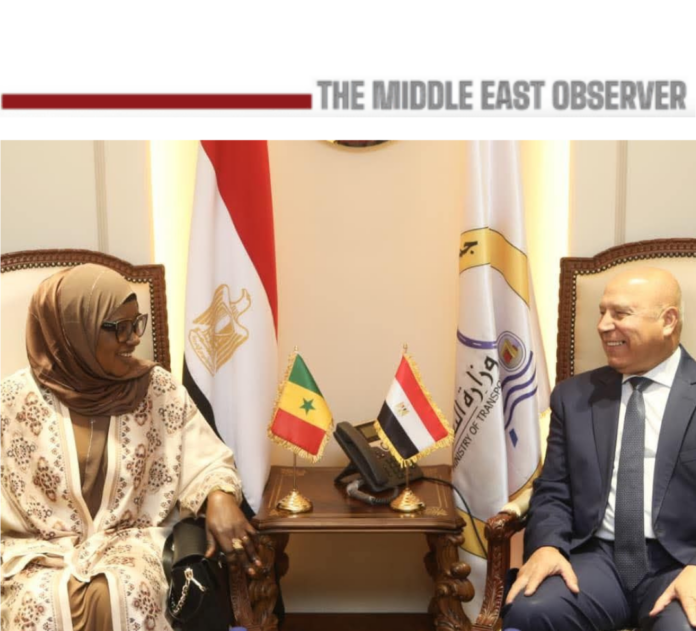
The initiative moved a step forward on September 16, when Egyptian Transport Minister Kamel El Wazir and Senegalese maritime minister Amy Mara Dièye agreed to establish a joint ministerial committee to reach the final wording of a bilateral maritime-cooperation agreement ahead of signing. The talks also covered shipbuilding, fishing vessels and maritime training.
The proposed service could reduce reliance on indirect transshipment routes while opening a more structured channel for Egyptian exports into West Africa and for Senegalese goods into Egypt and Middle Eastern markets. No operator, launch date, sailing frequency, vessel capacity or investment requirement has yet been announced.
Dakar gives the plan significance beyond bilateral commerce. DP World describes its terminal as a gateway for West Africa, with direct connections to Europe, the Americas and Asia. That network could eventually provide onward Atlantic options for Egyptian cargo, including connections towards Latin America, although such an extension is a strategic commercial possibility rather than part of the bilateral project announced by Cairo and Dakar.
The potential could strengthen with Senegal’s $1.2bn Ndayane deep-water port, around 50km from Dakar. Its first phase is designed to handle 1.2mn TEUs annually, while completion is targeted for 2028 as existing Dakar facilities approach their physical limits. Dakar handled about 850,000 TEUs in 2025.
The immediate next step is to finalise and sign the maritime agreement. Converting the proposal into a scheduled service would still require an operator, sufficient two-way cargo commitments, workable sailing frequency, vessel utilisation and viable backhaul economics.
If those conditions are met, Alexandria–Dakar could develop beyond a bilateral shipping link into part of a broader Mediterranean–West Africa–Atlantic trade corridor.
Related news:
Egypt and Eritrea Sign Maritime Cooperation
Morocco Pursues $26bn Financing for Atlantic Gas Pipeline
Read also:
OPEC+ Boosts June Output by 188,000 bpd in First Meeting After UAE Exit
Joint Satellite Project Strengthens Saudi-Egyptian Push into Space Economy