
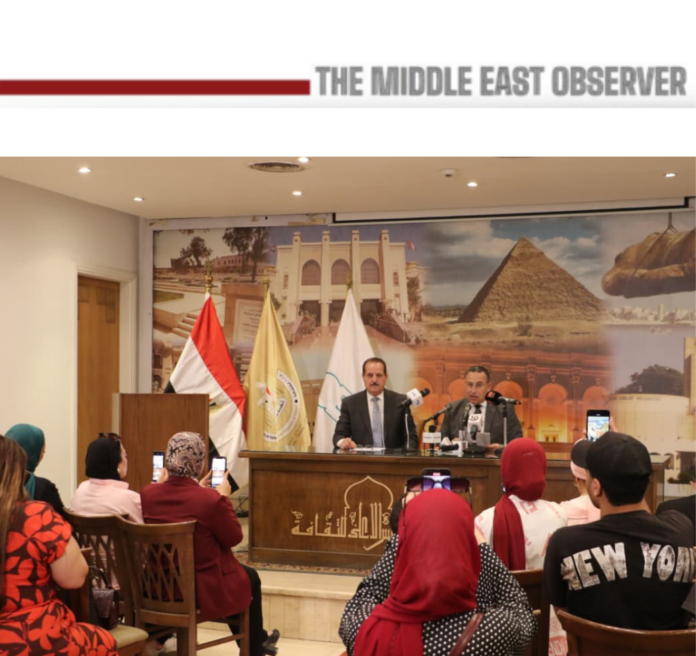
CAIRO — Egypt honoured former Minister of Culture Farouk Hosny, veteran actor and playwright Mohamed Sobhy, and a distinguished group of artists, scholars and cultural figures with the 2026 State Awards, recognising careers that have shaped the country’s artistic and intellectual landscape. Announced by the Supreme Council of Culture, the annual honours reaffirm the state’s commitment to preserving cultural heritage while positioning the creative industries as an increasingly important contributor to education, tourism, cultural diplomacy and economic development.
Established in the late 1950s, the State Awards are regarded as Egypt’s highest official cultural honours and among the Arab world’s most prestigious state-sponsored distinctions. Previous recipients include many of Egypt’s most celebrated writers, artists, intellectuals and academics, making the awards a benchmark for cultural achievement across the region. Candidates are nominated by universities, professional syndicates, cultural institutions and research bodies before being assessed by specialist committees and approved by the Supreme Council of Culture. The awards comprise four categories: the Nile Award, Egypt’s highest cultural distinction, carrying a gold medal and EGP 500,000; the State Appreciation Award, recognising lifetime achievement with a gold medal and EGP 200,000; the State Excellence Award, honouring distinguished professional accomplishment with a silver medal and EGP 100,000; and the State Encouragement Award, which rewards outstanding individual works by emerging and mid-career creators with EGP 50,000.
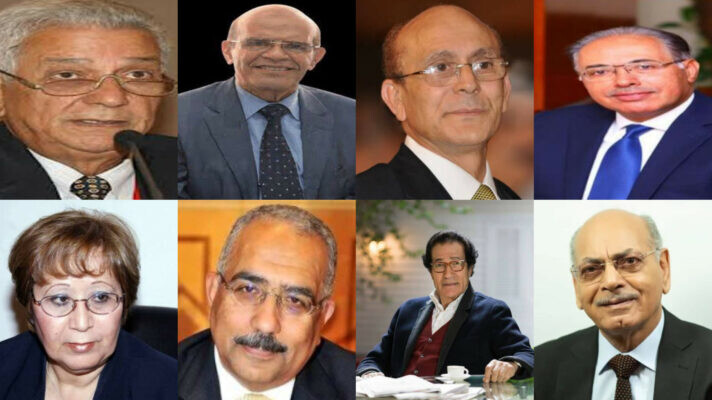
Former Culture Minister Farouk Hosny received the Nile Award for Arts, recognising a career that transformed Egypt’s cultural infrastructure. During nearly a quarter-century in office between 1987 and 2011, Hosny led one of Egypt’s most ambitious programmes of museum development and heritage conservation, overseeing the restoration and modernisation of major museums across the country. His tenure also saw the expansion of cultural centres and theatres nationwide while promoting Egyptian contemporary art on the international stage. Alongside his public service, Hosny earned global recognition as one of the Arab world’s leading abstract painters, exhibiting extensively throughout Europe, Asia and the Middle East. Shortly after receiving the award, he announced that he would donate the entire EGP 500,000 prize to Abu El-Reesh Children’s Hospital, saying that culture fulfils its highest purpose when it serves society.
The Nile Award for Literature was presented to Professor Youssef Noufal, Professor Emeritus of Arabic Language and Literature at Ain Shams University, in recognition of his distinguished contribution to Arabic literary scholarship. Widely regarded as one of Egypt’s foremost authorities on modern Arabic literature, Noufal has authored influential studies on Arabic poetry and literary criticism, supervised generations of postgraduate researchers and played an important role in preserving and interpreting Egypt’s literary heritage through decades of academic research.
Professor Ahmed Youssef Ahmed received the Nile Award for Social Sciences for his distinguished contributions to political science and strategic studies. A long-serving professor at Cairo University, Ahmed is recognised as one of Egypt’s leading specialists in Arab regional affairs, Egyptian foreign policy and international relations. His research and publications have significantly advanced understanding of Middle Eastern geopolitics and regional security while informing academic debate and public policy discussions on diplomacy and strategic affairs.
The Nile Award for Arab Creators was presented to distinguished Iraqi poet and literary critic Professor Ali Jaafar Al-Allaq, honouring his outstanding contribution to contemporary Arabic literature. Widely regarded as one of the leading voices in modern Arabic poetry, Al-Allaq has published acclaimed poetry collections and pioneering works of literary criticism that have influenced contemporary Arab thought. His writings have been translated into several languages and are widely studied in universities throughout the Arab world, cementing his position among the region’s most influential literary figures.
Among the recipients of the State Appreciation Award for Arts, veteran actor, playwright and director Mohamed Sobhy was honoured for a career spanning more than five decades that helped redefine modern Egyptian theatre. His productions became landmarks of Egyptian performing arts by combining commercial appeal with incisive commentary on education, governance, family values and broader social issues. Works including Takharif, Weghet Nazar, Mama America and the acclaimed television series Yawmiyat Wanees have left a lasting imprint on Egyptian popular culture. Beyond his artistic career, Sobhy founded Studio 80 to train young actors, reinforcing theatre’s role in education, artistic excellence and public engagement. The award recognises exceptional lifetime achievement and carries a gold medal together with EGP 200,000.
The same State Appreciation Award was presented to sculptor El-Sayed Abdo Selim, whose career has made a significant contribution to the evolution of contemporary Egyptian sculpture. Renowned for monumental public works that combine the visual language of ancient Egyptian civilisation with modern artistic expression, Selim has participated in major national and international exhibitions while mentoring younger generations of sculptors and contributing to the development of Egypt’s public art movement. The honour includes a gold medal and EGP 200,000.
Master calligrapher Khodeir Al-Borsaidy also received the State Appreciation Award in recognition of his pivotal role in preserving and advancing the art of Arabic calligraphy. Internationally acclaimed for his mastery of classical Arabic scripts, Al-Borsaidy has produced calligraphic works for mosques, museums and public institutions across the Arab world while training successive generations of artists, ensuring the continuity of one of the region’s oldest artistic traditions. The award includes a gold medal and EGP 200,000.
The State Excellence Award was presented to theatre director Ahmed Abdel Gelil, recognising more than half a century of distinguished contributions to Egyptian theatre. Having directed more than 120 stage productions, Abdel Gelil combined artistic achievement with institutional leadership, helping modernise theatre administration while mentoring emerging directors and performers. The award, which includes a silver medal and EGP 100,000, recognises distinguished professional accomplishment and frequently serves as a bridge between established achievement and lifetime recognition.
The State Encouragement Awards, each carrying EGP 50,000, recognised excellence across theatre, music, cinema, architecture, literature and the visual arts, highlighting the state’s commitment to nurturing the next generation of creative professionals. Among the recipients were theatre director Mohamed Zaki, violinist Ebada Ahmed Ali, costume designers Donia Abdel Maaboud and Nehal El-Masry, animation director Nesreen Mohamed Abdel Halim, composer Walaa Mosallam, architect Mohamed Tantawy, writer Dina El-Beltagy, ceramic artist Rehab Roshdy and painter Omar Raafat, whose individual works were celebrated for artistic innovation and creative excellence.
Beyond celebrating individual achievement, the State Awards have become an important instrument of Egypt’s cultural policy. By honouring established artists, distinguished scholars and emerging creators, the awards reinforce the country’s efforts to preserve its cultural heritage while strengthening the creative industries as a source of education, tourism and international cultural engagement. As Egypt continues investing in museums, heritage conservation and cultural infrastructure, the annual honours reflect a broader strategy to strengthen national cultural institutions while expanding the contribution of the creative economy to tourism, education and Egypt’s international cultural influence.
Related news:
Egypt Expands National Theatre Festival Beyond Cairo in Cultural Decentralisation Drive
Hurghada Youth Film Festival to Open Fourth Edition at Newly Renovated Cultural Palace
Read also:
Europe Under Fire: Wildfires Scorch an Area the Size of Luxembourg
Siemens Opens Egypt Factory to Support Smart Grid and Export Ambitions