Higher oil tanker traffic and rising cargo volumes signal a gradual recovery for one of Egypt’s largest sources of foreign currency, although navigation remains below pre-crisis levels.
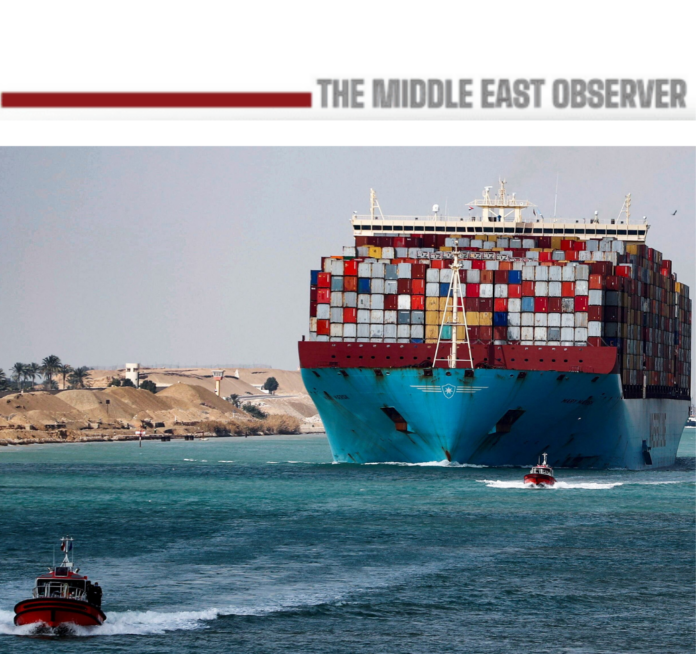
The Suez Canal recorded a stronger second quarter in 2026, offering further evidence of a gradual recovery in global shipping through the strategic waterway after prolonged disruptions to Red Sea trade routes. According to data released by the Central Agency for Public Mobilization and Statistics (CAPMAS), canal revenues rose 13% quarter-on-quarter to US$1.26 billion, up from US$1.1 billion in the first quarter, reinforcing the importance of the canal as one of Egypt’s largest sources of foreign currency alongside tourism, workers’ remittances and merchandise exports.
Navigation activity also strengthened during the quarter, with the number of transiting vessels increasing 7.7% to 3,580 ships, while total net tonnage rose 18.3% to approximately 169 million tonnes, compared with 142.9 million tonnes in the preceding quarter. Monthly revenue climbed to US$446 million in June, from US$414 million in May, reflecting a continued improvement in commercial shipping activity.
Higher crude oil exports from Gulf producers, together with evolving security conditions across the Red Sea and the Gulf region, supported a rebound in oil tanker traffic through the canal during the quarter. Official navigation data showed that oil tanker transits increased 22.3% year-on-year to 1,526 vessels, compared with 1,248 in the corresponding period of 2025. The recovery was also supported by the Suez Canal Authority’s commercial incentives, operational flexibility and ongoing efforts to restore confidence among international shipping companies as some operators gradually returned to the route.
The latest data suggest the recovery that began in late 2025 is gathering pace, although shipping volumes remain below the record levels recorded before attacks on commercial vessels in the Red Sea prompted many shipping lines to reroute around the Cape of Good Hope, significantly reducing canal revenues and disrupting one of the world’s busiest maritime trade corridors.
Handling around 12% of global seaborne trade under normal operating conditions, the Suez Canal remains a critical artery for international commerce linking Europe and Asia. The pace of recovery during the second half of 2026 is expected to depend on further improvements in regional maritime security, freight economics and the continued return of global container carriers and energy shippers to the Red Sea route, making the canal’s performance a closely watched indicator for both Egypt’s economy and international supply chains.
Related news:
El-Sisi Accelerates Suez Canal Shipbuilding Strategy as Exports Reach Europe
Egypt Advances Integrated Ports and High-Speed Rail Strategy to Strengthen Regional Trade
Read also:
Qatar Enters Global Diamond Trade with New Exchange
Saudi-US Partnership Targets $500m to Advance Kingdom’s Biotechnology Ambitions