Sometimes a sporting achievement can tell us something larger about a country — not only about the athletes who produced it, but about the talent that may still be waiting to be discovered.
Egypt’s Under-18 women’s handball team has provided such a moment.
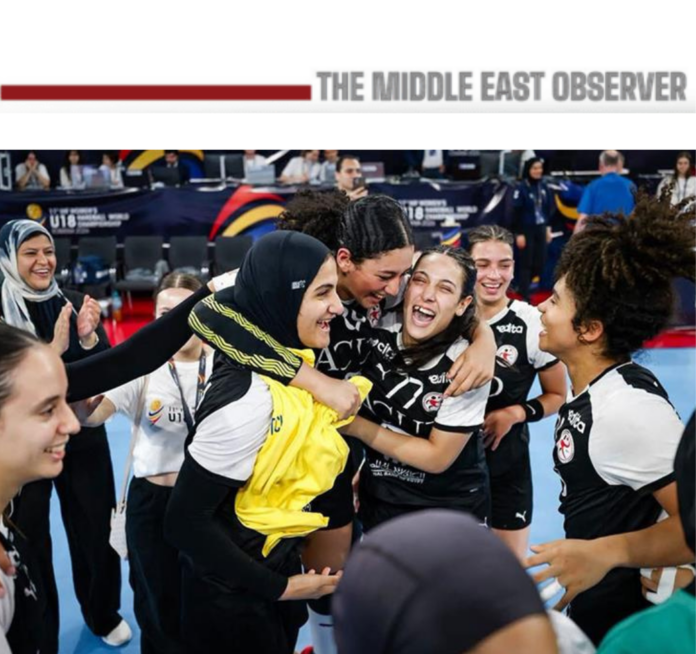
The young Egyptian side finished fourth at the 2026 IHF Women’s Youth World Championship in Romania, placing themselves among the leading teams in their age category. Their campaign included victories over established European opposition, notably a 29–24 win against France and a 27–24 victory over Croatia.
It was an exceptional achievement for Egyptian women’s sport. Yet outside the handball community, it received only a fraction of the attention that would almost certainly have accompanied a comparable result in football.
That disparity raises a broader question: has Egyptian sport become too heavily centred on football?
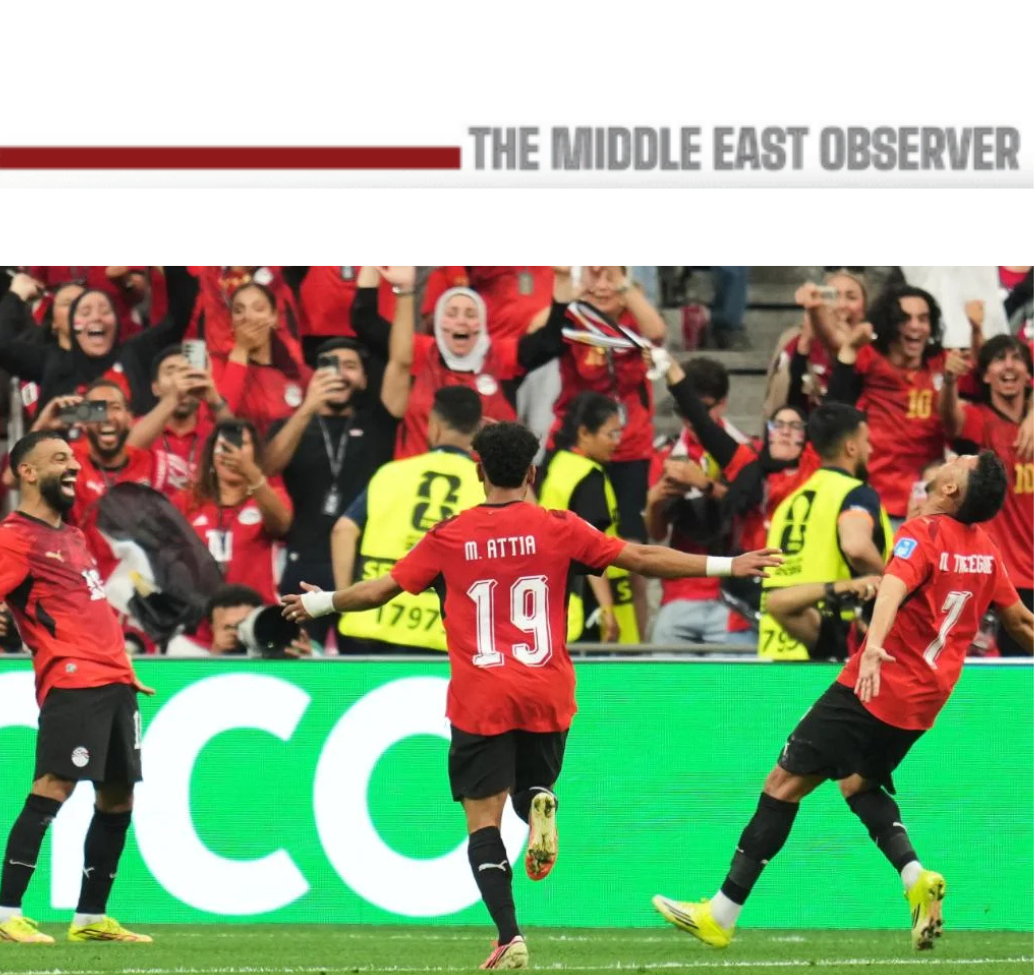
Football is unquestionably Egypt’s most popular sport. It commands enormous audiences, substantial commercial investment and an extraordinary share of media coverage. Egypt’s men’s national team has appeared at four World Cups, most recently reaching the Round of 16 in 2026 — its best performance at the tournament.
The comparison is not intended to diminish football, nor are senior football and youth handball directly comparable competitions. Rather, it highlights how international success outside football can struggle to command equivalent public attention.
At youth level, these handball players reached the final four of a world championship and demonstrated that Egyptian athletes can compete against some of the strongest sporting systems internationally. Their success deserves recognition in its own right. More importantly, it should prompt a wider discussion about how Egypt identifies, finances and develops sporting talent.
A Country of Talent — If We Look for It
Egypt has a population of well over 100mn. In a country of that scale, sporting potential cannot logically be confined to a single discipline.
There will be young Egyptians suited to football, but also potential elite swimmers, handball players, runners, boxers, weightlifters, gymnasts and martial artists. Egypt’s international record already provides evidence of this broader sporting potential, with the country producing world-class competitors across disciplines including squash, modern pentathlon, weightlifting, handball and martial arts.
The challenge is not simply whether that talent exists. It is whether the sporting system finds it early enough and provides a credible pathway for its development.
Too often, athletes in less commercially prominent sports become widely known only after winning an international medal or producing an unexpected result. By then, many will already have spent years training with comparatively limited resources, sponsorship and public recognition.
A serious sporting strategy should reverse that sequence. Talent should be identified before international success, not because of it.
That requires scouting programmes, qualified coaches, sports science, appropriate facilities, structured competition and sustained financial support. Schools, universities, clubs and sporting federations all have roles to play.
Media exposure matters as well. Visibility attracts spectators and sponsors, while stronger commercial backing can provide resources for developing the next generation of athletes.
Egypt’s “Forgotten Sports”
Many sports remain peripheral to the country’s mainstream sporting conversation despite Egypt’s history of international success outside football.
Calling them “forgotten sports” does not mean that they are forgotten by their athletes, coaches or families. Rather, they often operate outside the commercial and media ecosystem surrounding football.
Supporting other sports does not require weakening football or diverting supporters away from the game they love. Nor should the objective be to manufacture equal audiences for every discipline.
The objective should be more practical: give promising athletes in different sports a reasonable opportunity to succeed.
That does not necessarily mean distributing resources equally across every sport. Egypt can instead identify disciplines where it possesses a genuine competitive advantage — combining existing international performance, coaching expertise, participation, infrastructure and realistic medal or commercial potential.
Such an approach would treat sporting investment not simply as expenditure, but as the development of national talent.
Sport Is Also an Industry
There is an economic argument for diversification too.
Modern sport is no longer simply a contest for medals. It is a global industry encompassing broadcasting rights, sponsorship, advertising, academies, sports equipment, professional leagues, tourism, venues, data, sports medicine and athlete contracts.
Football demonstrates the model most visibly. Countries that develop sophisticated talent pipelines do not merely produce successful national teams; they can also produce athletes who become valuable assets in international markets.
Brazil is perhaps the best-known example. Its football success rests not simply on enthusiasm for the sport but on an extensive ecosystem of clubs, academies, scouts, coaches and competitions that has produced generations of professional players for domestic and international markets.
Egypt cannot simply replicate Brazil’s football model across every sport. The commercial economics of handball, swimming, squash or athletics are different.
But the underlying principle is relevant: talent becomes competitively — and potentially economically — valuable when institutions exist to identify and develop it.
Egypt already possesses many of the building blocks: a large young population, established clubs, universities, sporting federations and a history of international achievement.
The challenge is connecting those elements into a more systematic development pipeline.
From Exceptional Results to a Sporting System
That is why the fourth-place finish of Egypt’s Under-18 women’s handball team should be treated as more than an encouraging result.
It offers evidence of what is possible.
These young women competed successfully against leading international teams and reached the closing stages of a world championship. Their achievement also raises a wider question about how much comparable talent remains undiscovered.
Promising swimmers may lack access to suitable facilities; potential track-and-field athletes may never encounter specialist coaching; and children with an aptitude for less prominent sports may never find a pathway into organised competition.
No sporting system can discover every potential champion. But a country of Egypt’s scale should create as many credible pathways as reasonably possible.
Football will retain its special place in Egyptian society, as it should. Popularity cannot — and need not — be legislated away.
But Egypt’s sporting ambitions should be larger than football.
The country should increasingly judge investment in sport by its ability to identify and develop athletes, broaden participation, build sustainable institutions and compete internationally — rather than by television audiences alone.
That requires something more systematic than recognising athletes after they succeed: a national talent pipeline capable of identifying potential early and connecting young athletes with coaching, facilities, competition and financial support.
The young women who represented Egypt in Romania have demonstrated what can happen when talent finds a pathway to international competition.
Their fourth-place finish deserves celebration. Its more enduring value, however, may lie in the lesson it offers.
Egypt does not appear to have a shortage of sporting talent. The greater challenge is ensuring that enough of it gets the chance to be discovered.
Related news:
Egyptian Fencer Youssef Shamel Wins World Cup Bronze on Home Soil
Beyond 2026: Can FIFA Restore Trust Before the Historic 2030 World Cup?
Read also:
Egypt Moves Towards $5.3bn Healthcare Investment With Two Medical Cities Plan
The Maintenance Economy: The Industry Egypt’s Infrastructure Boom Is Creating