

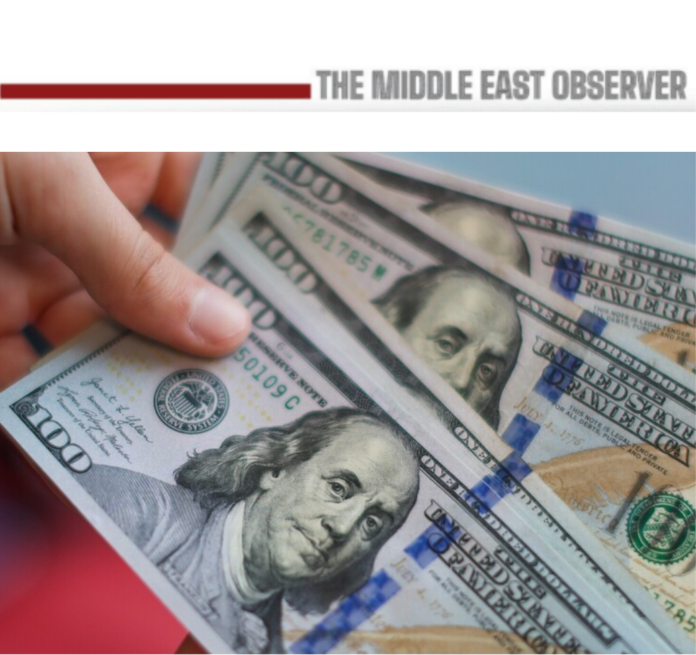
The MENA region entered 2026 after record debt issuance, but the price of capital has changed. Inflation is eroding purchasing power, global bond yields are rising and investors are demanding more to finance governments and companies. Gulf sovereigns retain the balance sheets and domestic liquidity to choose when and where to borrow; Egypt is deliberately reducing external issuance while trying to lengthen maturities. The emerging regional divide is increasingly between borrowers that can manage the timing and return on capital — and those forced to refinance at the market’s price.
Money is losing purchasing power while capital is gaining pricing power.
That apparent contradiction is becoming one of the defining forces in the Middle East and North African debt markets.
Regional bond issuance reached a record $171.1bn in 2025, led by Saudi Arabia, the UAE and Qatar, and remained elevated during the first half of 2026 despite geopolitical disruption. But borrowers are now operating in a world where US Treasury yields are approaching 5%, government debt issuance is rising and global investors have more alternatives for their capital.
The result is not a disappearance of financing.
It is a repricing of financing.
For MENA governments and companies, the central question is shifting from whether capital is available to how much it costs, how urgently it is needed and whether the economic return justifies borrowing at today’s price.
A higher global starting price
A MENA sovereign issuing dollar debt normally begins with the return available on US Treasuries and adds a premium reflecting country-specific risk.
In simplified terms:
US Treasury yield + sovereign risk premium = borrowing cost.
In practice, maturity, liquidity, currency and deal structure also matter, but the Treasury benchmark and sovereign spread remain the two dominant components.
When the US 10-year Treasury approaches 5%, almost every dollar borrower starts from a more expensive base.
Saudi Arabia can retain strong credit fundamentals and still pay more because the benchmark has risen. Egypt can improve economically and narrow its sovereign spread while still face elevated absolute financing costs.
This is why US inflation, Federal Reserve policy and Washington’s fiscal position increasingly influence financing conditions from Riyadh to Tokyo.
The pressure extends beyond central-bank policy.
US marketable Treasury debt has climbed from roughly $20tn in 2020 to more than $31tn in 2026, while governments and companies compete for capital to finance defence, artificial intelligence, power networks, infrastructure and industrial investment.
Traditional investors also have more alternatives.
Japan’s 10-year government bond yield has approached 3%, giving domestic institutions meaningful returns at home after decades of near-zero rates. Norway’s sovereign wealth fund has proposed reducing government bonds within its fixed-income benchmark.
China provides the counter-signal: Chinese commercial banks have recently bought Treasuries because higher American yields have become attractive relative to domestic alternatives.
The correct conclusion is therefore not that investors are abandoning government bonds.
It is that demand is becoming increasingly conditional on price.
That higher global clearing price feeds directly into MENA.
The Gulf advantage is financing optionality
Saudi Arabia, the UAE and Qatar have increased issuance while financing infrastructure, industrialisation, tourism, technology, transport and wider economic diversification.
That borrowing cannot be interpreted in the same way as debt raised merely to meet existing obligations.
Saudi Arabia’s government debt stood at about 33.9% of projected 2026 GDP at the end of the second quarter. Yet the Kingdom retains broad access to domestic and international markets. Its latest $3.25bn international sukuk attracted roughly $16.5bn of orders, demonstrating the difference between higher financing costs and impaired market access.
The UAE sits at an even stronger end of the spectrum, supported by substantial sovereign assets and relatively modest public debt.
That balance-sheet strength gives Gulf sovereigns a valuable advantage:
financing optionality.
They can issue internationally or domestically, use bank liquidity, recycle assets, bring private capital into projects — or postpone borrowing until pricing improves.
Local bond and sukuk markets reinforce that advantage.
A Saudi borrower capable of raising riyals does not have to enter dollar markets whenever Treasury yields spike.
Domestic borrowing is not necessarily cheaper. Its strategic value is choice.
Higher rates change the Gulf investment equation
The Gulf nevertheless faces a genuine capital-allocation challenge.
As global risk-free yields rise, the opportunity cost of domestic Gulf investment rises with them.
When highly rated global bonds yielded 1%-2%, a domestic project promising 7% offered a substantial premium.
When comparatively safe assets offer 4%-5%, the same project must compete much harder for capital.
Higher rates therefore raise the hurdle rate for Gulf development.
That could ultimately improve investment discipline by encouraging stronger project returns, more public-private partnerships, greater asset recycling and a larger private-sector role rather than automatic reliance on sovereign borrowing.
The MEO paradox is clear:
expensive global money makes Gulf development harder to finance while increasing the bargaining power of Gulf capital internationally.
The critical question is no longer whether Gulf governments can borrow.
It is whether the assets financed by that borrowing can generate economic returns high enough to justify its rising cost.
Egypt is trying to build the same flexibility
Egypt enters the higher-rate environment from a substantially different position.
Cairo is seeking to preserve international market access while reducing dependence on external commercial borrowing.
Egypt completed about $4bn of international financing transactions in FY 2025/26. For FY 2026/27, the government has approved an international issuance programme of around $3bn, implying a planned reduction of roughly 25%.
The government also says budget-sector external debt has declined by approximately $6.5bn over three years.
Egypt is therefore not retreating from capital markets.
It is attempting to change their function: maintain access, diversify funding and repay more external debt than is newly raised where possible.
Gross issuance and total debt are different measures.
A sovereign can issue $3bn of new securities, repay $5bn of existing obligations and still reduce its external debt stock by $2bn.
For Egypt, that net financing direction matters more than the number of new bond transactions.
Its central vulnerability is also not simply the headline debt ratio.
It is refinancing.
Large amounts of debt must repeatedly be rolled over, and the price at which that happens feeds directly into the government’s interest bill.
Internationally, Egypt faces both the US Treasury benchmark and an Egypt-specific sovereign risk premium. Domestic reforms can compress the second while a global bond sell-off raises the first.
Domestically, replacing foreign borrowing with local debt reduces currency exposure but does not automatically reduce financing costs.
Lower external issuance is constructive, but insufficient if expensive short-term domestic borrowing simply replaces it.
Egypt’s debt strategy should therefore be judged less by gross issuance than by whether it reduces net external borrowing, extends average maturities, lowers rollover requirements and replaces expensive commercial funding with cheaper guaranteed or concessional structures.
Foreign demand for high-yielding Egyptian local debt can provide useful liquidity.
But carry-trade capital is not permanent capital.
Periods of strong demand should be used to improve the maturity profile rather than recreate dependence on short-term foreign portfolio flows.
For Egypt, successful debt management increasingly means acquiring the Gulf’s most valuable advantage:
the ability to wait for better pricing.
Oil cuts both ways
The Middle East also affects the global price of money through energy.
Higher oil strengthens fiscal revenues for Gulf exporters but can simultaneously increase global inflation, making central banks less willing to cut rates and encouraging bond investors to demand higher yields.
The same oil shock can therefore improve Gulf budgets while raising Gulf financing costs.
For oil-importing MENA economies, the equation is harsher: higher energy bills and more expensive capital can arrive together.
What investors should do
The current environment does not justify indiscriminate bond selling.
Nor does a high coupon automatically make a bond attractive.
For strong Gulf sovereign debt, higher yields can offer attractive income where balance sheets, reserves and domestic liquidity remain robust.
For Gulf quasi-sovereigns, investors should distinguish strategically important entities with strong cash generation and credible state support from borrowers dependent on repeated refinancing.
For Gulf corporations, leverage, interest coverage and maturity schedules matter more than during the cheap-money era.
For Egyptian Eurobonds, investors should focus on whether prospective compression in Egypt’s sovereign spread is sufficient to compensate for persistently high global benchmark yields.
For Egyptian local-currency debt, nominal returns must be assessed alongside inflation, exchange-rate risk and the durability of foreign portfolio demand.
For long-duration global government bonds, greater caution remains appropriate until inflation, energy prices and sovereign supply offer clearer evidence of turning.
The stronger strategy is therefore:
hold quality, accumulate selectively when yields compensate for risk, and avoid excessive duration while inflation and sovereign-debt supply remain uncertain.
MEO assessment: the three clocks of expensive money
The next MENA debt cycle will be governed by three clocks: inflation, maturity and return.
The first is the inflation clock.
History shows that sustainable reductions in borrowing costs follow inflation credibility rather than political demands for cheaper money.
The Volcker-era US experience is instructive: aggressive tightening began in 1979, but long-term Treasury yields remained high until investors became convinced that inflation had been brought under control.
The lesson is simple:
lower and credible inflation is one of the cheapest forms of debt management.
The second is the maturity clock.
Latin America’s debt crisis in the early 1980s showed the danger of being forced to refinance large foreign liabilities after global interest rates rise sharply.
The lesson was not merely that countries had borrowed too much.
It was that many had borrowed in ways that left them little control over when markets could reprice their debt.
That distinction is directly relevant to Egypt.
Longer maturities, diversified funding sources and pre-financing of known repayment concentrations can buy governments something almost as valuable as reserves:
time.
But time only has value if policy improves the underlying economics before refinancing arrives.
The third is the return clock.
Saudi Arabia’s response after the 2014 oil-price collapse offers a different lesson. The Kingdom used fiscal reserves, developed domestic debt issuance, entered international markets and built a more formal debt-management framework.
The effect was to diversify the sources and timing of financing.
Today’s Gulf investment cycle poses a tougher test because benchmark returns are much higher.
A project generating 7% is economically different when sovereign funding costs 2% than when comparatively safe global assets yield close to 5%.
The three clocks therefore converge in one test:
can a sovereign bring inflation down before debt matures, while ensuring the capital raised generates returns above its effective cost?
A government can tolerate temporarily expensive financing when inflation is falling, maturities are long enough to avoid forced refinancing and borrowed capital is generating productive returns.
The dangerous combination is the reverse:
persistent inflation, short maturities and debt that generates insufficient economic return.
That is how a cyclical rise in interest rates becomes a structural debt problem.
For Gulf economies, financing optionality should therefore be used to improve capital allocation — not simply to borrow because markets remain open.
For Egypt, the opportunity is to move from refinancing management towards broader liability management: reduce dependence on expensive external debt, extend the domestic maturity curve and create enough economic growth to outrun the effective cost of borrowing.
The objective is not simply lower interest rates.
It is to create the conditions that justify lower rates.
Governments cannot permanently control the global price of money.
They can control more important variables: when they borrow, how long they borrow for, how effectively they contain inflation and what economic return they generate from the proceeds.
The winners in the next MENA debt cycle will therefore not necessarily be those that borrow least.
They will be those that bring inflation down before debt reprices, extend maturities before markets close, and turn borrowed capital into productivity before interest costs overwhelm its return.
That is how expensive money becomes manageable — and how financing flexibility becomes durable economic strength.
Related news:
MENA Market Snapshot: How Healthcare, Biotechnology and Food Security Are Reshaping Regional Growth
China Dominates Global Banking While MENA Lenders Strengthen Regional Standing
Read also:
Telecom Egypt Adds Sinai Route to Its Global Data-Corridor Network
1 GW Ras Shokeir Deal Deepens Egypt’s Gulf of Suez Wind Push