
Qatar ranks fourth globally and first in the Middle East and North Africa in the Standard of Living pillar of the 2026 Legatum Prosperity Index. It also ranks eighth in the broader Development domain, although its overall Prosperity Index position is 78th. The economic significance lies in what the living-standards result reveals: Qatar has converted decades of gas income into infrastructure, services and material well being on a scale few resource-rich states have matched. The next challenge is to turn those advantages into higher productivity, stronger private-sector competitiveness and greater resilience beyond hydrocarbons.
Qatar has already achieved one of the central objectives of a resource-rich economy: translating natural-resource income into durable national assets.
Gas revenues have financed transport networks, healthcare, education, utilities, urban infrastructure and substantial sovereign financial reserves. Legatum’s ranking does not suggest that Qatar’s economic transformation is complete, but it does provide a clear measure of how extensively hydrocarbon wealth has been reflected in material living conditions.
The next phase is more demanding.
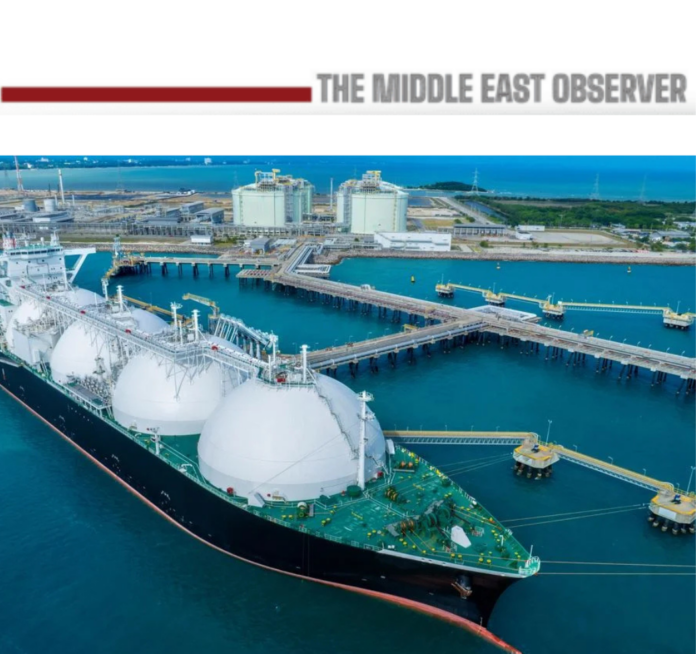
Qatar does not lack a source of headline economic growth. QatarEnergy plans to increase LNG production capacity from 77mn tonnes a year to 142mn tonnes by the end of 2030, an expansion of about 85 per cent. North Field East will raise capacity to 110mn tonnes, North Field South to 126mn and North Field West ultimately to 142mn.
Those additional volumes should generate another large increase in exports, national income and fiscal capacity. They will also lift GDP as new production enters the economy.
But higher LNG output is not diversification.
The more consequential question is what productive capacity the next gas expansion leaves behind.
That distinction has become particularly visible in 2026. Qatar’s economy contracted 7 per cent year-on-year in the first quarter as regional conflict disrupted energy production, while the IMF’s latest country indicators point to a real GDP contraction of 8.6 per cent for the year.
The contrast is striking. Qatar can rank among the world’s leaders in material living standards while current economic output remains highly exposed to disruption in the sector that financed them.
The issue is therefore not accumulated wealth, but productive resilience.
Qatar’s first development phase was centred on converting gas into national wealth. Its second requires turning that wealth into businesses, skills and industries capable of generating internationally competitive value beyond the hydrocarbon sector.
The Third National Development Strategy reflects that shift. By 2030, Qatar is targeting 4 per cent annual non-hydrocarbon GDP growth, 2 per cent annual labour-productivity growth, $100bn in cumulative net foreign direct investment, R&D expenditure equivalent to 1.5 percent of GDP and a top-10 business environment.
Of those targets, the 2 percent productivity objective may prove more important than the growth target.
Additional LNG trains can raise GDP through higher production. Productivity measures whether the broader economy is becoming more efficient at turning labour, capital, technology and knowledge into value.
That is a more demanding measure of diversification.
Doha’s strategy identifies manufacturing, logistics, tourism, financial services, digital technologies and education among the sectors expected to broaden the productive base. It also calls for a larger private-sector role and a business environment capable of supporting internationally competitive industries rather than activity sustained primarily by government expenditure.
Qatar has ample financial capacity to support those ambitions. The harder task is ensuring that investment produces companies able to compete internationally, attract capital on commercial terms, absorb technology and develop domestic capabilities without permanent dependence on state support.
This is where the Legatum ranking gains a second economic significance.
High living standards are not only the product of past gas revenues. They can also become an economic asset.
Competition across the Gulf increasingly extends beyond capital to skilled labour, entrepreneurs, executives and specialised professionals. Healthcare, education, security, infrastructure, mobility and urban quality all influence where companies locate regional operations and where internationally mobile workers choose to live.
Qatar’s living standards therefore strengthen its ability to compete for the talent and investment required to support higher-value industries.
The potential economic chain is clear: gas revenues finance infrastructure and human development; those assets help attract capital and talent; capital and expertise support specialised industries; stronger industries lift productivity; and higher productivity reduces the economy’s relative dependence on hydrocarbons.
The challenge lies in completing that chain.
Infrastructure can be financed relatively quickly. Productivity develops more slowly through competition, skills, managerial capability, technology transfer and the emergence of companies able to succeed beyond protected domestic markets.
Foreign investment is similarly not an end in itself. Its value depends on whether it expands productive capacity, transfers expertise and creates businesses capable of generating sustainable returns beyond government procurement and hydrocarbon-funded demand.
The North Field expansion therefore carries a dual significance.
It reinforces Qatar’s dependence on gas as the principal source of national income, while simultaneously providing the financial resources that could make the economy less dependent on gas over time.
That is the central economic challenge of Qatar’s next decade.
The coming increase in LNG capacity should strengthen exports, fiscal revenues and sovereign financial power. But those gains will say relatively little about the success of diversification on their own.
The more revealing indicators will be whether non-hydrocarbon companies become more productive, whether private investment becomes less reliant on public spending, whether new industries develop export markets and whether foreign capital leaves behind technology, skills and commercially sustainable businesses.
Qatar has already shown that hydrocarbon wealth can finance world-class living standards.
The next measure of success will be whether the coming LNG windfall can finance something more difficult: an economy in which productivity, private enterprise and competitive industries become increasingly capable of sustaining those living standards themselves.
Related news:
Qatar’s JTA and UK’s Watt Plan EV Plant for 2028 Production
UAE, Qatar Deepen Asia Trade Ties with South Korea in Strategic Shift
Read also:
Jordan Broadens China Partnership, but $1bn Energy Pipeline Awaits Capital
Gulf Investors Build Sectoral Clusters Across Syria’s Reconstruction