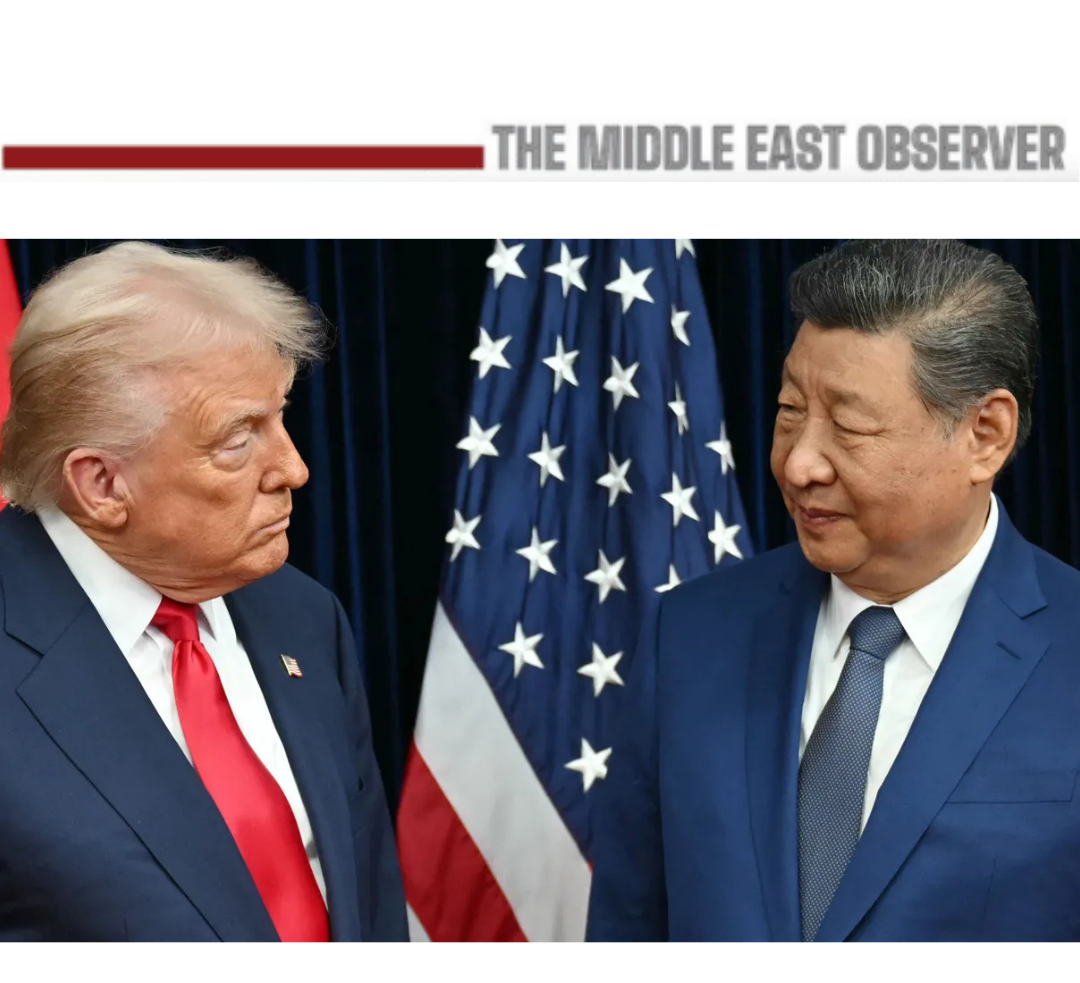
US President Donald Trump said on Friday, September 11, that he would accept Chinese automakers building cars in the United States if they manufacture locally and hire American workers, while rejecting Chinese production in Mexico designed to supply the US market. Speaking to Laura Ingraham on Fox News’ The Ingraham Angle, Trump said: “If China wanted to come in and open a plant to build their cars here, I’d be okay with that,” citing Japanese manufacturers as a model for foreign investment that creates US employment. His comments came amid pressure from American automakers and lawmakers to keep Chinese vehicles out of the market ahead of his expected meeting with President Xi Jinping.
The proposition follows an established American industrial model. Foreign-owned manufacturers including BMW in South Carolina, Mercedes-Benz in Alabama and Volkswagen in Tennessee have invested heavily in US assembly, combining American production and employment with global component supply chains.
US tariff policy already rewards such localisation. Under the current Section 232 automobile regime, manufacturers assembling vehicles in America can apply for an import-adjustment offset equal to 3.75% of the aggregate retail value of their US-assembled vehicles through April 2030. The benefit is designed to offset the 25% tariff on imported automobile parts representing roughly 15% of a vehicle’s value. Eligibility is tied to the US final assembly rather than the nationality of the manufacturer.
But that does not mean a Chinese manufacturer would automatically receive the same effective commercial treatment as BMW or Mercedes.
The offset applies to Section 232 automobile-parts tariffs; it does not automatically cancel separate China-specific Section 301 duties. Chinese EVs face an additional 100% tariff, while EV batteries and several strategic inputs face elevated duties, including 25% rates on lithium-ion EV batteries and, from 2026, natural graphite and permanent magnets.
More importantly, national-security regulation remains a bigger barrier than tariffs. From model year 2027, US rules prohibit Chinese-linked manufacturers from selling covered connected vehicles in America even when those vehicles are assembled in the United States. Restrictions also apply to covered Chinese software, with hardware restrictions following later.
Trump has therefore opened the political door, while existing US policy still largely keeps the commercial door closed.
For BYD, Geely or other Chinese groups to commit billions of dollars to American factories, Washington would need to define what they receive in return. The most commercially credible model would be US market access combined with transitional tariff treatment for selected components, followed by progressively higher American sourcing requirements.
That balance will determine whether Trump’s proposal becomes investment policy or remains rhetoric. Allow too little of China’s battery, electronics and supplier ecosystem into the US and Chinese manufacturers could lose the cost advantage that makes them competitive. Allow too much, and Washington risks replacing dependence on Chinese finished vehicles with dependence on Chinese components and technology.
The economic prize is therefore larger than the final assembly. If Washington can use access to its protected consumer market to redirect Chinese capital, battery plants, suppliers, engineering and procurement expenditure into the US, it could capture a greater share of the automotive value chain without simply opening the border to Chinese imports.
The decisive question is no longer whether China may build cars in America. It is whether Chinese manufacturers will be offered a commercially viable localisation regime comparable to other foreign assemblers — and how much of their supply chain Washington will permit to follow them.
Related news:
MCIT Pushes Outsourcing Expansion as Concentrix Plans 35,000-Strong Egypt Workforce
Hypatia of Alexandria The Last Light of the Ancient World
Read also: