Cairo International Airport has consolidated an African aviation lead it has held by passenger traffic since at least 2023, offering roughly 50% more scheduled seats than its nearest continental rival in September 2026 as Egypt prepares infrastructure capable of lifting annual airport capacity to about 70mn passengers.
Cairo ranked Africa’s largest airport by scheduled airline capacity in September with 1.79mn seats, up 11.2% from a year earlier, according to aviation analytics provider OAG. Addis Ababa Bole followed with 1.19mn seats and Johannesburg’s OR Tambo with 1.16mn, leaving Cairo with around 50% more capacity than Addis and 54% more than Johannesburg. Egypt simultaneously ranked as Africa’s largest country market by scheduled airline capacity, with 3.08mn seats, up 13.4%, ahead of South Africa’s 2.43mn and Morocco’s 2.07mn.
The September ranking extends an established lead rather than marking a one-month advance. Airports Council International Africa records Cairo as the continent’s No. 1 airport by passenger traffic in both 2023 and 2024. Cairo handled 28.97mn passengers in 2024, 57% more than Johannesburg’s 18.46mn and almost two-and-a-half times Addis Ababa’s 11.80mn. It also led Africa in international traffic, processing 24.43mn international passengers, against 10.10mn at Addis.
The measures are different — ACI records passengers actually handled, while OAG measures airline seats scheduled for sale — but both show Cairo holding a substantial scale advantage over competing African hubs.
Cairo’s absolute scale increased further in 2025, when passenger traffic reached a record 31.29mn, up 8% from 28.97mn in 2024, while aircraft movements increased 5.8% to 226,477. The airport therefore added more than 2.3mn passengers in a year.
Growth has been less uniform in 2026. Cairo handled 7.94mn passengers between June and August, only about 1.4% more than the 7.83mn recorded a year earlier, while flight movements increased by about 1.3%. Momentum strengthened in August, however, when passenger traffic rose 9% to 3.13mn and flights increased 11%, indicating a stronger end to the summer period.
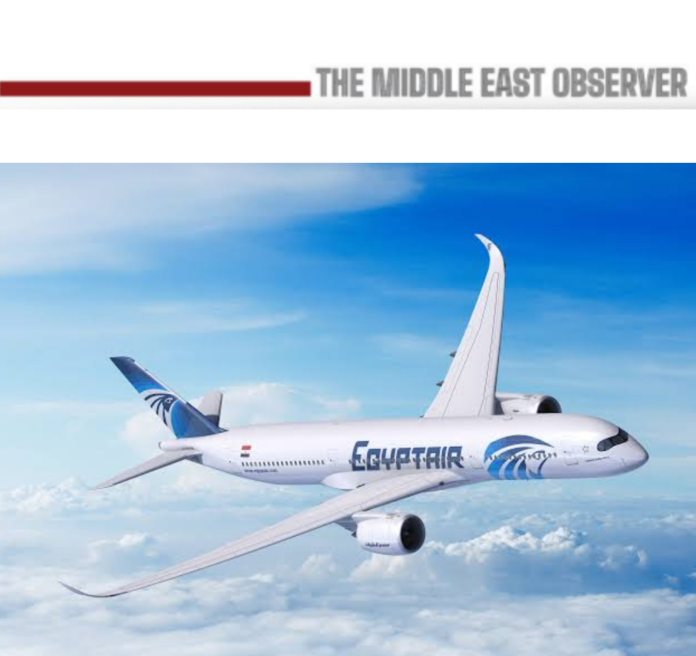
Egypt’s wider aviation position is also strengthening. EgyptAir ranked third among African airlines by scheduled capacity in September, with 890,773 seats, up 6.7%, while Air Cairo entered the continental top 10 in ninth place with 360,502 seats, up 14.9%. Together with Egypt’s No. 1 country-market position, the figures show that Cairo’s airport lead is increasingly supported by broader expansion across the country’s airline sector.
Infrastructure planning is now moving well beyond current traffic levels. The proposed Terminal 4 is designed for 40mn passengers annually, taking Cairo International Airport’s overall capacity to approximately 70mn passengers a year. The government intends the terminal to incorporate artificial intelligence, digital passenger processing and smart operating systems while supporting higher transit traffic and attracting additional international airlines.
That planned capacity would be more than twice Cairo’s 2025 passenger throughput, giving the airport substantial room for long-term expansion rather than merely relieving present constraints. The demand outlook provides support: the International Air Transport Association forecasts Egyptian passenger demand to grow by 3.4% annually between 2024 and 2050 under its central scenario, above the 3.1% global rate, with growth potentially reaching 3.8% under a higher-growth case.
The strategic test is therefore shifting from whether Cairo can claim Africa’s top aviation ranking to whether Egypt can convert that scale into a deeper and commercially durable hub. Terminal 4 can remove physical constraints, but infrastructure alone will not create a successful hub: sustained gains will depend on airline network expansion, competitive airport economics, stronger transfer connectivity and sufficient passenger demand to absorb the additional capacity. Cairo has established a sizable continental lead; the next phase is turning that advantage into long-term hub economics.
Related news:
Cairo International Airport saw its highest daily traffic since its inception in 1963
Air Cairo Orders 15 A320neos as Egypt Expands Tourism Capacity
Read also:
Iraq, France Sign Six Accords as Baghdad Expands Energy, Defence Ties
Egypt’s Next Industrial Push Points to Grids, Machinery and Advanced Manufacturing