
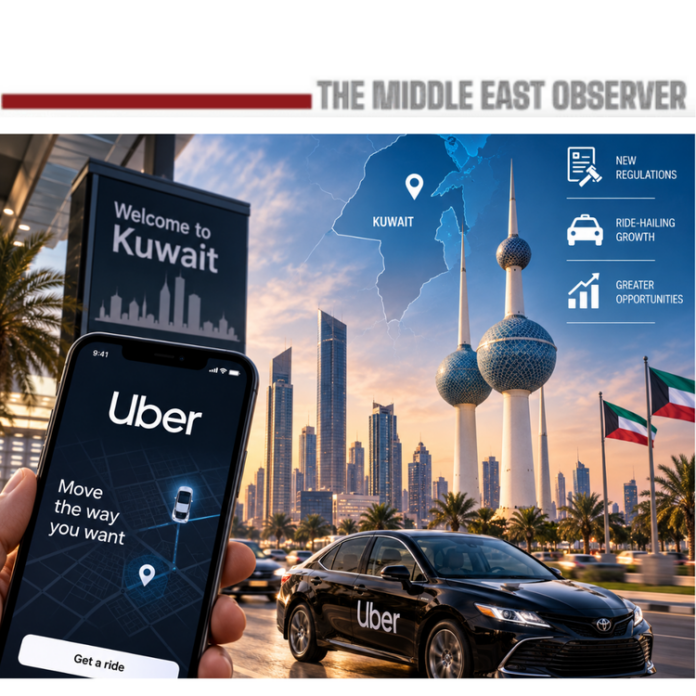
Uber has launched operations in Kuwait, entering an established ride-hailing market just as tighter regulation begins to reshape how app-based passenger transport competes.
The company began services on September 15 with Taxi, Uber Comfort, Uber Black and Uber Lux, spanning mass-market and premium transport.
The launch follows Kuwait’s adoption in July of revised rules covering licensing, fleet standards, drivers, recordkeeping and operational compliance. The framework marks a shift towards more formal oversight of a sector that was already well established digitally.
Uber is therefore not creating a new transport category. Kuwait already has significant app-based mobility usage through services including Careem, whose ride-hailing business is owned by Uber, and independent operators such as WIYAK.
Competition is consequently moving beyond basic app adoption towards pricing, vehicle availability, service quality and regulatory compliance.
The new rules could also raise operating costs and entry barriers, increasing the importance of scale, fleet quality and the administrative capacity required to meet licensing and data requirements.
Uber’s global customer base could provide an additional advantage among international travellers and business visitors already familiar with the platform, particularly for airport and premium journeys.
Uber’s arrival therefore signals a new phase for Kuwait’s ride-hailing market: one increasingly shaped by scale, service differentiation and regulatory compliance rather than simply the expansion of digital transport.
Related news:
Cairo Ranked Fourth Globally as Egypt’s Tourism Strategy Gains Recognition
When Cities Become Software: The Rise of Egypt’s Invisible Digital Infrastructure
Read also:
The New Mining Race Is About Control, Not Just Resources
How Hollywood and Luxury Brands Created a Win-Win Business Model