

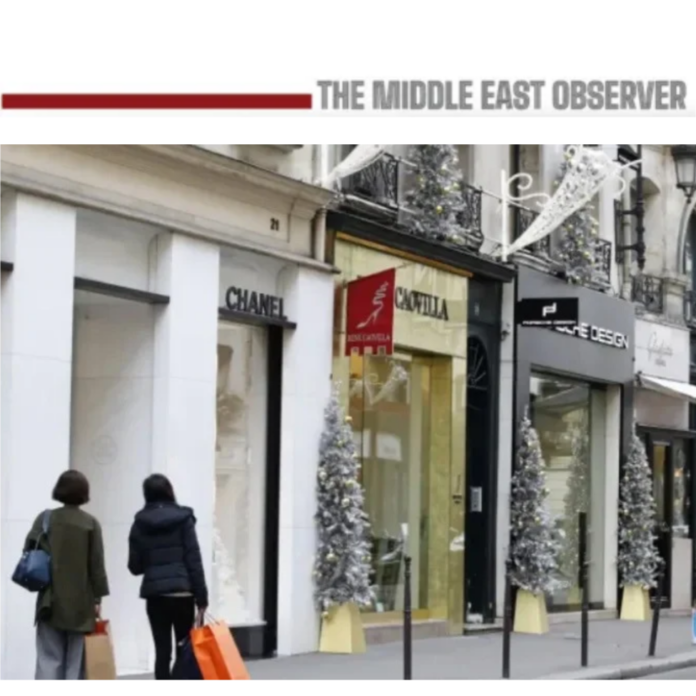
LVMH and Hermès lead a stock-market retreat as softer Chinese demand, slowing US spending and divergent brand performances challenge the industry’s once-premium valuations.
Europe’s six largest listed luxury groups have lost €251 billion in market value this year, with LVMH and Hermès accounting for nearly 90% of the decline, as weakening Chinese spending and signs of cooling American demand force investors to reassess the industry’s long-standing growth expectations.
LVMH has shed €131.6 billion in market capitalisation and Hermès €93.3 billion, according to Financial Times calculations published on October 25. The wider group includes Kering, Richemont, Prada and Moncler, whose combined performance reflects mounting pressure on an industry that built much of its international expansion around rising Asian wealth and strong demand from affluent consumers.
The sell-off has outpaced the deterioration in company revenues, exposing a more fundamental concern: whether Europe’s luxury brands can continue commanding exceptional stock-market valuations without the sustained sales growth, pricing power and high profit margins that investors previously expected.
For more than a decade, expanding Chinese consumption, premium pricing and strong brand loyalty supported elevated earnings multiples across the industry. As growth forecasts weaken, investors are paying less for each euro of anticipated future profit, magnifying market-value losses even among companies that remain profitable.
China Exposes the Industry’s Growth Dependence
China remains the principal source of pressure. A prolonged property downturn, weaker household wealth and subdued consumer confidence have reduced demand for expensive handbags, clothing and accessories.
The impact is evident in the latest corporate results.
LVMH reported a 5% organic decline in third-quarter fashion and leather goods revenue, although its overall group revenue increased 1%. Sales of the division’s products to Chinese customers fell by a mid-teens percentage, according to the Financial Times.
Kering reported a 1% decline in comparable group revenue, while Gucci, its flagship brand, recorded a 6% contraction to €1.29 billion. Chinese sales at Kering fell by an estimated 15–20%, underscoring the difficulty of reviving Gucci while consumer traffic remains weak.
Official Chinese statistics reinforce the broader weakness. Retail sales increased just 1.1% during January–September 2026, while sales at brand-exclusive stores among larger retailers declined 10.3%. The latter measure covers multiple retail categories rather than imported luxury products alone.
Beijing’s intensified scrutiny of taxes on certain offshore investment income has also created uncertainty among wealthy Chinese investors. However, the extent to which these measures are directly affecting luxury purchases remains unestablished.
The larger challenge is whether China’s previously rapid growth in luxury consumption is merely experiencing a prolonged cyclical slowdown or entering a more mature phase in which European brands can no longer assume consistently expanding demand.
Luxury Brands Face a Two-Speed Market
The latest results suggest that the industry is not experiencing a uniform collapse. Instead, companies serving different consumer segments are displaying sharply contrasting levels of resilience.
Hermès reported third-quarter revenue growth of 4.3% at constant exchange rates, below market expectations. Its leather goods division expanded 10.8%, supported by demand for exclusive handbags and other products, while ready-to-wear and accessories sales declined 2%.
Richemont, owner of Cartier and Van Cleef & Arpels, delivered 24% growth in jewellery sales at constant exchange rates during its fiscal quarter ended June, helping lift group revenue by 20%.
Elsewhere, Prada reported third-quarter organic revenue growth of 1%, while Moncler’s revenue was broadly flat at constant exchange rates.
These differences reveal a widening commercial divide. Ultra-premium products serving exceptionally wealthy customers are holding up better than brands more dependent on aspirational consumers whose purchasing decisions are sensitive to economic uncertainty and repeated price increases.
For luxury groups, the consequences extend beyond sales. Slower growth is increasing pressure to protect margins, improve inventory management and reduce costs without weakening the scarcity and exclusivity that underpin premium pricing.
Kering has already closed a net 105 stores during the first nine months of 2026 as part of a wider restructuring programme aimed at improving efficiency and restoring brand performance.
The industry’s challenge is therefore increasingly about the profitability and resilience of different business models, not simply the volume of luxury goods sold.
US Slowdown Raises Risks as Middle East Sales Diverge
The United States, which helped offset earlier Chinese weakness, is showing signs of moderation.
Citi credit-card data reported by Reuters showed American luxury purchases falling 6% year on year in September, following 4% declines in both July and August.
The figures point to softer discretionary spending but do not establish an industry-wide contraction. Hermès recorded 8.8% third-quarter growth in the Americas at constant exchange rates, demonstrating continued demand among wealthier customers.
The Middle East is also displaying uneven performance. Hermès reported a 4.5% decline in regional sales during the third quarter, while Prada’s organic Middle East retail sales fell 23% during the first nine months of 2026.
The periods are not directly comparable, and regional geopolitical disruption has independently affected tourism and retail activity. Nevertheless, the figures highlight vulnerabilities in markets that have become increasingly important to international luxury retailers and premium shopping destinations.
For Gulf investors, retailers and hospitality operators, the industry’s changing outlook raises questions about the sustainability of luxury-led expansion, the balance between domestic and tourist spending, and the commercial strength of individual brands.
A €251bn Valuation Reset — But Not Yet an Industry Collapse
Despite the sell-off, evidence of a lasting structural contraction remains inconclusive.
Bain & Company’s June 2026 assessment projected that worldwide personal luxury goods sales could increase 2–4% this year to between €365 billion and €373 billion, compared with approximately €358 billion in 2025.
That forecast preceded the latest company results and assumed improving Chinese demand and relative stability in major markets. It nevertheless illustrates the distinction between slowing sales growth and falling equity valuations.
An industry can continue expanding while investors reduce the premiums they are prepared to pay for its future earnings.
The coming months will provide a more decisive test. China’s fourth-quarter consumer spending, US holiday-season purchases, operating-margin performance and management forecasts for 2027 will help establish whether the present weakness represents a cyclical adjustment or a more persistent deterioration in growth expectations.
For Europe’s luxury groups, recovery will depend not only on attracting customers back into stores but also on restoring confidence in the earnings growth that once justified their exceptional market valuations.
The €251 billion decline may ultimately prove less significant as a measure of lost market value than as a warning that the industry’s era of reliably expanding growth premiums can no longer be taken for granted.
Related News:
How Hollywood and Luxury Brands Created a Win-Win Business Model
China’s 20% Offshore Trust Tax Puts$140 Billion in Holdings Under Scrutiny
Read Also:
Modon, Nammos Unveil Luxury Resort and Residences at Ras El-Hekma
Shein Heads for Hong Kong IPO at a Quarter of Its Peak Valuation
