

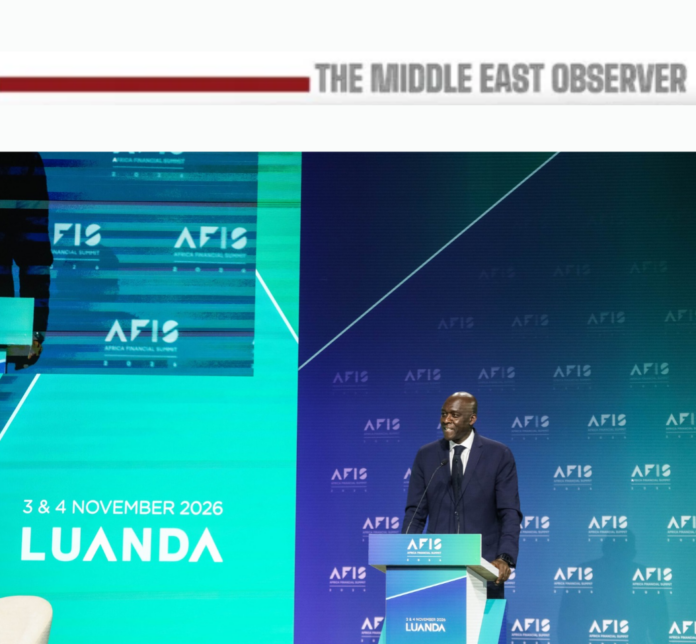
Luanda gathering calls for stronger capital markets, investment-law enforcement and domestic financing as IFC and Proparco sign new African lending agreements.
African financial leaders pressed governments to remove investment barriers, mobilise domestic capital and expand long-term lending at the Africa Financial Summit (AFIS 2026), held in Angola on November 3–4, as the continent seeks to close an annual development-financing gap exceeding $400bn.
The two-day gathering, co-hosted by the International Finance Corporation (IFC), brought together financial executives, regulators and development lenders to examine how Africa’s substantial financial resources could be channelled into industry, infrastructure and employment.
The urgency is underscored by a striking imbalance: African banks generated more than $100bn in revenues in 2024, with returns on equity of around 19%, yet lending represented only about 30% of their assets, according to summit organisers.
African Development Bank (AfDB) President Sidi Ould Tah promoted the bank’s New African Financial Architecture for Development (NAFAD), while IFC Managing Director Makhtar Diop called for stronger investment-law enforcement, deeper capital markets and greater access to local-currency financing.
Financing Agreements Signed
The summit produced two confirmed transactions illustrating how development institutions intend to expand productive lending.
Nigeria — $50mn IFC loan. The IFC signed a seven-year loan with Nigeria’s Bank of Industry, with at least 25% earmarked for women-owned businesses. The agreement forms part of a proposed package of up to $100mn, potentially including a further $50mn IFC investment in a domestic bond issue designed to attract institutional capital.
Democratic Republic of Congo — $10mn guarantees. France’s Proparco, with European Union support, signed two portfolio guarantees totalling $10mn for Ecobank DRC. These are risk-sharing guarantees rather than direct loans, intended to support credit for smaller businesses, agriculture, healthcare, education and women-led enterprises.
Six Priorities for Africa’s Financial Development
1. Mobilising African capital. Ould Tah advanced NAFAD as a framework for improving coordination between development banks, commercial lenders and institutional investors. The AfDB estimates Africa’s domestic financial resources at roughly $4tn, including banking assets, pension and insurance funds and other capital pools. The challenge is to make more of these resources available for productive investment through suitable financial instruments and improved risk allocation.
2. Enforcing investment laws. Diop warned that gaps between legislation and implementation continue to discourage investors. He proposed national private-sector councils to identify regulatory failures and accelerate corrective action. Predictable rules, commercial enforcement and effective project approvals were presented as essential conditions for attracting private capital.
3. Expanding productive and long-term finance. Discussions prioritised financing for manufacturing, agriculture, energy, housing, infrastructure and small businesses. Diop advocated longer-maturity debt, greater equity investment, corporate bond issuance and local-currency lending. These instruments could reduce the mismatch between short-term finance and long-term projects, while limiting foreign-exchange exposure.
4. Sharing investment risks. The AfDB and IFC promoted stronger use of guarantees, blended finance and public-private financing arrangements to attract commercial lenders and institutional investors. Such mechanisms could help make infrastructure and industrial projects bankable without requiring development institutions to provide all the financing themselves.
5. Integrating payments and capital markets. Preliminary findings from the sixth Deloitte-AFIS African Financial Industry Barometer showed that 69% of surveyed institutions considered implementation of the African Continental Free Trade Area too slow, while only 11% reported connections to the Pan-African Payment and Settlement System (PAPSS).
Regulatory fragmentation also emerged as a direct obstacle to investment. BRVM chief executive Edoh Kossi Amenounve told Reuters that differing exchange rules complicated efforts to widen African access to Dangote Refinery’s $1.6bn initial public offering. The issue attracted approximately $4.77bn in orders, demonstrating substantial investor demand. Amenounve advocated mutual recognition of regulatory approvals and discussed depositary receipts as a possible cross-border listing mechanism.
6. Modernising African financial institutions. The summit’s agenda also prioritised stronger banking capacity, fintech partnerships, AI-assisted credit assessment and digital financial services. Wider use of transaction data and cash-flow-based lending could improve access to finance for smaller businesses lacking conventional collateral. Cybersecurity, data governance and regulatory safeguards remain necessary as digital services expand.
Egypt and the Regional Opportunity
The summit’s priorities closely reflect Egypt’s efforts to expand African trade, industrial investment and financial integration.
The Central Bank of Egypt joined PAPSS in November 2024 and is facilitating participation by interested Egyptian banks. Wider operational adoption could reduce reliance on dollar-routed payments, improve cross-border collections and support Egyptian exporters entering African markets.
The Luanda agenda also builds on investment-financing discussions held at Egypt’s Alamein Africa Business Forum in October, where African governments called for bankable-project pipelines, risk-sharing mechanisms and stronger regional industrial partnerships.
From Commitments to Implementation
AFIS 2026 reinforced a shift towards mobilising African financial resources rather than relying predominantly on external development assistance. However, no binding continent-wide reform agreement or newly quantified financing target was verified as an outcome of the Luanda gathering.
Its economic significance will depend on whether governments enforce investment reforms, regulators reduce cross-border barriers and financial institutions convert capital into productive lending.
Related news:
- Africa Puts Deadlines Behind Investment Ambitions at Inaugural Alamein Forum
- Alamein Shifts Toward Execution as Africa Targets Finance and Stability
Read Also:
- Egypt Moves to Extend InstaPay Across Africa’s Payments Network
- Egypt Eyes Industrial Expansion Across Africa as Regional Trade Hits $214bn
