Kingdom leads the Arab world with 348,000 dollar millionaires as low leverage and deeper capital markets provide a backdrop to rising private wealth
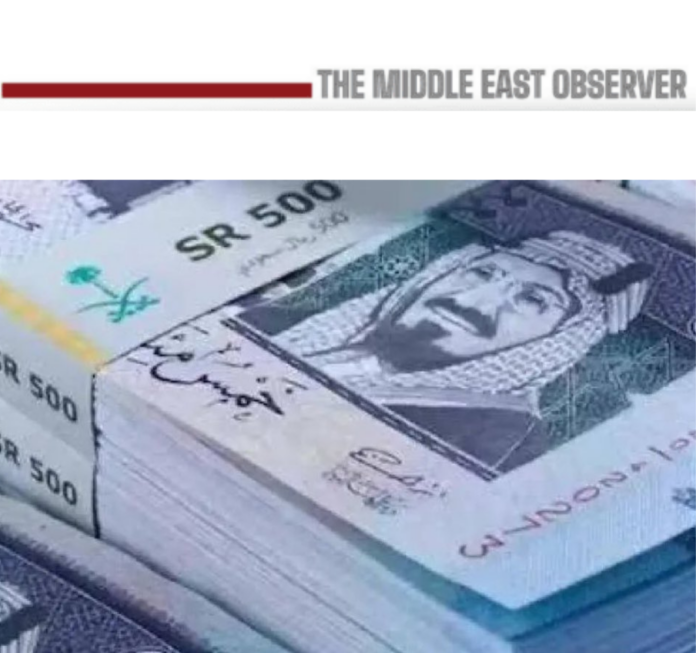
Saudi Arabia added the equivalent of roughly one new dollar millionaire every hour in 2025, lifting the number of people with net wealth above $1mn to about 348,000 and reinforcing the Kingdom’s position as the Arab world’s largest millionaire market.
The number rose by about 2.7% during the year, according to an analysis by Saudi newspaper Al Eqtisadiah based on the UBS Global Wealth Report 2026. The increase amounted to roughly 8,700 people — almost 24 a day, or one an hour on average.
The statistic does not mean a new Saudi entrepreneur generated a $1mn fortune every hour. UBS measures net wealth rather than income or newly created fortunes. Individuals can cross the threshold through appreciation in equities, property or private businesses, accumulated savings or lower liabilities.
That distinction is central to understanding what the rise in Saudi Arabia’s millionaire population says — and does not say — about the transformation of private wealth.
From Savings to Assets
Saudi Arabia’s millionaire growth comes as the Kingdom develops a broader financial and investment ecosystem under Vision 2030.
The Financial Sector Development Program has expanded the infrastructure available to investors through funds, capital markets, digital financial services and debt instruments. Assets under management reached 24.4% of GDP in the second quarter of 2025, while institutional investors accounted for an average 50.1% of traded value and foreign ownership reached 11.6% of Saudi free-float equities.
These indicators show a deeper and increasingly institutionalised investment market rather than directly measuring household participation. But they expand the channels through which Saudi savings can ultimately be converted into financial assets.
An Al Eqtisadiah analysis of the latest UBS data puts financial assets at about 59% of Saudi millionaire wealth, while debt represents roughly 6%. UBS’s previous Middle East report similarly found that debt represented just 5.7% of overall Saudi gross wealth, among the lowest levels internationally.
Low leverage matters. When liabilities represent a relatively small share of assets, appreciation in equities, businesses or property translates more readily into higher net wealth.
Vision 2030’s Wealth Transmission Test
The wider backdrop is one of the world’s largest investment programmes.
Saudi Arabia’s National Investment Strategy targets annual gross fixed capital formation of about SAR2tn by 2030, equivalent to 30% of GDP, including roughly SAR1.65tn in domestic investment.
Capital is being directed across tourism, logistics, technology, mining, manufacturing, financial services, infrastructure and real estate.
But investment on that scale does not automatically create household wealth. The transmission depends partly on who owns the assets benefiting from it.
If Saudi households gain greater exposure to listed companies, investment funds, private businesses and property connected to expanding industries, economic investment can feed into private balance sheets through capital appreciation, dividends and business income.
That makes the expansion of domestic asset ownership potentially more consequential than the millionaire headline itself.
Saudi Arabia Leads the Arab World
Saudi Arabia’s approximately 348,000 dollar millionaires compare with about 183,000 in the UAE, giving the Kingdom the largest millionaire population in the Arab world. The UAE nevertheless recorded faster growth during 2025, at about 3.5%, compared with roughly 2.7% in Saudi Arabia.
Saudi Arabia also sits just outside the world’s 20 largest millionaire markets.
Absolute numbers require context. The Kingdom has a substantially larger population than the UAE, meaning its lead should not be interpreted as evidence of greater millionaire concentration or higher wealth per adult.
Its significance lies instead in the combination of scale, expanding private wealth and an increasingly developed domestic investment market.
A Global Wealth Boom — With a Saudi Difference
Saudi Arabia’s increase came during an exceptional year for global wealth.
Worldwide personal wealth increased 10.8% in US-dollar terms in 2025, the fastest expansion since 2017. Nearly one million people joined the dollar-millionaire ranks, lifting the global total by about 1.5%. The US accounted for almost half of the increase, adding more than 440,000 millionaires.
Part of the global increase reflected currency movements. A weaker dollar raised the dollar value of assets denominated in currencies that appreciated against it.
Saudi Arabia is different.
Because the riyal is pegged to the US dollar, the Kingdom received little benefit from the currency-translation effect that boosted measured dollar wealth in several other markets. Its increase is therefore less attributable to currency translation and more reflective of changes in underlying asset values and household balance sheets.
Beyond the Millionaire Headline
Millionaire counts remain an imperfect gauge of prosperity.
They measure net assets rather than wages, productivity or disposable income and reveal relatively little about how evenly wealth is distributed. A household already close to the $1mn threshold can become a statistical millionaire following relatively modest appreciation in property, shares or business assets.
The rise to 348,000 dollar millionaires shows that private wealth is expanding alongside Saudi Arabia’s broader economic transformation. The more consequential question is whether that expansion develops into a broader domestic asset-owning class.
The longer-term measure of success will therefore be not how many Saudis cross the $1mn threshold, but how widely ownership of the assets created by the Kingdom’s investment boom is distributed.
If Vision 2030 produces a broader domestic class of shareholders, investors and business owners, Saudi Arabia’s wealth story will become more significant than the millionaire count itself.
Related news:
Saudi Arabia Broadens Its Investment Base as Trade Surplus Soars 329%
Saudi Oil Trade Shifts East as Asian Prices Fall and US Imports Dry Up
Read also:
Dozens of National Pavilions Suspend Activities During Venice Biennale Strike