

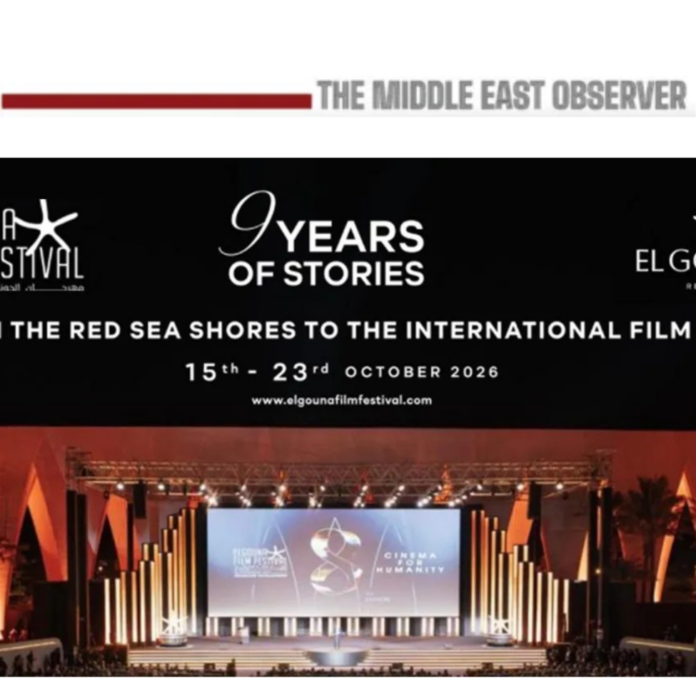
El Gouna Film Festival brought its ninth edition to a vibrant close on October 23, 2026, with a spectacular evening combining music, spontaneous dancing, glamorous red-carpet appearances and the celebration of outstanding cinematic achievements.
Held under the themes “Nine Years of Stories” and “Cinema for Humanity,” the festival concluded after nine days of screenings and industry events, featuring approximately 80 Arab and international films. The closing ceremony at the El Gouna Conference and Culture Centre reflected the festival’s dual mission: celebrating cinema as an art form while supporting the people and ideas shaping its future.
Music, Dancing and an Unforgettable Finale
The closing ceremony was transformed into a lively celebration when Egyptian singer and actor Mohamed El Sharnouby performed “Sidi” alongside young actress Yasmina El Abd.
According to the festival account, the song was created in just five days in El Gouna. Written by Menna Adly El-Kaie, composed and arranged by Ahmed Tarek Yehia, and directed by Zeina Ashraf Abdel Baky, the performance quickly became one of the evening’s highlights.
As the music filled the venue, several stars joined in spontaneous dancing, creating a relaxed atmosphere that contrasted with the formality of the red carpet. The moment captured the celebratory spirit of the festival and highlighted cinema’s ability to bring artists and audiences together beyond the screen.
Red-Carpet Elegance: A Celebration of Style
The red carpet once again offered a showcase of fashion and personal style, attracting established actors, emerging performers and filmmakers.
Among the attendees were Amina Khalil, Caroline Azmy, Farah Youssef, Jihad Hossam El-Din, Dalia Shawky, Engy El-Mokaddem, Ahmed Dawood and Ola Roshdy, Salwa Mohamed Ali, Karim Kassem, Fatma Nasser and Cynthia Khalifeh.
Black dominated many of the evening’s most striking looks. Dina El Sherbiny appeared in a mermaid-cut gown featuring lace details, while Huda El Etreby and Sherine Reda opted for designs that emphasised clean lines and statement jewellery. Nahed El Sebaei attracted attention in a long black gown embellished with silver pearls and stones.
Other stars embraced softer shades inspired by the coastal setting. Maryam El Khosht chose a flowing, elegant gown, while Rakeen Saad and Mai El Gheity favoured understated designs. Crystal and bead embellishments added a final touch of glamour beneath the photographers’ lights.
Beyond the fashion, the red carpet reflected the festival’s position as a meeting point for cinema, celebrity culture and the wider creative industries.
Golden Awards Celebrate Cinematic Achievement
The awards ceremony placed the spotlight on filmmakers whose work stood out across feature, documentary and short-film categories.
According to the supplied festival report, Egypt’s Safe Exit, directed by Mohamed Hammad, won the Golden Star for Feature Narrative Films. The Palestinian-French documentary Citizen Osama, directed by Ahmed Hassouna, received the Golden Star in the documentary category, while Anders Davidson’s Stolen Memories won the Golden Star for Short Films.
The festival’s humanitarian and environmental commitments were also reflected in its awards. An American Doctor, directed by Bo Si Ting, received the Cinema for Humanity Award, while The Annoying Bear won the Green Star Award, recognising the festival’s environmental focus.
In the acting categories, Jordanian actress Rakeen Saad was named Best Actress for her performance in Owl, while Jovan Ginic won Best Actor for After Three Weeks. The Arabic-language feature Al-Bareh Al-Ain Ma Namet was selected as Best Arab Feature Film.
Together, the awards highlighted the range of stories presented during the festival, from individual performances to films addressing broader social and humanitarian concerns.
Tributes to Artists and Lasting Creative Legacies
The closing celebrations also included moments of remembrance for artists and professionals whose contributions shaped Egyptian and Arab entertainment.
Names recalled during the festival included Hany Shaker, Abdel Rahman Abou Zahra, Kitty, Siham Galal, Mohamed Marzban, photographer Maged Helal and Kyrillos Salah.
Music also played a central role in the tributes. Singer Mona Aziz performed a selection of songs associated with the Egyptian musical group El-Masryeen, celebrating the legacy of composer Hany Shenouda.
The festival’s Creative Achievement Award was presented to acclaimed Moroccan filmmaker Faouzi Bensaïdi, recognising his contribution to Arab cinema and his distinctive artistic career. The honour followed the opening ceremony’s recognition of Egyptian actress Mona Zaki and lighting technician Hassan El-Sayed.
CineGouna: Investing in the Future of Film
Beyond the glamour of the closing ceremony, the CineGouna platform underscored the festival’s role in supporting film development and production.
The supplied report states that the programme hosted 40 professional discussion sessions and distributed more than $350,000 in financial and production support across 16 film projects.
Such initiatives are important to the wider film ecosystem. Beyond providing opportunities for filmmakers to develop new work, industry platforms can help connect creative talent with producers, investors and international partners.
For emerging filmmakers in the Arab region, access to funding, professional networks and international exposure can be as important as the recognition offered by festival awards.
A Festival Looking Beyond the Red Carpet
The ninth edition of El Gouna Film Festival concluded with a combination of celebration, recognition and industry engagement. Its closing night brought together music, fashion and cinematic achievement, while its awards and development programmes highlighted the importance of supporting filmmakers and expanding opportunities for regional storytelling.
The festival’s longer-term significance, however, will depend not only on the films celebrated during its nine-day programme, but also on the projects that move into production, the professional relationships that endure and the audiences those stories eventually reach.
As the lights dimmed on the closing ceremony, El Gouna once again positioned cinema as more than entertainment: a platform for cultural exchange, creative collaboration and the exploration of shared human experiences.
Related news:
Oscars, A Stage for Cinema — and a Voice for Peace
Read also:
Egyptian Short Film Khufu Brings Contemporary Egyptian Storytelling to the Global Stage
Tree Felling: Between Economic Necessity and Environmental Responsibility
